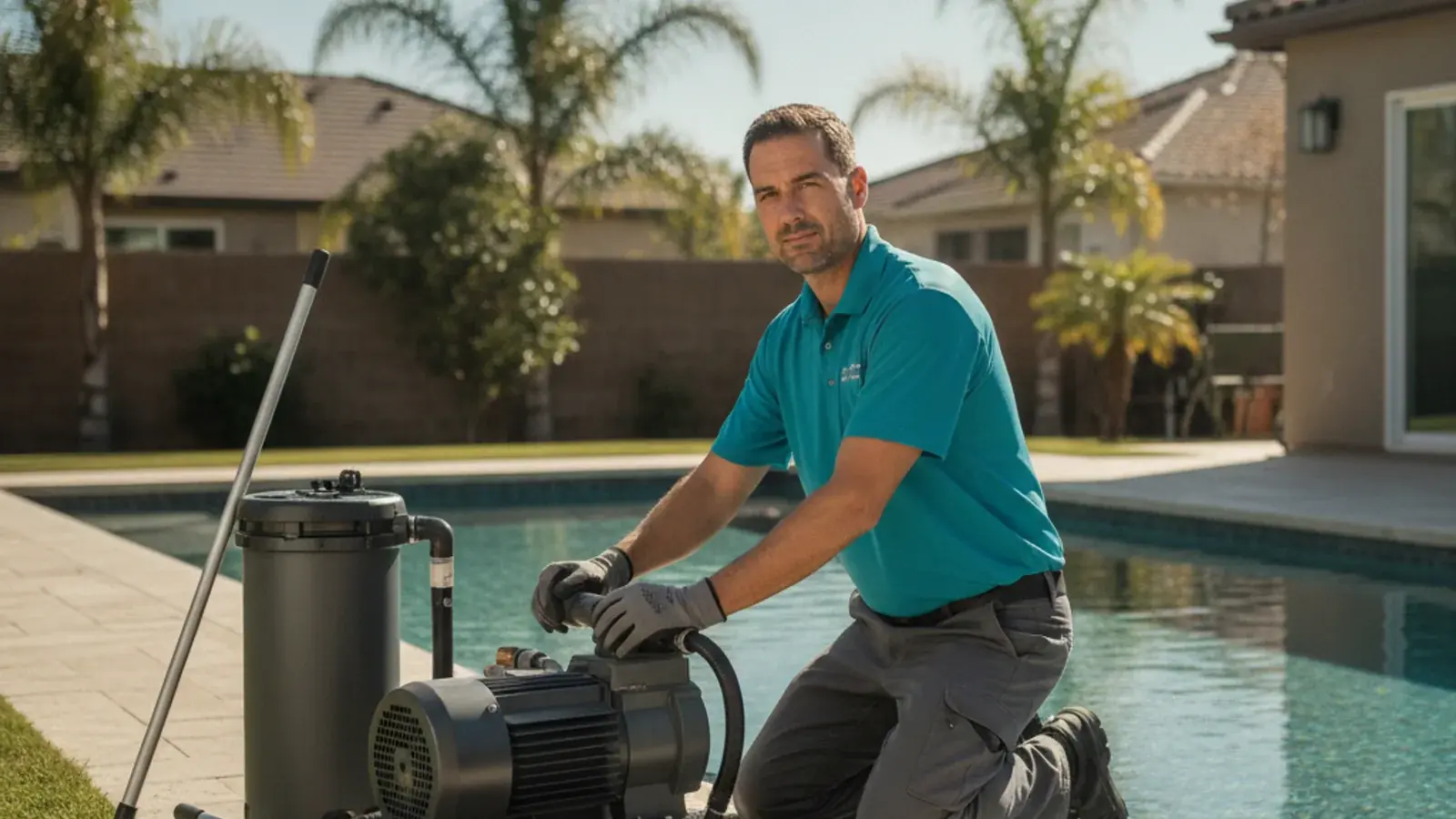
Pool renovation in San Diego for 2026
Most pool renovations in San Diego this year follow one pattern: resurfacing plus one system upgrade. The most common pairing is a pebble or quartz finish with a saltwater chlorine generator. The second most common is equipment modernization, usually a variable-speed pump swap. Splash Pool SD matches you with licensed independent pros who handle the actual work and provide written quotes before anything starts.
Most requested renovations right now
Pebble has overtaken plain white plaster as the default recommendation from most pros. The reason is local: San Diego’s hard water leaves mineral staining on lighter finishes, and pebble’s textured surface hides that discoloration far better. If you want a deeper comparison of finish options, our guide to pebble, plaster, and quartz breaks down the tradeoffs.
Saltwater conversion is the most popular add-on during resurfacing. The pool is already drained, so installing the chlorinator cell and plumbing the salt system avoids a second drain-and-refill later. Salt systems generate chlorine for sanitation, so you stop buying and storing chlorine tablets.
Waterline tile replacement rounds out the top three. When old 6-inch tile shows grout failure, it is usually replaced during the same drained visit. LED light upgrades are also common and pair well with the resurfacing timeline.
Pebble and quartz vs. white plaster
Pebble and quartz cost more upfront than white plaster. Ask your pro for specific product names, written care instructions, and warranty terms for each option. Don’t rely on promised extra lifespan claims without written documentation. Our post on hard water and San Diego pools explains why mineral content matters for finish selection here.
Saltwater conversion during resurfacing
Converting while the pool is drained is the efficient path. Request the chlorinator and surface work in one written scope that specifies who owns each phase. This keeps accountability clear if a question comes up later. Our breakdown of saltwater pool conversion cost in San Diego covers what drives pricing.
Angi lists in-ground salt conversion as a general U.S. planning estimate around $1,000 to $2,500. Your matched pro will quote the actual figure based on your pool’s plumbing layout and equipment pad.
Equipment modernization
California Energy Commission Title 20 requires variable-speed motors for replacement dedicated-purpose pool-pump motors at 0.5 HP or above, manufactured on or after July 19, 2021. If your pump is older, a renovation is a natural time to upgrade. Our post on variable-speed pool pumps in San Diego covers what to expect.
Before your pro visits, record the model numbers on your pump, filter, and heater. Ask whether a variable-speed pump or pad update belongs in the renovation scope. Request warranty and care instructions for any new equipment.
Budgeting your renovation
Plan each item separately: resurfacing, salt system, equipment, tile. Don’t rely on one bundled number. HomeGuide and Angi publish a general U.S. planning estimate of $6 to $8 per square foot for plaster resurfacing, or about $6,000 to $8,000 for 1,000 square feet of surface, not including refill. Your matched pro quotes the actual figure after inspecting your pool, and it may fall outside that range.
If your pool has an unknown leak history, add leak detection before resurfacing. Resurfacing over an undetected leak wastes the new finish. Leak detection doesn’t always include the repair itself, so ask what additional work the quote covers.
Renovate vs. replace
Don’t base this decision on pool age alone. A structural engineer should confirm shell failure before you consider rebuilding. Small cracks may only need a simple patch. Extensive cracking or broken pipes require more complicated work.
Record visible shell, surface, and equipment conditions before requesting quotes. Compare resurfacing and repair costs against rebuilding based on written scope. Assess the shell and buried pipes as separate items. Our post on the pool renovation timeline in San Diego covers sequencing in more detail.
Timeline and sequencing
The typical order goes like this: leak detection, drain, resurface or replace tile, install equipment or salt system, refill, then startup chemistry. Refill can take a full day or more depending on water pressure and pool size.
New plaster or pebble needs brushing and chemical balancing for the first 2 to 4 weeks. Skipping the cure schedule causes staining on the new surface within about 6 months. Your pro should provide a written schedule after seeing the pool. Permit timing, hidden deck work, or plumbing issues can shift the sequence.
Pre-quote checklist
Before requesting your quote, document etching, staining, and rough spots with photos. The pool must be drained and cleaned before resurfacing begins. Request the salt conversion quote separately from the resurfacing quote, then ask whether the salt work fits the same drained visit. Ask for written finish-care and warranty terms for every option you consider.
When to call us
Resurfacing, salt conversion, and equipment replacement all require a licensed pool professional. The sequencing, permitting, and cure schedule aren’t DIY territory. Call us at (858) 400-4404 and we’ll connect you with a licensed local pool specialist.
Frequently asked questions
How much does pool resurfacing cost in San Diego?
HomeGuide and Angi publish a general U.S. planning estimate of $6 to $8 per square foot for plaster resurfacing, or about $6,000 to $8,000 for 1,000 square feet of surface, not including refill. Your matched pro quotes the actual figure after inspecting your pool.
Should I convert to saltwater during resurfacing?
Converting while the pool is already drained avoids a second drain-and-refill later. Request the chlorinator and surface work in one written scope so each phase is clearly assigned.
How long does a pool renovation take?
No standard renovation length is published. Your pro should provide a written schedule after seeing the pool. Permit timing, hidden deck work, or plumbing issues can change the sequence.
What is the curing schedule for new plaster or pebble?
New plaster or pebble needs brushing and chemical balancing for the first 2 to 4 weeks. Skipping the cure schedule can cause staining on the new surface within about 6 months.
Should I get leak detection before renovating?
If your pool has an unknown leak history, add leak detection before resurfacing. Resurfacing over an undetected leak wastes the new finish. Note that leak detection does not always include the repair itself.
Need professional help in San Diego County?
Splash Pool SD connects you with a licensed specialist for any service in this post.