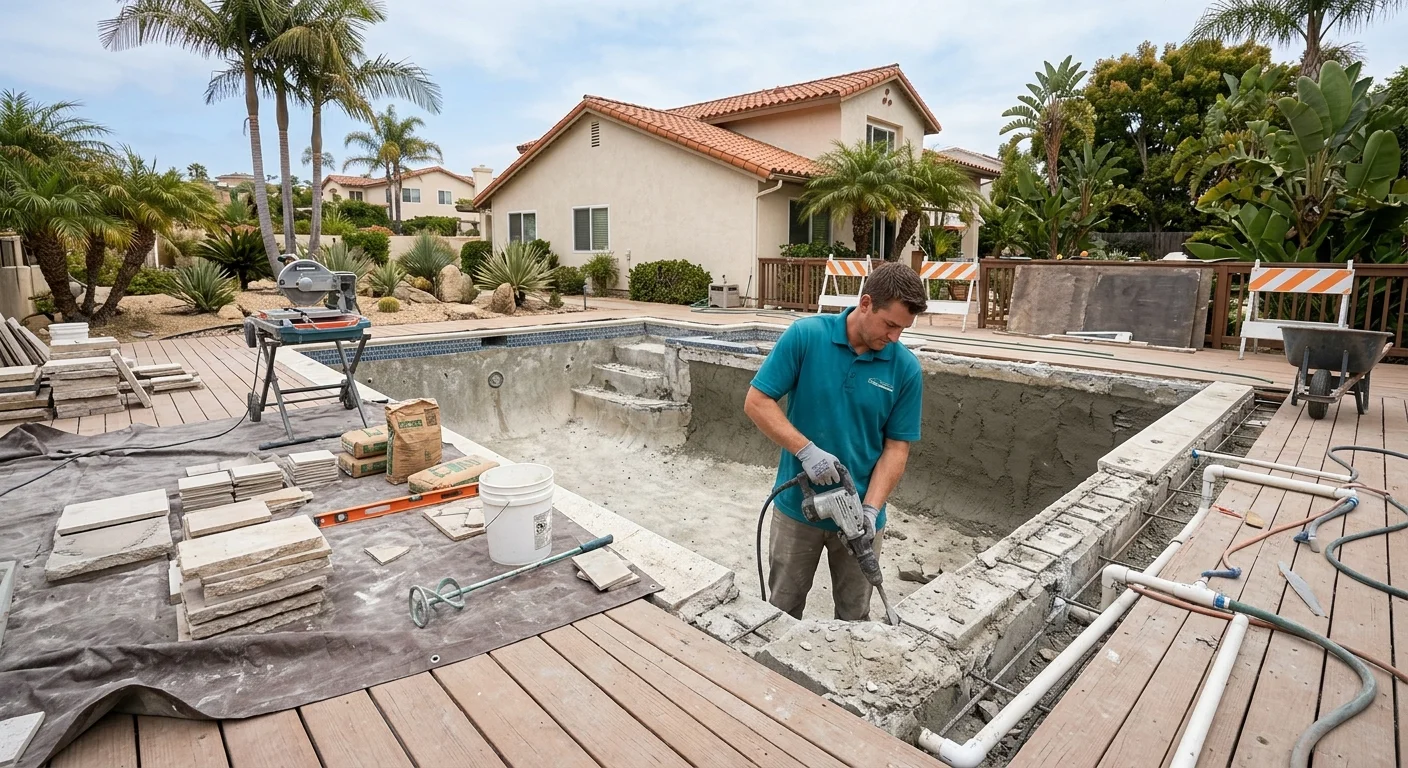
A surface-only renovation like replastering takes weeks. A full remodel that touches decking, plumbing, structural work, and equipment can take months. The difference comes down to how many trades are involved and how many approvals gate each phase. A written, phase-by-phase schedule from your contractor is the only reliable way to know where your project stands.
How the phases stack up
Every renovation starts with scope. Your contractor documents existing conditions and you lock in selections: interior finish, tile, coping, decking, plumbing, lighting, and equipment. Some materials must be ordered before demolition begins, so dimensions, finish type, and install method drive early confirmation.
Permit review and material ordering follow. Once those clear, site prep begins. That means access planning, area protection, and getting the pool ready for demo.
Demolition exposes the shell and any previously hidden areas. Your contractor compares what they find against the original scope. Repairs and rough work come next, whether that involves the shell, plumbing, tile, coping, deck edges, or equipment. Each trade needs a clear handoff to the next one. Covering unfinished work before the next trade is ready creates delays later.
Surface prep follows approved repairs. Then the new interior finish goes on through resurfacing or replastering. After that comes filling, startup, water care, equipment adjustments, and a final walkthrough.
A surface-only project has fewer dependencies. Add decking, plumbing, structural, or equipment work and the handoffs multiply. Your schedule should show phases, approvers, and prerequisites, not just an end date.
What causes delays
Scope changes shift every subsequent date. Swapping a tile can alter the ordering timeline. Adding deck work changes access and trade sequencing. Moving plumbing or equipment may trigger permit questions.
Lock major choices before demolition. Old finish can conceal damage nobody saw coming. When that happens, document the newly exposed conditions and get any changes in writing.
Materials control the sequence. There is no install date until the product is confirmed on-site. A product listed in the proposal isn’t the same as the product sitting in your yard.
Access matters too. A narrow side yard limits staging. Limited deck space or shared access complicates work. Discuss gates, pets, landscaping, parking, and storage before demo starts.
Tile may need completion before the next surface step. Equipment work may depend on plumbing finishing first. A useful schedule identifies these handoffs, not just a target date. And always verify your contractor through the CSLB license check before work begins.
Weather still matters in San Diego
San Diego’s climate is mild, but it still carries weather risk for pool work. Surface products have temperature, moisture, and application specs. Wind, rain, heat, and direct sun exposure all affect work windows.
Follow the manufacturer’s written requirements for your chosen material. Ask your contractor how weather calls are made and documented. A countywide forecast may not match conditions at your property. Coastal and inland yards can differ on the same day.
Permits and inspections
Requirements vary by scope and by jurisdiction. Encinitas and La Mesa have different permit rules. Identify the correct city or County of San Diego office and confirm current requirements directly with them.
There is no uniform inspection wait time across San Diego County. Get timing from both the permitting office and your contractor. Your schedule must flag phases that need approval before continuing. Permits and inspections belong on the project calendar because they can gate the next physical phase.
The California pool safety statute
When a permit is issued for a private single-family pool, California law applies. HSC §115922 requires at least two of seven drowning-prevention features. This is a two-of-seven rule, not a universal fence mandate. Confirm applicability with your permitting authority before work starts.
Curing and startup
Finish application isn’t the practical endpoint. Each material may have a unique curing and startup protocol. That protocol affects filling, water treatment, brushing, circulation, and equipment settings. It determines when normal use can resume.
There is no universal curing period across all finishes. Plaster, pebble, and other materials carry different written instructions. Obtain the requirements for the exact product installed on your pool. Don’t substitute a generic online timeline.
Your contract should name who handles initial water testing, treatment, brushing, circulation checks, and equipment adjustments. It should also state your duties once the contractor finishes. A readiness date must be written and must reflect material specs and actual condition.
Keep product info, startup records, and contractor notes together. Documents beat verbal reminders for handoff. They also prevent conflicting guidance from unrelated sources.
New equipment commissioning may overlap with startup. The finish schedule and the equipment schedule are distinct. Your contractor must explain how both feed the final handoff. If you are upgrading equipment as part of the renovation, the pool equipment upgrade guide covers what to expect.
Planning around summer
Identify the first date your pool truly matters. A family visit, school break, a gathering. Work backward from that date.
Your calendar must include design, contract, materials, permits, demo, repairs, finish, inspections, curing, and startup. Build in contingency for concealed conditions and weather. A zero-contingency schedule isn’t dependable.
Decide your essential features before requesting proposals. Request identical schedule details from each contractor. Compare assumptions, not just proposed finish dates. One bid may exclude permitting or startup. Non-equivalent timelines can’t be compared directly. The guide to comparing refinishing quotes walks through what to look for.
Don’t schedule a gathering against a projected completion date. Protect your desired pool-use window on the calendar and avoid concentrating all risk in the final week. A good contractor ties dates to completed phases. If scope changes, request a revised written schedule.
If you are still deciding whether a renovation or a full remodel makes more sense for your budget, this breakdown of remodel costs explains what drives the price. And if you aren’t sure whether your pool needs resurfacing yet, these signs will help you decide.
When to call us
Resurfacing, structural repairs, plumbing changes, equipment work, and permit-dependent remodels all require a licensed pool professional. If your project touches any of those, you need a pro who can pull permits and stand behind the work. Call us at (858) 400-4404 and we’ll connect you with a licensed local pool specialist.
Frequently asked questions
How long does a typical pool renovation take in San Diego?
Surface-only work like replastering usually takes weeks. A broader remodel that includes decking, plumbing, or equipment changes can stretch into months. A written schedule from your contractor should separate active work, inspections, curing, and startup so you know what each phase requires.
What causes the most delays in a pool renovation?
Scope changes, late material decisions, concealed damage found during demo, permit steps, inspections, weather, and startup procedures are the most common delay factors. Locking major choices before demolition and documenting any newly exposed conditions in writing helps keep the schedule on track.
Do I need a permit for a pool renovation in San Diego County?
It depends on the scope of work and your jurisdiction. Encinitas and La Mesa, for example, have different permit rules. Your contractor should identify which permits apply, and you should confirm current requirements directly with the correct city or County of San Diego office.
When can I use my pool after a renovation?
Wait for your licensed contractor to complete the startup process. Each finish material has its own curing and startup protocol that affects filling, water treatment, brushing, and circulation. Follow the written instructions for your specific finish and equipment rather than relying on generic online timelines.
Need professional help in San Diego County?
Splash Pool SD connects you with a licensed specialist for any service in this post.