San Diego pool leak detection and repair services
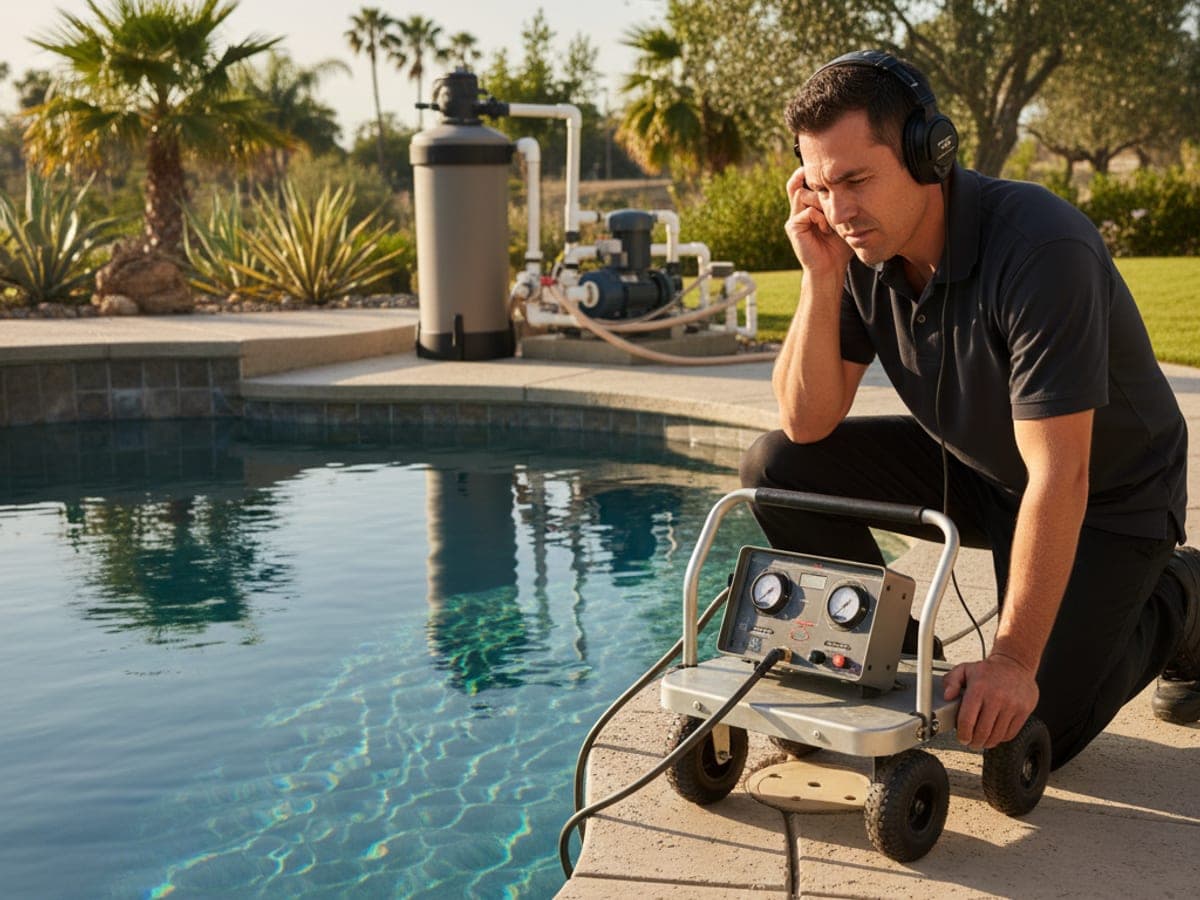
A falling water level isn't always a leak. Summer heat and wind draw water out of every San Diego pool, which is why the bucket test comes first: it separates evaporation from an actual leak without anyone guessing at a rate. Once that's ruled out, water is escaping somewhere it shouldn't, typically wasting money and undermining plumbing in the process. Leak specialists in our network use listening equipment, pressure testing, and dye to pinpoint the source before anyone breaks concrete.
Which steps are part of detecting a pool leak in San Diego County?
Licensed independent leak specialists are matched to you through Splash Pool SD. They begin by performing a bucket test, followed by pressure-testing the lines, deploying listening equipment, and dye-testing areas of concern. Quotes address fixing accessible pipes and fittings. Splash Pool SD itself does not carry out any physical work.
- Bucket test to separate a real leak from normal evaporation
- Pressure testing performed independently on each plumbing line
- Electronic listening-device detection
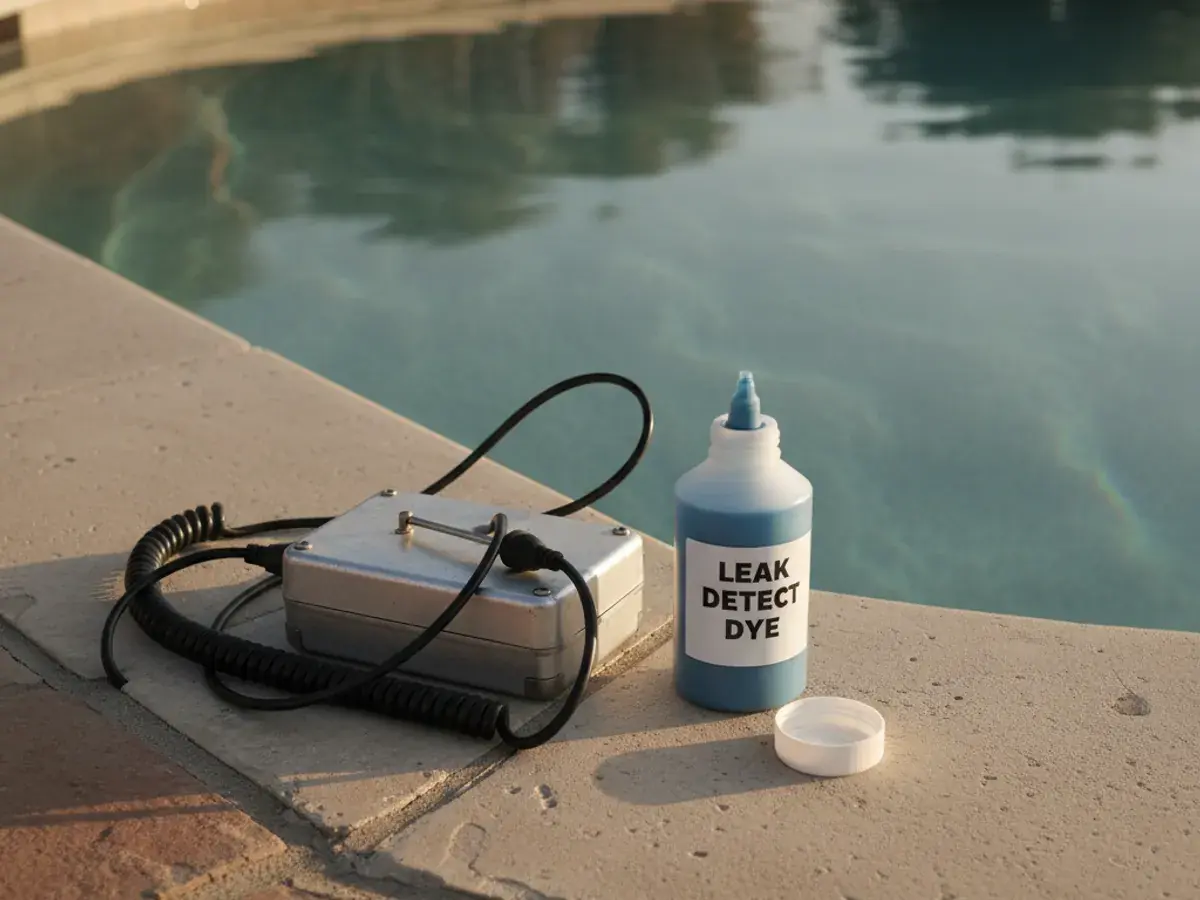
- Dye testing applied at suspected cracks and fittings
- Leak location mapping along with a repair plan
- Pipe and fitting repair in accessible locations
When is pool leak detection necessary?
Schedule leak detection once the pool drops faster than a bucket test accounts for, you notice soggy ground near the shell, the auto-fill keeps running, or your water bill jumped without a clear reason.
- Water line drops faster than a bucket test explains
- Ground near the pool that's soggy or unusually green
- Auto-fill valve running nonstop
- Water bill increased with no obvious reason
- Cracks visible in the plaster or along the tile line
How much water loss counts as a leak versus evaporation?
Evaporation and a leak look identical at the tile line, so measure rather than guess. The bucket test resolves it without needing the local evaporation rate: place a weighted bucket on a step, fill it so the water inside matches the pool level, and compare both lines after 24 hours. Both lose water to evaporation equally. If the pool dropped more than the bucket, the difference is escaping through the shell or plumbing.
- Pool drops level with the bucket: evaporation, not a leak
- Pool losing water faster than the bucket: schedule swimming pool leak detection and repair
- Unexplained lush grass, soggy soil, or a soft area beside the pad or return line
- Air showing up in the pump basket indicates a suction-side leak above the water line
- Water loss only while the pump runs suggests the pressure side; only when it's off suggests the shell
Pool leak detection and repair: pinpointing the problem without destroying your deck
Electronic leak detection picks up the sound of pressurized water escaping, which lets the source be pinpointed before anything is broken open. Pressure testing checks each line individually to identify which one is failing. Dye testing verifies a suspected shell crack up close. All three methods share the same goal: identify the precise location, then fix that location, instead of digging based on a hunch.
- Listening equipment locates pressurised line leaks through deck and soil
- Pressure testing on each line individually shows which run is losing water
- Dye testing verifies cracks in the shell, light niches, and skimmer throats
- Frequent sources of leaks here: light conduit, skimmer throat, return fittings, and aging plumbing at the pad
Common problems and their typical causes
These are the failures that bring in leak detection calls across San Diego County. The cause listed is where a competent technician starts, not a diagnosis from a distance.
- Pool losing water
- Before anyone charges to hunt for a leak, a bucket test tells you whether it's actual loss or just evaporation.
- Saturated or sinking soil near the deck
- a buried line is the culprit, and the ground itself reveals the approximate location without any tools.
- Bubbles coming out of the return jets
- air getting in on the suction side, meaning a leak that draws inward instead of pushing outward.
- Water level dropping then stopping at a fixed line
- the leak sits at that height. If it stops at the tile line, the skimmer or the tile is the likely source.
- Autofill running constantly
- the most definitive sign available, and the meter reading quantifies the loss.
What do homeowners ask about Leak Detection?
How can I quickly tell whether it's a leak or just evaporation?
Try a bucket test. Place a weighted bucket on the uppermost step and fill it to match the pool level. Mark both the bucket and pool waterlines, then wait 24 hours. If the pool dropped more than the bucket, you likely have a leak. If they fell equally, it's just heat and evaporation.
Is it possible to find a leak without tearing up my deck?
In most cases, yes. Leak detection equipment pinpoints the source through the deck surface, so excavation only happens after the exact spot is confirmed and the fix actually demands access.
How much water loss is considered normal?
Measure rather than guess. Set a weighted bucket on a step and fill it until the level matches the surrounding pool water. Evaporation lowers both by the same amount, so if the pool has dropped further than the bucket after 24 hours, that gap points to a leak worth a professional inspection.
Where do we offer Leak Detection in San Diego County?
The network covers leak detection in every city and community across San Diego County. Pick yours to see details specific to your area, including water hardness, local pool challenges, and city-specific FAQs.
See all 67 cities and communities
Need leak detection in San Diego County?
Call and describe the problem. We'll route it to a specialist who handles it.