San Diego salt water pool conversion
A salt system doesn't remove chlorine from the equation, it just makes the pool manufacture its own. Dissolved salt runs through a cell that converts it to chlorine on a steady drip, which means no more hauling jugs from the pool store and a noticeably softer feel in the water.
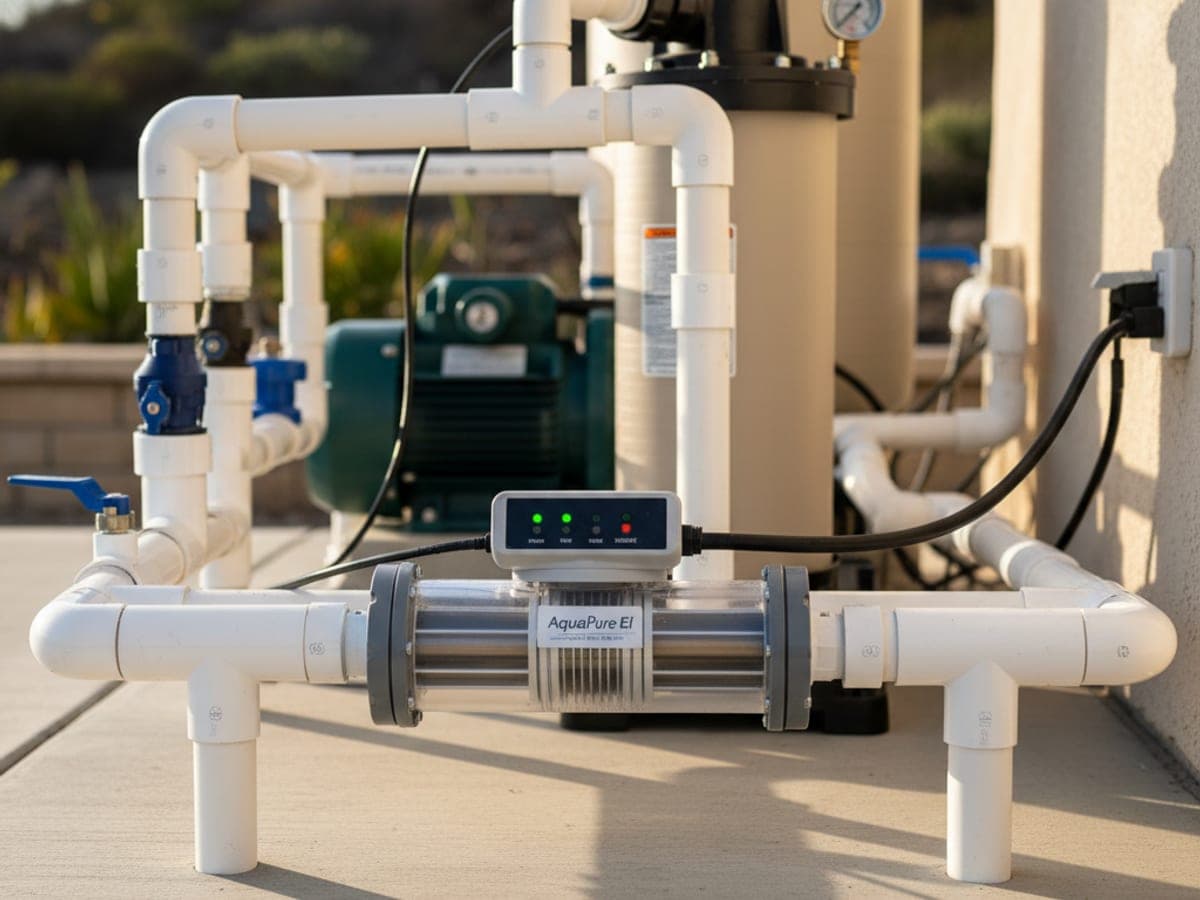
What's included in a salt water pool conversion?
Splash Pool SD connects homeowners to licensed independent specialists who assess existing equipment, select and install a salt chlorine generator sized to the pool, load salt to match the volume, and calibrate output and stabilizer. We do not perform the physical work.
- Equipment and plumbing compatibility check before conversion
- Salt chlorine generator installation for Pentair IntelliChlor, Hayward AquaRite, and comparable models
- Salt loading matched to the pool's volume
- Output and stabilizer calibration
- Regular salt cell maintenance and eventual replacement
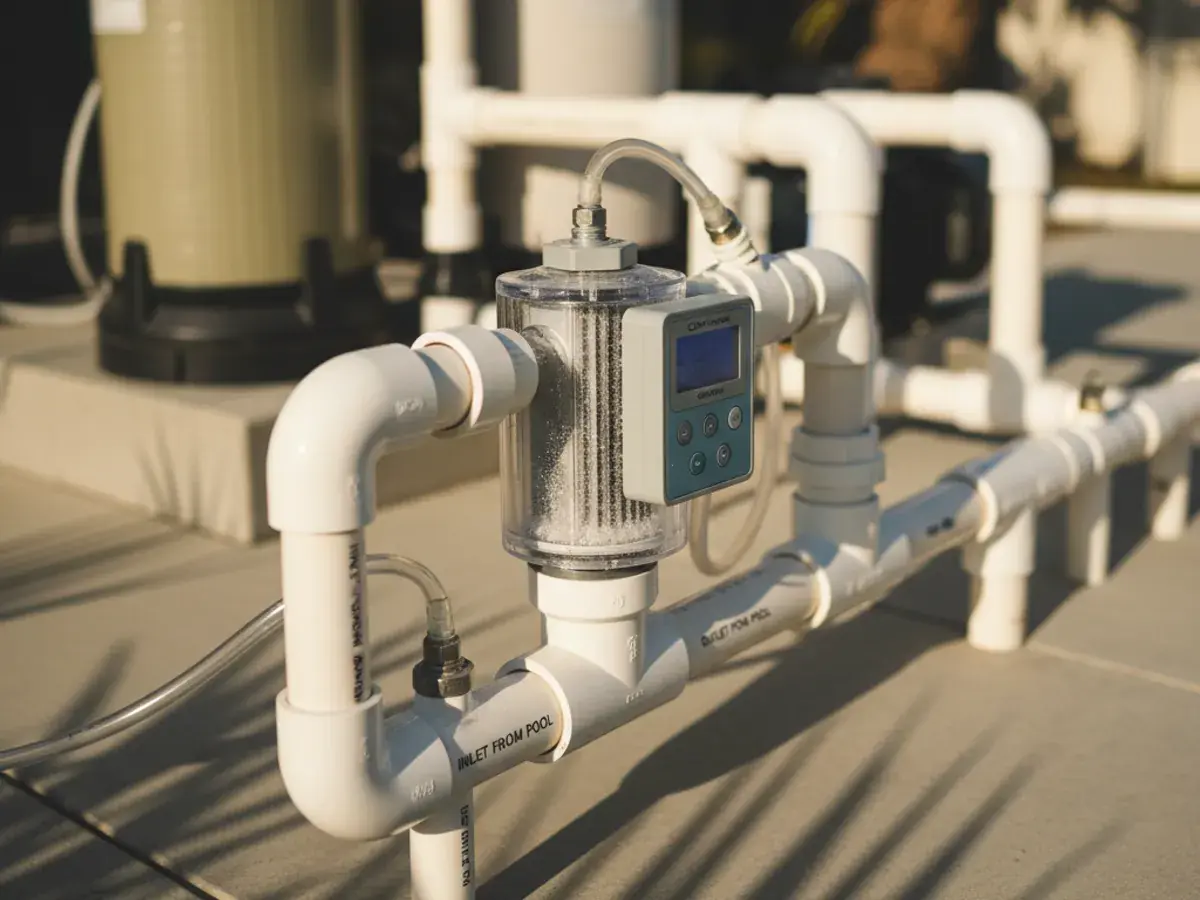
At what point does converting to salt water make sense?
A salt conversion makes sense once chlorine expenses and trips to the pool store have become a burden, or when chlorine irritation keeps appearing after swims.
- Tired of buying and hauling chlorine every week
- Skin or eye irritation from chlorine has gotten worse than before
- Hard water is a factor for your pool, meaning the cell requires extra attention
- You're already replacing other equipment and want to bundle the work together
Common problems and their typical causes
These are the failures that bring in salt water conversion calls across San Diego County. The cause listed is where a competent technician starts, not a diagnosis from a distance.
- Salt cell scaling quickly
- Hard fill water combined with high pH, which is the typical pattern throughout most of San Diego County.
- Water tests salty but the cell reads low
- This points to a plate or sensor problem rather than a salt level problem, so hold off on adding anything until testing confirms.
- Metal fittings and rails showing corrosion
- Low pH is the cause, not the salt itself. Salt pools succeed or fail based on pH control.
- Chlorine falling even though the system is on
- Stabiliser is out of range, so the chlorine the system produces gets destroyed by sunlight before it can do its job.
What do homeowners ask about Salt Water Conversion?
Does a salt system actually outperform liquid chlorine?
Chlorine is still the sanitizer doing the work, but it's produced on-site rather than poured in. Salinity stays near contact lens solution levels, so the water feels softer, and you avoid the spikes that manual dosing causes. It's lower-maintenance, not maintenance-free. Cells still require periodic cleaning and will eventually need replacement.
How long can a salt cell realistically last?
Run hours, bather load, and water chemistry all play a role. Hard water areas like San Marcos, El Cajon, and Rancho San Diego cause scale buildup that wears cells down quicker. Ask how frequently they recommend inspecting and cleaning the cell.
Can salt water harm pool equipment?
Newer equipment carries ratings for salt exposure. Older gear, particularly metal ladders, light rings, and certain fittings, may corrode faster once salt is added. The specialist checks for vulnerable parts before converting.
Where do we offer Salt Water Conversion in San Diego County?
The network covers salt water conversion in every city and community across San Diego County. Pick yours to see details specific to your area, including water hardness, local pool challenges, and city-specific FAQs.
See all 67 cities and communities
Need salt water conversion in San Diego County?
Call and describe the problem. We'll route it to a specialist who handles it.