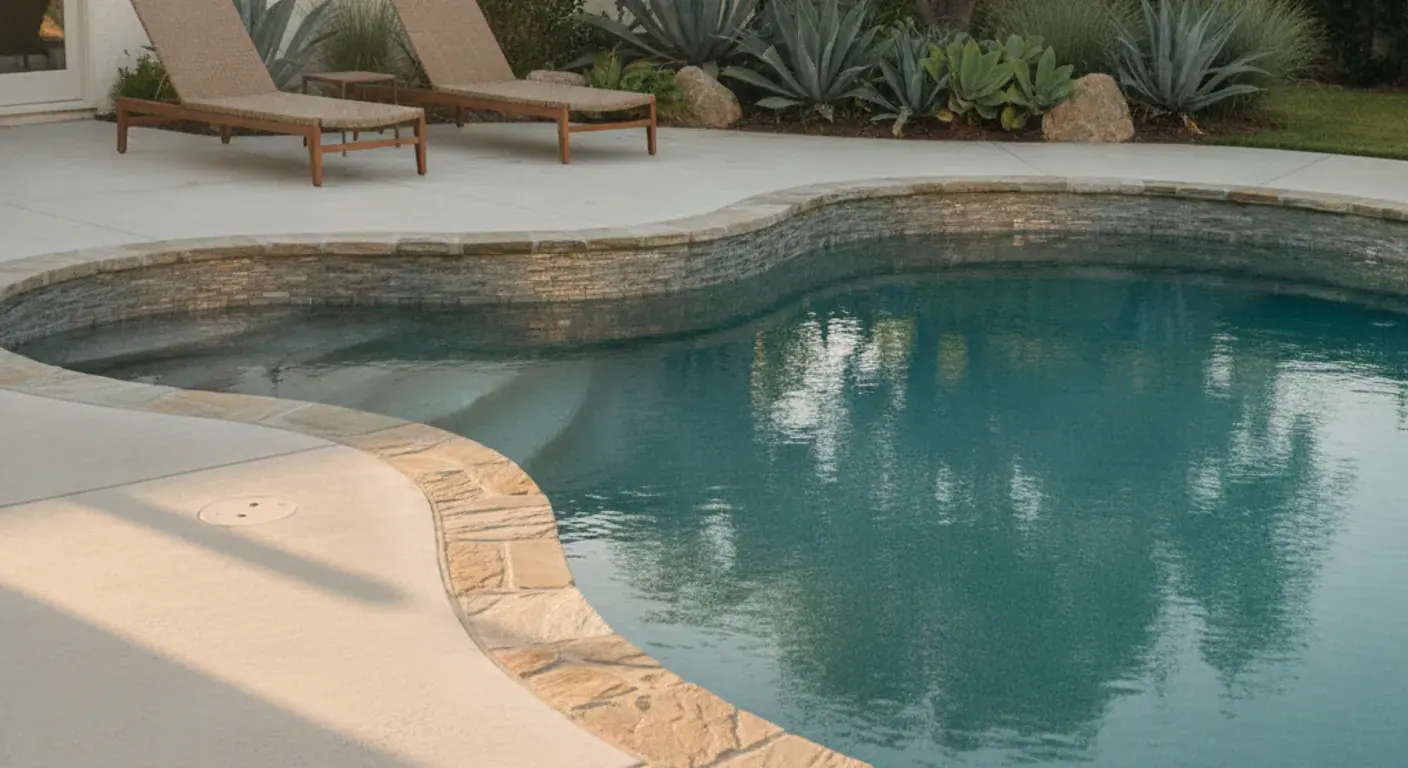
A pool remodel in San Diego County costs what your specific project demands. Pool size, finish material, how many systems you’re replacing, and local permit fees all shape the final number. No two quotes look the same, and any flat figure you find online is a guess. The only reliable path is a site visit from a licensed pro who measures your shell, inspects your equipment, and writes a line-item quote before work starts.
What follows is a breakdown of what goes into a remodel, what moves the price, and what San Diego’s conditions add to the equation.
What a pool remodel actually covers
A remodel isn’t one job. It’s a bundle of components, and you choose which ones to include.
Interior finish. This is the surface you see and touch. Plaster, quartz, and pebble are the three main options, each troweled onto the shell by hand. Finish choice is one of the biggest cost drivers in any remodel.
Waterline tile. This strip sits at the water surface and endures constant contact. In San Diego, hard water deposits calcium scale on tile faster than in softer regions. If your tile is pitted, discolored, or lifting, it belongs in the scope.
Coping. The cap that meets the deck at the pool’s edge. Common materials include brick, natural stone, and poured concrete. Coping fails from soil shift and heat cycling, both of which happen here. If it’s cracked or pulling away, replacing it during a remodel prevents water from getting behind the shell.
Decking. Spalling and cracking are the usual problems. If your deck is failing, addressing it while the pool is already drained and the crew is on site saves a separate mobilization later.
Equipment. Pumps, filters, and heaters have shorter lifespans than the shell itself. If yours are original or nearing the end of their service life, swapping them during a remodel avoids tearing into a fresh deck later.
Lighting. Old incandescent or halogen fixtures draw more power and burn out faster. LED replacements are a common remodel add-on.
Water features. Spas, sheer descents, and deck jets are priced separately from the base remodel. If you want one added, it goes into the quote as its own line.
All of these components are easier to address while the pool is already drained. That’s the core logic behind bundling.
Three tiers of scope
Most remodels in San Diego fall into one of three categories.
Cosmetic refresh
New interior finish, minor tile work, and an equipment check. This is the lightest option. It works when the shell is sound, the deck is fine, and you mainly want a fresh surface. Timeline runs about one to two weeks from drain to refill.
Mid-range remodel
New finish, full waterline tile replacement, coping replacement, and an equipment swap. This tier makes sense when two or more systems are showing age. Expect two to four weeks of active work.
Full renovation
Everything above plus deck work, LED lighting, salt conversion, and any water features. This is the most involved option and typically runs four to eight weeks. Larger pools or extensive hardscape push timelines toward the top of that range.
What moves the price
Several factors create the spread between a modest quote and a large one.
Pool size. A 15,000-gallon pool sits at the lower end of material and labor ranges. Larger shells need more finish, more tile, and more time.
Finish material. Standard plaster is the most affordable. Quartz sits in the middle. Pebble costs more upfront but outlasts plaster against hard water, which matters here.
Salvageability. If your existing tile, coping, or deck can stay, the quote drops. If they need full replacement, it climbs.
Access. Narrow side yards or tight backyards can limit equipment delivery. If a crew can’t get a mixer or a skid steer to the shell, labor costs rise.
Calcium scale. Heavy buildup on tile or the shell adds prep time beyond a standard quote. San Diego’s hard water makes this common.
Equipment brand and model. Pumps, heaters, and automation systems vary in price. The pro you’re matched with will walk through options that fit your budget.
Permits. Some scopes require them, some don’t. Permit fees and plan-check time add to the total.
The matched pro quotes all of this before work starts. You’ll see each line item and can adjust scope before anything is torn out.
San Diego factors that shape your remodel
This county’s conditions affect pool remodels in ways that don’t apply everywhere.
Hard water. San Diego’s municipal supply is mineral-heavy. Calcium scale builds up on tile, coping, and plaster surfaces faster than in regions with softer water. This shortens the lifespan of standard plaster and makes quartz or pebble a stronger long-term play. Read more in our guide to hard water and San Diego pools.
Heat cycling. Inland areas like Poway, Escondido, and El Cajon see wider temperature swings than coastal zones. Coping and deck materials expand and contract more, which accelerates cracking.
Salt air. Coastal communities from Oceanside through Encinitas to Chula Vista expose metal fixtures and equipment to corrosion. If you’re near the ocean, factor in material choices that resist it.
Soil conditions. Expansive clay in parts of East County and inland North County shifts over time. That movement stresses coping and deck joints. If your coping is already pulling away, soil movement is a likely cause.
These differences mean a remodel in Carlsbad won’t look identical to one in La Mesa. A local pro who works your specific area will know what to watch for.
Timeline: what to expect
Active work is only part of the schedule. Here’s the full picture.
Lead time. Permits and HOA approval happen before the crew arrives. Some San Diego cities process pool permits quickly. Others take longer. If your HOA requires architectural review, add that to the front end.
Active construction. One to two weeks for a cosmetic refresh. Two to four for mid-range. Four to eight for a full renovation.
Startup cure. After the pool is refilled, the new finish needs a 28-day chemical cure period. During this window, plaster and pebble are still settling. You can swim before the cure completes, but the pro will give you a specific brushing and chemistry schedule to follow. Skipping it can stain or etch the new surface.
For a deeper look at scheduling, see our post on pool renovation timelines in San Diego.
Upgrades that pay for themselves
If you’re already draining the pool and bringing in a crew, certain upgrades deliver measurable returns.
Variable-speed pump. These use a fraction of the energy a single-speed pump draws. Most San Diego homeowners see the energy savings cover the pump’s cost within one to two years. Our guide to variable-speed pumps covers sizing and rebates.
LED lighting. Lower electrical draw, longer bulb life, and color options that incandescent fixtures can’t match. If your current lights are original, this is a low-friction upgrade.
Salt conversion. Salt systems generate chlorine on site, which means softer-feeling water, less chlorine odor, and lower ongoing chemical costs. The salt cell itself is a future maintenance item, but the day-to-day savings are real. We break down the tradeoffs in chlorine vs. salt water pools.
Pebble or quartz finish. Both outlast standard plaster in hard-water conditions. If you’re tired of replastering every few years, stepping up to a harder finish can stretch the interval significantly. Compare options in our guide to pebble, plaster, and quartz.
Resurface or full remodel: how to decide
Resurfacing replaces only the interior finish. It’s a narrower, less expensive job. If your pool is rough underfoot, stained, or pitted but everything else is holding up, resurfacing alone may be the right call. Our post on replastering cost in San Diego covers that scope in detail.
A full remodel makes sense when two or more systems are failing at the same time. If your finish is worn and your tile is scaled and your coping is cracking, bundling them into one project saves labor and avoids paying for a second drain-and-refill cycle later.
Permits and regulations
This varies by city within San Diego County, so there’s no single answer.
Resurfacing alone often doesn’t require a permit. Confirm with your local building department.
Equipment replacement commonly requires one, especially if it involves electrical or plumbing changes.
Electrical work like new lighting circuits typically needs a permit.
Gas line work for heaters almost always does.
Structural changes to the deck or shell commonly require a permit and possibly engineering.
HOA review. Some communities mandate pre-approval before any pool work begins. Check your CC&Rs before scheduling.
The pro you’re matched with will know which permits apply in your city and can handle the paperwork.
Planning considerations before you start
A few things worth confirming before the crew shows up.
Backyard access. Measure the width of your side yard or gate. If a concrete mixer or material pallet can’t fit through, the crew needs to plan around it. That affects the quote.
Calcium scale. If your tile or shell has heavy buildup, mention it when you request your quote. It adds prep time beyond a standard resurface.
HOA rules. Some associations require architectural review, specific color approvals, or noise-hour restrictions. Get that sorted before the start date.
Season. San Diego’s mild climate means remodels happen year-round, but summer demand is higher. Booking in fall or winter can mean a shorter wait for crew availability.
When to call us
If your pool’s finish is failing, your equipment is aging out, or you’re ready to bundle multiple upgrades into one project, that’s the time to bring in a licensed pool professional. The matched pro handles permits, scheduling, and the full scope of work. Call us at (858) 400-4404 and we’ll connect you with a licensed local pool specialist.
Frequently asked questions
How much does a pool remodel cost in San Diego?
There is no single number. Price depends on pool size, finish material, how many systems you're updating, and local permit requirements. A licensed pro quotes your specific project before work starts.
What's the difference between resurfacing and a full remodel?
Resurfacing replaces only the interior finish. A full remodel can include tile, coping, decking, equipment, lighting, and water features on top of a new finish. If two or more systems are failing, bundling them into one remodel usually saves labor and drain costs.
How long does a pool remodel take in San Diego?
A cosmetic refresh runs about one to two weeks. Mid-range work with tile and coping takes two to four weeks. A full renovation can run four to eight weeks. Permits and HOA approval add lead time before the crew even starts.
Do I need a permit for a pool remodel in San Diego County?
Resurfacing alone often does not require one. Equipment replacement, electrical work, gas line work, and structural changes to the deck or shell commonly do. Requirements vary by city, so check with your local building department.
Which upgrades give the best return in San Diego?
Variable-speed pumps pay for themselves in energy savings within one to two years. LED lights draw less power and last longer. Salt conversion lowers ongoing chemical costs. Pebble and quartz finishes outlast standard plaster against San Diego's hard water.
Need professional help in San Diego County?
Splash Pool SD connects you with a licensed specialist for any service in this post.