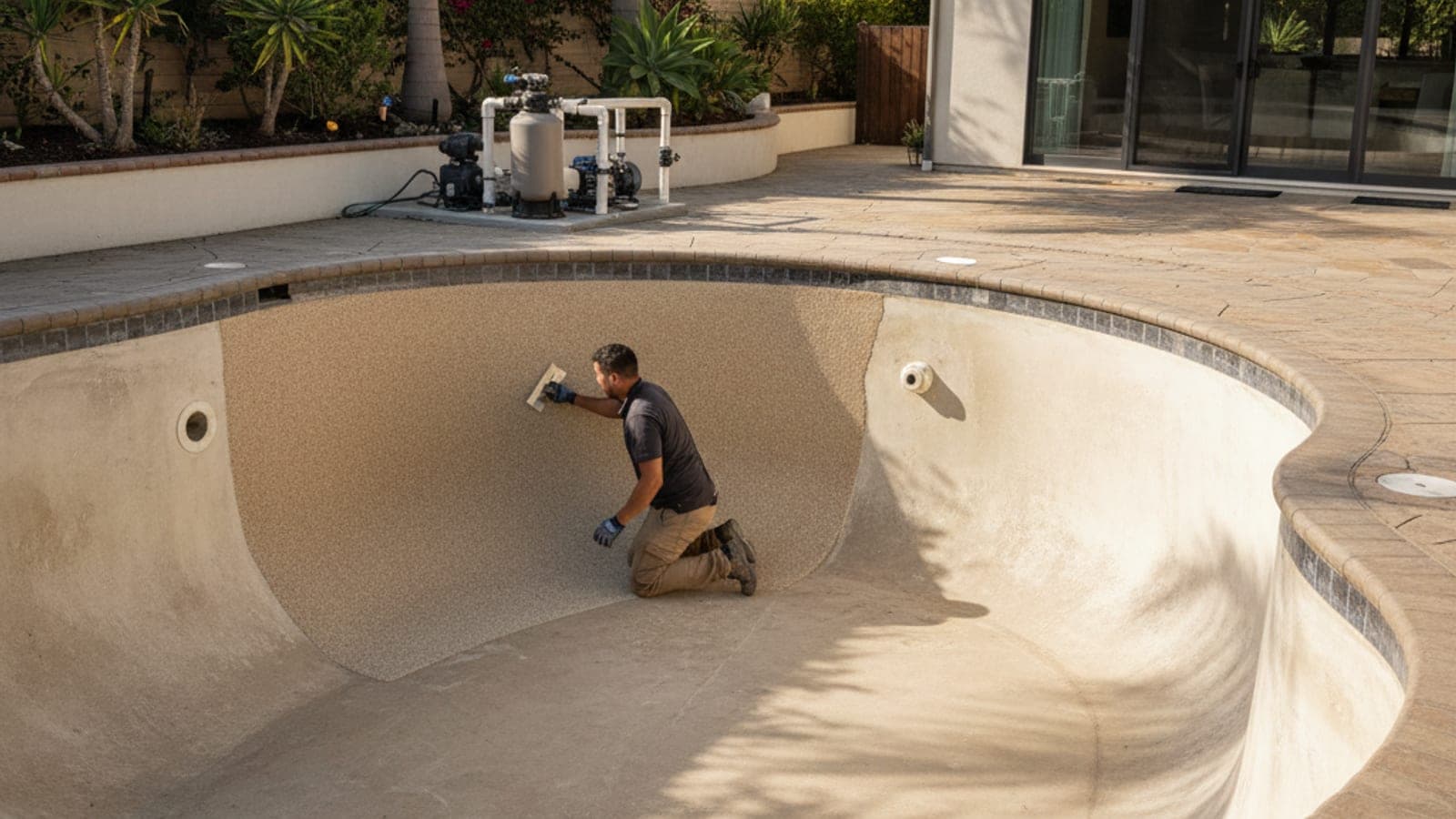
Pool replastering cost in San Diego depends on five things: your pool’s surface area, the finish material you choose, site access, whether the old surface needs a full chip-out, and any tile or coping work done at the same time. No two pools price the same, and no online calculator can replace an on-site inspection. The licensed resurfacing pro you are matched with through Splash Pool SD will assess your pool, explain what drives your specific number, and give you a written quote before any work starts.
What moves the price
Surface area, not gallons
Replastering is priced by square footage of wetted surface, not by how many gallons the pool holds. A 40-foot pool has roughly double the area of a 20-foot pool, even if the depth is the same.
Here are rough surface-area ranges by pool size:
- Small pools under 10,000 gallons: 550 to 700 square feet.
- Medium pools, 10,000 to 20,000 gallons: 800 to 1,100 square feet.
- Large pools over 20,000 gallons: 1,200 to 1,600 square feet.
A typical 15,000-gallon pool measures about 20 by 40 feet with a 6-foot average depth.
Shape and features
Freeform and kidney-shaped pools add 15 to 25 percent more surface area compared to a rectangle of the same length. Spa combos add cost because curved surfaces are harder to trowel. Raised walls, baja shelves, and beach entries all increase the area that needs new finish.
Chip-out versus prep
If the old plaster is severely deteriorated, the crew must chip it all the way down to the gunite shell. That is labor-intensive and adds to the quote. If the existing surface is intact, an acid wash and bonding agent are usually enough. The contractor makes this call during the drain-and-inspect phase.
Draining can also reveal cracks, bond coat failure, or rebar corrosion. Minor surface repairs are typically included in the base quote. Through-cracks or rebar issues are charged separately.
Tile and coping
Many homeowners replace waterline tile while the pool is drained. The standard option is 6-inch waterline tile. Glass mosaic is the premium choice. Coping, the edge material where the pool meets the deck, can also be replaced. Concrete coping is often left in place. Brick, flagstone, and natural stone coping are replaceable.
Finish options and how long they last
Standard white plaster
White Portland cement mixed with marble aggregate. This is the original pool finish and still the most common by volume. It gives a smooth, classic white surface.
The downside: it has low stain resistance and is the weakest finish against calcium scaling. In San Diego’s hard water, standard plaster typically lasts 7 to 10 years instead of the 8 to 12 you might see in softer-water regions.
Quartz
White cement blended with ground quartz crystal. Harder than standard plaster, with moderate-to-good stain resistance and good hard-water durability. It feels smoother underfoot than pebble.
Brands include Diamond Brite, PlasterScapes, and quartz variants from Pebble Sheen. Colors range from blues and greens to grays and multicolor blends. Expect 12 to 18 years of life.
Pebble
Small river pebbles embedded in a cement matrix. This is the most durable common finish and handles San Diego’s hard water better than anything else. It lasts 15 to 25 years, which is 50 to 100 percent longer than standard plaster. It also needs acid washing less often.
PebbleTec is the original brand and still the most common. Pebble Sheen uses finer aggregate for a smoother feel. Pebble Fina is the finest texture, closest to quartz underfoot.
The tradeoff: pebble is rough underfoot. Children notice it more than adults. If that matters for your household, ask about the finer variants.
Glass tile
A specialty finish for luxury builds and high-end renovations. Full glass-tile surfaces are rare outside resort or custom pools. More often it appears as a waterline accent only.
Glass tile is non-porous with excellent stain resistance, but grout joints can accumulate scale. It requires different techniques than plaster-based finishes and is unforgiving of installer errors. If you are considering it, get multiple bids and verify the installer’s specific experience with glass tile.
For a deeper comparison of these options, see our guide to pebble, plaster, and quartz finishes.
San Diego-specific factors
Hard water
County water runs 10 to 20 grains per gallon, with source hardness between 200 and 400 ppm depending on your water district. That hardness shortens plaster life by 1 to 3 years compared to national averages. It is the single biggest reason pebble or quartz makes more financial sense here over time, even though the upfront cost is higher.
Read more about how hard water affects San Diego pools.
Labor rates
San Diego labor for pool resurfacing runs 15 to 25 percent above the national average. That reflects the cost of living, demand, and the C-53 licensing requirement for swimming pool contractors. Always verify that any contractor you consider holds a valid C-53 license.
Access premiums
Hillside properties in Rancho Santa Fe, Del Mar, and similar areas can carry access premiums because equipment and material delivery is harder. East County locations like El Cajon and Santee typically don’t carry those premiums.
Signs your pool needs replastering
You likely need a new finish if you see:
- Rough or chalky texture in multiple areas, not just one spot.
- Visible pitting or small craters.
- Heavy staining that resists acid washing.
- Calcium nodules: small white bumps forming on the surface.
- Plaster that is bubbling, lifting, or separating from the shell.
- A pool that is 15 or more years old with any of the above.
When you might wait
- Mild discoloration with no texture change: a professional acid wash may be enough.
- Calcium scale only at the waterline: tile cleaning addresses that without a full replaster.
- Scattered small stains: chemical treatment can sometimes resolve them.
- Under 10 years old with a smooth surface and only cosmetic issues.
The gray zone
If your pool is 10 to 14 years old with roughness but no pitting, or you see discoloration and can’t tell if it is staining or something structural, get a professional assessment. Some tired-looking pools clean up beautifully with an acid wash. Some mild-looking pools have hidden substrate problems that only show once drained.
If you are considering replastering before selling your home, an assessment helps you decide whether the investment is warranted or whether a less expensive fix will get you through closing.
Our post on signs your pool needs resurfacing covers these indicators in more detail.
Timing and scheduling
The best months for replastering in San Diego are April through October. Mild temperatures and low rainfall help the new finish cure properly. Avoid December through March: rain delays and cool temperatures both affect cure quality.
Spring is peak season. April and May slots fill 6 to 10 weeks ahead. If you want spring work, book in February or March. For summer work, book by April at the latest.
From first contact to first swim, expect 6 to 12 weeks during peak season. That includes the bidding process, scheduling window, and the physical work.
What the project timeline looks like
Here is a typical sequence once you sign a contract:
- Weeks 1 to 2: site visit, bid, contract signing.
- Weeks 3 to 8: scheduling window, varies by contractor backlog.
- Day 1: drain. This takes 4 to 8 hours.
- Days 2 to 4: chip-out or surface prep, plus tile and coping work if included.
- Days 8 to 9: new finish applied.
- Days 10 to 12: cure time and refill. Refill itself takes 24 to 48 hours.
- Days 14 to 42: the 28-day cure window.
During the cure window the pool is swimmable, but chemistry needs daily management. Your contractor will give you a startup chemistry schedule. Follow it closely. This is when the finish is most vulnerable to staining and etching.
For a broader look at how long different finishes hold up, see how long pool resurfacing lasts.
Replastering versus resurfacing
These terms get used interchangeably, and most San Diego contractors treat them as synonyms. Strictly speaking, replastering means a new plaster-based finish only. Resurfacing is the broader category that also includes glass tile and specialty finishes. The physical process is the same either way: drain, prep, apply new finish, refill. The distinction matters mainly when you are specifying which material you want.
Getting comparable quotes
Because price varies so much by finish, size, and site conditions, comparing quotes only works when each bid covers the same scope. Make sure each contractor quotes the same finish type, the same prep level, and the same tile or coping work. If one bid is much lower, ask what is excluded.
We have a full guide on comparing pool refinishing quotes in San Diego that walks through what to look for line by line.
When to call us
Replastering isn’t a DIY project and not a job for a general handyman. It requires a C-53 licensed swimming pool contractor who knows how to handle drain permits, surface prep, and finish application in San Diego’s climate. If your pool is showing the signs described above, or you are unsure whether it needs a full replaster or just an acid wash, a professional assessment is the right next step.
Call us at (858) 400-4404 and we’ll connect you with a licensed local pool specialist.
Frequently asked questions
How much does pool replastering cost in San Diego?
There is no single number. Price depends on surface area, finish material, access difficulty, and whether chip-out is needed. San Diego labor runs 15 to 25 percent above the national average. A licensed pro you are matched with will quote the exact figure after inspecting your pool.
How long does the replastering process take?
From drain to swim-ready, expect 7 to 14 days on site. The full timeline from booking to first swim runs 6 to 12 weeks during peak season. The 28-day cure window follows, during which the pool is usable but chemistry needs daily attention.
How do I know if my pool needs replastering?
Look for rough or chalky texture in multiple areas, visible pitting, calcium nodules, or plaster that is bubbling or lifting. In San Diego's hard water, standard plaster often needs replacement at 10 to 15 years. A professional assessment can confirm whether an acid wash will buy more time.
Which finish lasts longest in San Diego conditions?
Pebble finishes last 15 to 25 years and resist calcium scaling better than any plaster-based option. Quartz runs 12 to 18 years. Standard white plaster typically lasts only 7 to 10 years here because of hard water.
When is the best time of year to replaster in San Diego?
April through October offers mild temperatures and low rain, which helps proper curing. Avoid December through March. Spring slots fill 6 to 10 weeks ahead, so book by February or March for spring work.
Need professional help in San Diego County?
Splash Pool SD connects you with a licensed specialist for any service in this post.