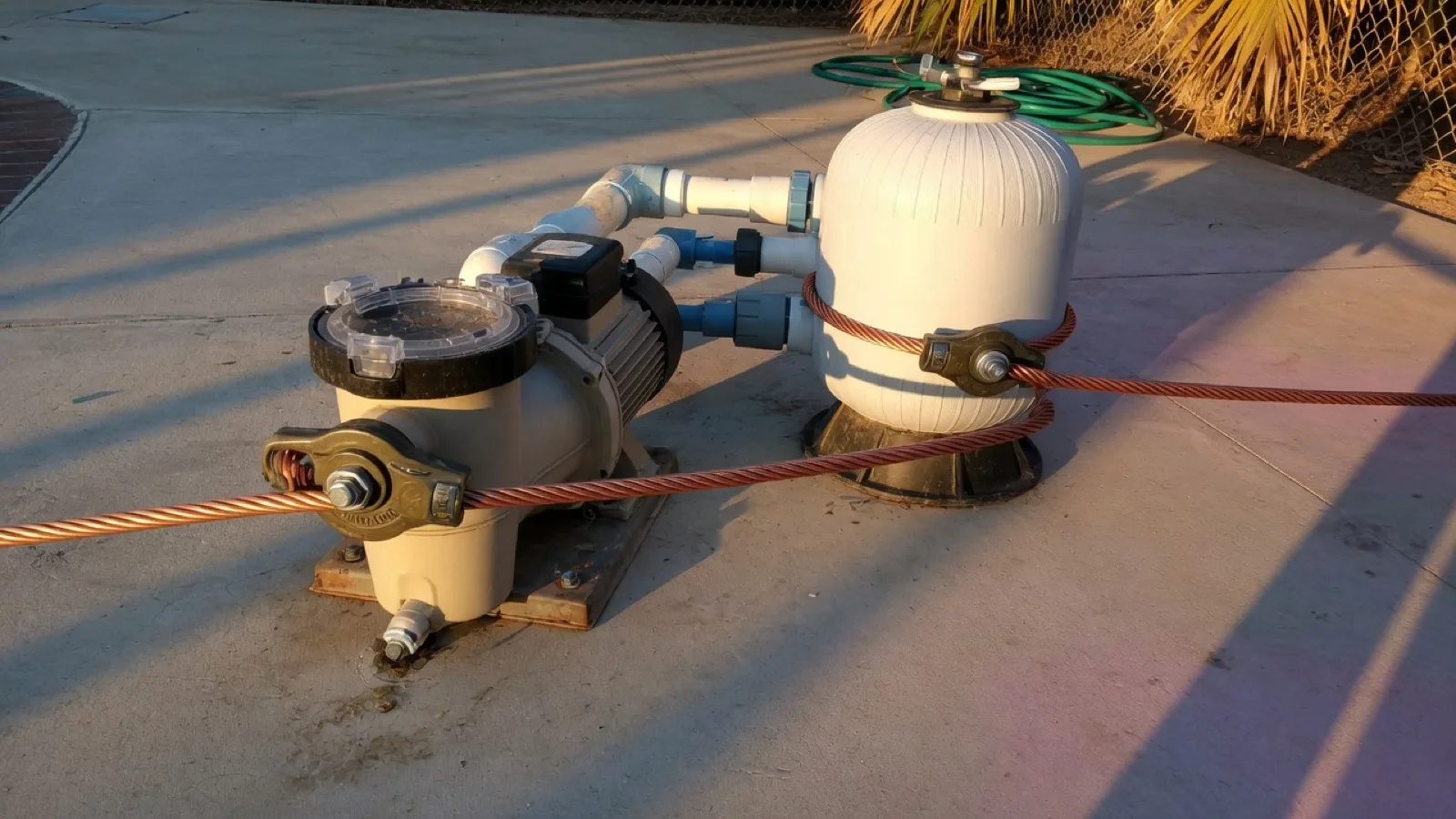
A tingle in the water is an electrical problem until a licensed electrician says it is not. Equipotential bonding is the grid that is supposed to keep the pool’s metal, the water, and nearby conductive parts at the same potential so your body is not the path. San Diego inspectors flag it on remodels, equipment swaps, and older shells that never had a complete grid.
This page is that grid, the tingle, and the inspection comment. It is not a wiring diagram. It does not quote National Electrical Code article numbers from memory. The authority for a given yard is the building department that will sign the card (the AHJ) and the licensed electrician who stamps the work.
If a pump is tripping a GFCI, read pool pump trips breaker with this page. A ground fault and a missing bond can show up on the same afternoon.
What bonding is for, in plain language
Metal in and around a pool can sit at slightly different voltages: the light niche, the ladder, the equipment pad, a handrail, a copper water line. If those pieces are not tied together, you can feel the difference when you swim from one to the other. Equipotential bonding is the set of conductors meant to tie those pieces together.
What must be included, where the ring goes, and how the water itself is bonded are specified by the code edition the city adopted and by the inspector in front of you. Chula Vista, the City of San Diego, Encinitas, and the County all inspect. They do not all talk the same on an older pool. The electrician asks the AHJ. We do not.
Do not treat a copper jumper someone wrapped around a filter tank as “the bonding.” A real grid is continuous, labeled where the job requires, and landed on the parts the drawing names.
The two calls we actually get
“There is a tingle.” Out of the water. Equipment off. No testing with a wet hand on the ladder. The matched licensed electrician measures. A tingle can be a faulting light, a heater, a pump, stray voltage from a neighbor, or an incomplete bond. Guessing which one from the deck is how people get hurt.
“The inspector wrote bonding.” That is a permit comment. The fix is a licensed electrician and, when the shell or the deck is involved, the pool contractor on the same job. Equipment-only swaps (a new pump on an old pad) are a common trigger: the new motor needs a bond lug landed, and the inspector wants to see the rest of the grid is still there. Title 20 variable-speed replacement motors are a separate rule on the motor itself. Bonding is the electrical grid around it.
We do not publish a punch-list of “these eight items must be bonded.” That list is how blogs go stale against the next code cycle.
What a licensed electrician does, and what we do not
A matched licensed electrician will:
- Kill and lock the circuit before any lug is touched.
- Inspect existing conductors, lugs, and connections for continuity as their process requires.
- Add or repair only what the permit and the AHJ require.
- Coordinate with the pool contractor if a niche, a rail, or deck steel is in scope.
- Write the scope on an estimate you can read.
Splash Pool SD matches homeowners with licensed independent pros. We do not hold an electrical license, pull the permit, or warranty the grid. Look up whoever shows up on the CSLB license check.
If the tingle started after a pump swap, bring that up. If it started after a light failed, bring that up. Pool light repair is the niche and the lamp. Bonding is the grid those parts are supposed to sit on.
How to describe the fault when you request a match
Say tingle, inspector comment, or both. Name the city, because the AHJ changes. Say whether a pump, heater, or light was just replaced. Photograph the inspection note and the equipment pad, dry, from the deck. Do not open electrical boxes.
Call (858) 400-4404 and we will match you with a licensed local specialist.
Frequently asked questions
What is pool equipotential bonding?
It is the network of conductors that ties conductive parts of the pool, the water, and nearby metal to the same electrical potential so you are less likely to feel a voltage difference in the water or on the deck. The exact layout is what the local building department (the AHJ) enforces on that job. This page does not quote a code section from memory.
I felt a tingle in the pool. What do I do?
Get out. Leave the pump and the heater off. Do not keep swimming while you 'see if it happens again.' Call for a match. A tingle can be a bonding problem, a ground fault on a piece of equipment, or both. See also pool pump trips breaker if a GFCI is opening.
The inspector said I need bonding. Who does that?
A licensed electrician, working with the pool contractor as the job requires, under the permit and the local building department's rules. Splash Pool SD does not pull electrical permits and does not perform that work. We match you with licensed independent pros. Verify them on the CSLB lookup.
Is bonding the same as grounding?
They are related and they are not interchangeable words. Grounding is a fault path back to the electrical system. Equipotential bonding is about keeping the metal you can touch at the same potential. The electrician names both against the drawings and the AHJ, not against a blog.
Can I clamp a copper wire to the pump myself?
If you are not the licensed electrician on a permitted job, no. A clamp on a pump that is not part of the designed grid can look like bonding and do nothing for the water or the deck steel. Bad bonding is worse than an honest open item on an inspection.
Need professional help in San Diego County?
Splash Pool SD connects you with a licensed specialist for any service in this post.