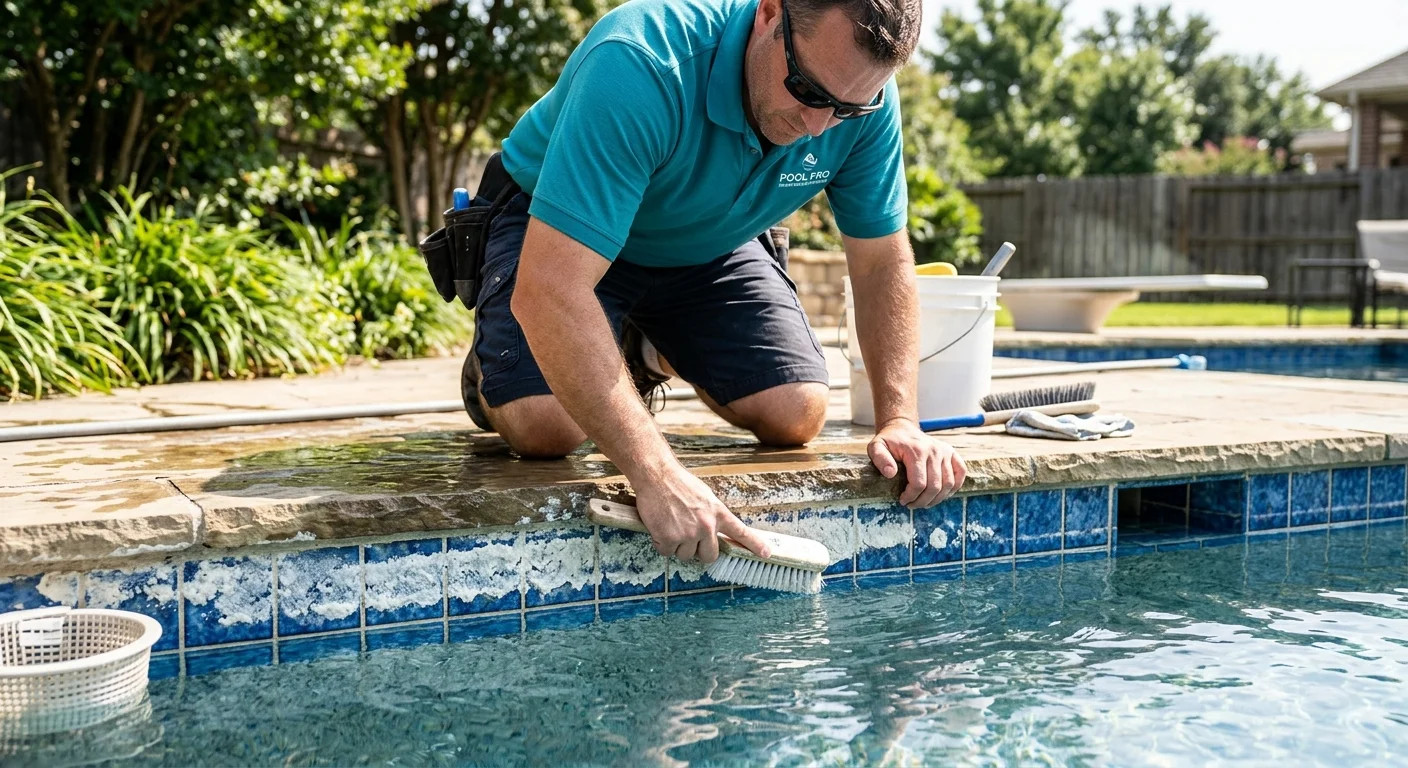
Hard water in a pool means the calcium hardness reading is higher than the water can hold without depositing minerals on surfaces. The fix starts with a test, not a product. You test your pool water and your refill water separately, compare the two numbers, and then match a correction method to what the results actually show. Skipping straight to a drain or a chemical treatment without confirmed numbers risks unnecessary work and wasted money.
What hard water means for your pool
Calcium hardness belongs to the water sitting in your pool right now. It isn’t a property of your house or your street. A result from a neighbor’s pool tells you nothing about yours. Even two pools on the same block can read differently based on fill history, evaporation rate, and chemical balance.
Test both your pool water and the water you use to refill it. Label each sample, record the date, and request written results. If a number surprises you, confirm it before spending on correction. Appearance alone isn’t enough for a treatment decision. A white waterline doesn’t automatically mean the entire volume needs replacement.
Photograph the waterline, any visible deposits, and equipment condition before anyone proposes work. Note whether buildup appeared gradually or showed up after a specific refill. These details help a specialist match the measured condition to the right response.
San Diego’s imported water and why it matters
Imported water is a common explanation for high calcium hardness across San Diego County, but it isn’t a property-specific answer. No verified countywide hardness number exists that applies to every address. Coastal North County data doesn’t equal East County or South Bay readings. A nearby address isn’t a substitute for testing your own incoming water.
Start with the utility listed on your current water bill. Request the current water quality report for your service address. The San Diego County Water Authority is a useful regional starting point, but your actual provider must confirm what arrives at your meter. If your provider can’t confirm a hardness figure, note that explicitly. Keep both your fill-water result and your pool-water result with your service records.
For more on what to test and how to read results, see our guide on pool water testing.
Scale on tile, heaters, and salt cells
White deposits on the tile line, rough patches on the finish, or crusty buildup on equipment all support an inspection. They don’t, on their own, justify a correction. Photograph the waterline and any changing areas first. Don’t scrape, soak, or apply a product before a professional identifies what you are looking at.
Heaters and salt cells need inspection by someone familiar with that equipment. Ask the pro to explain findings in plain language: where the deposit is, what test supports the diagnosis, and what the proposed fix targets. Distinguish between water correction, deposit removal, equipment service, and finish repair. One symptom shouldn’t become a vague, unrelated-work proposal.
If scale has built up on your salt cell, our post on salt cell replacement in San Diego covers what that involves. For tile-line deposits specifically, calcium on pool tile walks through the inspection process.
Cloudy or green water is a separate issue. It isn’t a hardness problem, and treating it as one wastes time.
Correction methods
Partial drain and refill
This replaces some pool water with fresh fill water. There is no generic replacement percentage that applies to every pool. The amount must come from your current test results. Ask where the removed water goes. Your local authority sets the discharge direction for your property. Any proposal must explain the refill plan and post-refill testing.
Managed water exchange
This is a planned process that adds water while removing other water. Ask the specialist to define the term in writing and explain how it differs from a partial drain. Discharge questions still require an address-specific answer from your authority. For a deeper look at exchange options, see pool water recycling in San Diego.
Treatment products
The word “treatment” means different things in different proposals. Ask what the product or process claims to accomplish. Does it change measured calcium hardness, address existing deposits, or something else? Request the product name, written directions, and the expected follow-up test. A “no-drain” label alone isn’t enough for comparison with a water replacement approach.
Pre-approval checklist
Before approving any correction, gather these items:
- Current pool-water test results
- Current fill-water test results
- Photographs of visible deposits
- Notes on finish and equipment condition
- Proposed destination for removed water
- Written description of the expected result
The scope must separate testing, water correction, deposit removal, equipment work, and finish repair into distinct line items.
Drain rules and discharge
No confirmed countywide drain rule covers every home in San Diego County. Don’t copy advice from another city. The authority serving your property sets the answer. Carlsbad instructions aren’t the same as El Cajon’s, and neither matches Chula Vista’s.
Identify your municipality and water provider. Contact the wastewater or stormwater authority for your address. Ask where water may go, what preparation is required, and whether current restrictions apply. Record the agency name, the date, and the person who gave you the answer. If they refer you to another department, follow that referral before work starts.
A full drain isn’t a casual experiment. Your specialist must document the planned water level, discharge destination, refill steps, and follow-up testing. Ask what conditions would stop or change the work mid-process.
Before hiring anyone for drain-related work, verify their license through the CSLB lookup. Match the listing to the person or business actually offering the work. A logo or a verbal claim isn’t proof of an active license.
When to call us
Call when you have confirmed high hardness that involves draining, equipment deposits, or a damaged finish. A licensed pro inspects the pool, reviews your test record, and prepares a scope specific to your property. Call us at (858) 400-4404 and we’ll connect you with a licensed local pool specialist.
Frequently asked questions
What is the first step to fix hard water in a pool?
Test your pool water and your fill water separately. Compare the two results before choosing any correction method. A confirmed number guides the response, not a guess based on tile deposits alone.
Does white buildup on my pool tile prove the water is hard?
No. Visible scale supports an inspection but does not confirm the full water condition. Photograph the deposits, then test the water. The measured calcium hardness level determines whether correction is needed.
Can I just drain my pool to lower calcium hardness?
Not casually. No single countywide drain rule covers every San Diego County address. Your municipality or wastewater authority sets where discharged water may go and what preparation is required. Confirm before any drain begins.
How do I verify a pool contractor's license in California?
Use the CSLB license lookup online. Match the listing to the person or business offering the work. A logo, advertisement, or verbal claim is not proof of an active license.
Need professional help in San Diego County?
Splash Pool SD connects you with a licensed specialist for any service in this post.