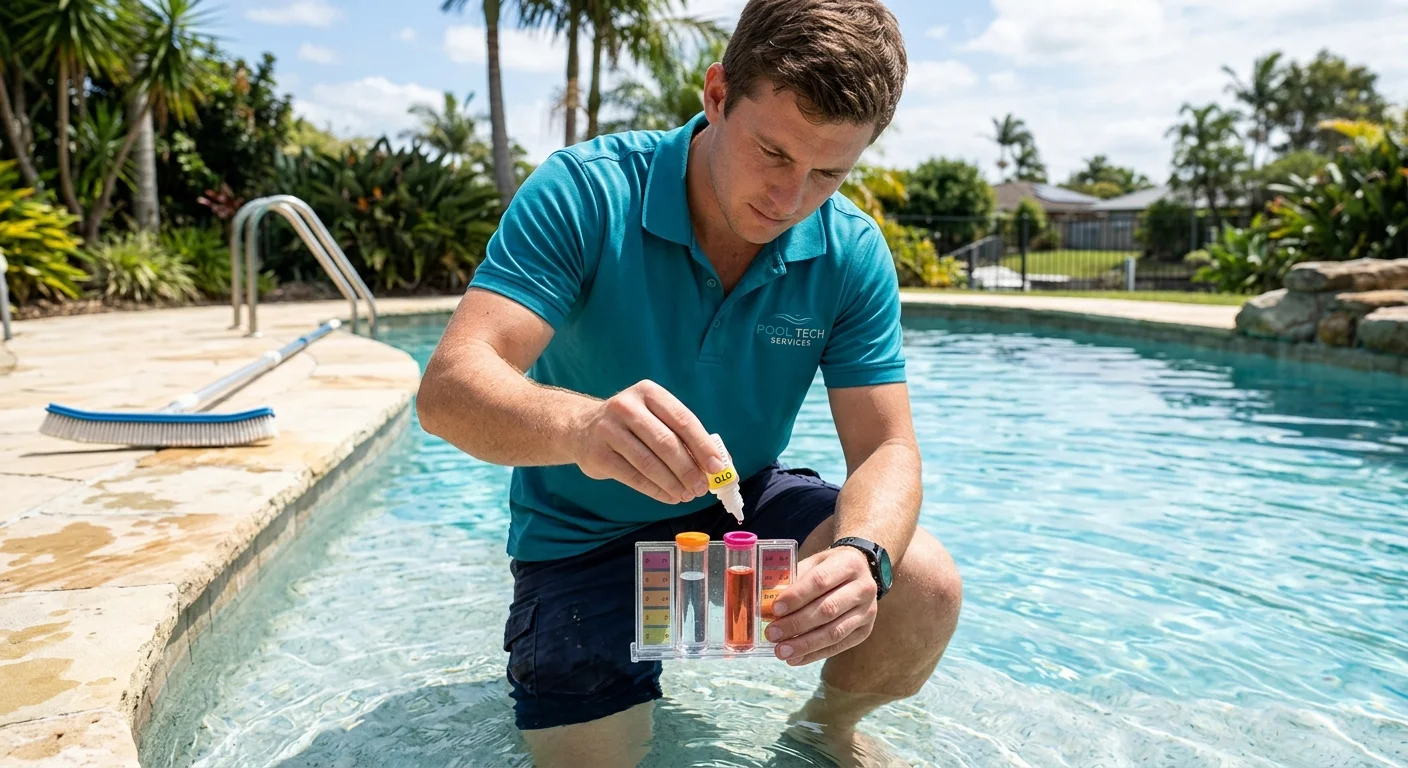
San Diego pool owners should test sanitizer and pH every few days during swim season and run a full balance panel weekly. Retest after heavy use, rain, Santa Ana wind events, or any large top-off. That rhythm catches drift before it becomes a problem.
The core readings
Each parameter tells you something different about your water. Here is what matters and why.
Sanitizer. In residential pools this means free chlorine. It is the reading that tells you whether the water is actively protected. Total chlorine adds context when you compare it against the free number.
pH. This measures acidity and alkalinity. It affects swimmer comfort, chlorine effectiveness, equipment life, and surface condition.
Total alkalinity. This is the water’s buffering capacity. It explains why pH stays stable or drifts between tests.
Calcium hardness. This tracks dissolved calcium. San Diego’s fill water is hard, so this number tends to climb over time. High calcium hardness relates to scale formation and cloudiness. Our post on hard water and San Diego pools covers why this matters locally.
Cyanuric acid. CYA shields chlorine from UV breakdown. It changes how you interpret your sanitizer reading. More on this below.
Salt. Test salt only if you run a salt chlorine generator. Match the level against your generator manufacturer’s specs. If you are considering a switch, our guide on chlorine vs. salt water pools in San Diego walks through the tradeoffs.
Temperature. This contextualizes the other readings and affects reagent instructions.
Printed target ranges are guidelines, not California law. Conditions vary by pool, finish, and climate zone.
Testing methods
Strips are fast and repeatable. They work well for trend detection. Accuracy drops with poor lighting, bad timing, wet fingers, or expired product. Read strips within the time window the product states.
Drop kits give you more sample control than strips. Fill to the line, orient bottles correctly, and count drops carefully. A rushed drop test can look precise and still be wrong.
Photometers replace visual color matching with an electronic readout. They help when two colors appear nearly identical. They still need clean cells, fresh reagents, and correct procedure. A screen display isn’t automatically accurate.
Best practices
Consistency in method and collection location matters more than the tool you pick.
- Collect your sample away from return jets and recent chemical additions.
- Store supplies per the label. Replace anything damaged or expired.
- Repeat a surprising result before making water changes.
- Confirm with a second method when results seem off.
- Log your additions and timing. A written record reveals drift versus error.
Cyanuric acid and the San Diego top-off problem
CYA enters your pool through conditioner and stabilized chlorine products. Repeated additions raise it without any visible change. Dissolved CYA persists through evaporation cycles.
This is where San Diego’s climate creates a specific issue. Pools here need frequent top-offs during dry and windy spells. A top-off replaces volume but not dissolved material. The CYA stays. Over months it can climb to a point where chlorine readings look weak even though you keep dosing.
Don’t repeatedly add chlorine to chase a low reading. Test CYA and the full balance panel first. Salt systems are still subject to this same chlorine-CYA relationship. Confirm any water-replacement recommendation before acting. A large adjustment based on one questionable reading can create new problems.
Our post on cyanuric acid running too high explains what to do when the number is already elevated.
San Diego testing rhythm
The county isn’t one climate. Coastal and inland pools behave differently.
A shaded pool in Oceanside loses less chlorine to UV than an exposed pool in El Cajon. Sunlight, heat, wind, and use patterns all vary by location. Santa Ana winds carry dust and plant debris that consume sanitizer and cloud water. Cool periods reduce swimming but leaves still enter and decompose. Warm inland weeks increase both use and evaporation.
Weather events are better testing cues than calendar dates. After a wind event, a rain, or a large top-off, retest.
Keep a log. Note the date, results, weather, water added, and products used. Track pump changes and shifts in water appearance. Check the San Diego County Water Authority fill-water reports to understand what is coming out of your hose.
If your water turns green, get confirmed readings before dosing chemicals. Guessing at a green pool usually makes it worse.
Professional lab testing
A lab test provides a second measurement system. It may include metals, phosphates, salt, and total dissolved solids. The panel varies by lab, so ask what was measured and what method was used.
Results contextualize stains, scale, cloudiness, and equipment warnings. Interpret them alongside your pool history, not in isolation.
Bring a fresh sample in a clean container. Note the collection time, location in the pool, recent products, weather, and any equipment issues. Without that context, even a detailed printout can mislead.
A lab test supplements your home testing. It doesn’t replace it. Your home log shows what happened between visits. Ask for measured results, not just product recommendations. Compare the lab numbers against your own log and equipment specs. If the methods disagree, repeat the sample before making a major change. Common causes of disagreement include old reagents, handling errors, technique differences, or a non-chemistry issue.
What a log reveals
A simple log connecting date, readings, weather, water added, and products used will show you patterns that single tests can’t. You will see whether a dropping sanitizer is a CYA problem, a circulation problem, or just heavy use. You will spot when calcium hardness is creeping toward a level that causes scale on tile and equipment. The pool maintenance service guide covers what a regular service visit typically includes alongside testing.
When to call us
If readings conflict persistently, sanitizer won’t hold despite corrections, or water keeps changing after repeated adjustments, the issue may not be chemistry alone. Circulation, filtration, and equipment problems can mimic chemical imbalance. Call us at (858) 400-4404 and we’ll connect you with a licensed local pool specialist.
Frequently asked questions
How often should I test my pool water in San Diego?
Check sanitizer and pH every few days while the pool is in use. Run a full balance panel weekly. Retest after heavy use, rain, wind events, or large top-offs.
Are test strips reliable enough on their own?
Strips work well for quick trend checks. If a result surprises you, confirm it with a second method before making any water changes.
Why does my chlorine keep dropping?
Heavy use, debris, sunlight, poor circulation, and the relationship between chlorine and cyanuric acid all affect sanitizer levels. Test your full balance before adding more product.
What should I bring for a professional water test?
Bring a fresh sample in a clean container. Note the collection time, recent products added, weather conditions, equipment changes, and any visible problems.
Need professional help in San Diego County?
Splash Pool SD connects you with a licensed specialist for any service in this post.