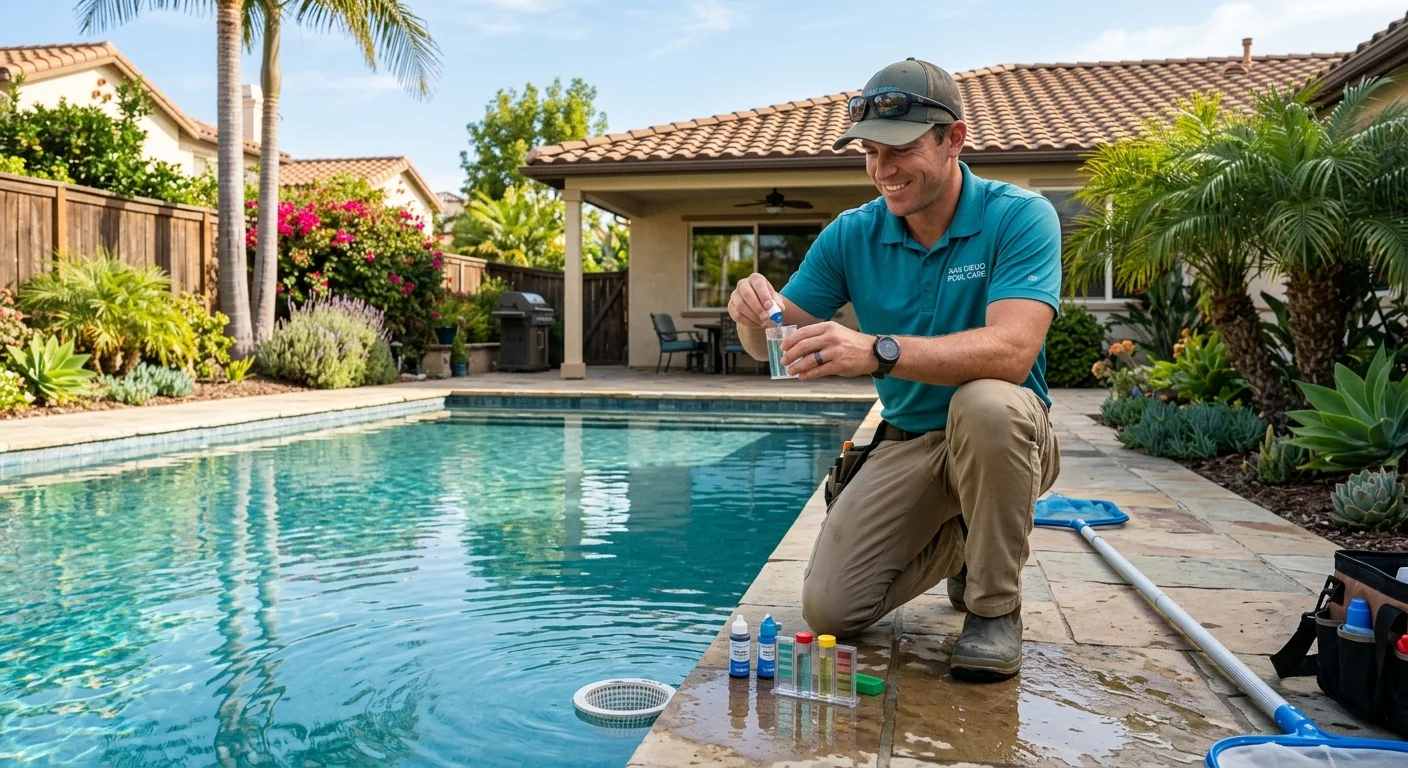
A pool maintenance service covers routine cleaning, water chemistry management, and basic equipment observation on a recurring schedule. It doesn’t cover repairs, replacements, or major recovery work. The exact scope varies by provider and by the written agreement you sign, so understanding what is and isn’t included protects you from surprises.
What a standard weekly visit includes
Most weekly maintenance visits follow a consistent sequence. The technician skims the surface with a net to remove floating leaves and debris. They empty the skimmer and pump baskets. They brush the walls, steps, benches, and waterline to prevent buildup in spots that automatic cleaners miss. Vacuuming happens weekly, on a rotating schedule, or as needed, depending on the agreement.
After the physical cleaning, the technician tests the water before adding any chemicals. Routine treatment chemicals are added per the terms of your agreement. The technician also looks for visible leaks or equipment issues during the visit.
Each completed visit should produce a record. That record might come as a door tag, an email, a text, or an entry in an online portal. These records matter. Over time they reveal repeating chemistry patterns or equipment concerns that a single visit wouldn’t show.
Windy weeks demand more debris removal. A pool that sees heavy use has different priorities than one that stays covered most of the week. A good technician adjusts effort accordingly.
Chemistry and physical cleaning are different jobs
Cleaning removes visible material: leaves, dirt, algae on surfaces. Chemistry checks address conditions you can’t see. Clear water may still need adjustment. Cloudy or dull water can have multiple causes, and brushing alone won’t fix a balance problem.
The agreement should specify which readings are tested each visit and what thresholds trigger action. If it doesn’t, ask.
San Diego County’s water supply adds a layer of complexity. The San Diego County Water Authority provides the regional supply, but hardness and mineral content vary by local provider. Never rely on a countywide hardness number alone. Check your specific water provider’s current report for fill water data. Fresh fill water affects the maintenance approach, especially after a drain and refill.
The CDC publishes healthy swimming guidance that serves as a useful owner-facing resource for understanding why chemistry matters beyond appearance.
For more on what to test and why, see our guide on pool water testing.
What is typically excluded
This is where most confusion starts. A maintenance plan, even one labeled “full service,” generally excludes:
- Pump, filter, heater, and automation repairs
- Replacement parts and equipment
- Leak detection and plumbing work
- Electrical work
- Surface repairs and resurfacing
- Major cleanup after prolonged neglect
- Severe water condition recovery
- Work requiring equipment disassembly
Green pool recovery isn’t ordinary weekly upkeep. It depends on circulation, debris load, and equipment condition. A pump failure or a clogged filter is a separate repair, not a maintenance task. If your pool has turned green, our post on green pool cleaning in San Diego explains what that process involves.
When a technician spots a problem outside the maintenance scope, they should document the issue and propose a separate diagnostic step. Repairs get quoted separately before any work begins. The written scope matters more than the plan name.
Equipment observation isn’t a diagnosis
During a routine visit, the technician performs a visual and auditory check of accessible equipment. They watch for water near visible plumbing or the pump. They listen for unusual sounds during normal operation. They note weak or irregular water movement, debris restricting baskets, a cleaner that isn’t moving as expected, or alerts on a control display.
This observation doesn’t confirm a root cause. Water near the pump may come from multiple sources. A stopped cleaner could be a simple obstruction or a mechanical fault. The technician describes what they see. They don’t diagnose.
Photos are useful when conditions change between visits. Your agreement should distinguish basic adjustments the technician can make from work that requires separate authorization.
If the technician flags something that needs a deeper look, the next step is a repair estimate from a licensed specialist. Our post on pool equipment repair estimates walks through what that process looks like.
Reading your service agreement
Start with frequency and scope definitions. “Weekly service” describes a schedule, not a complete task list. Confirm what happens during a normal visit and what triggers extra attention.
Clarify brushing and vacuuming frequency: is it every visit or as needed? Confirm whether routine chemicals are included or billed separately. Define how unusual chemical treatments are handled. Specify who empties each basket and cleaner container. Clarify whether filter cleaning is included or scheduled separately.
Confirm whether an attached spa falls under the same plan. Features that may be excluded include the spa, a water feature, a salt system, a heater, an automatic cover, and an automation controller. Don’t assume a component is covered just because it sits in the same equipment area.
San Diego County pools aren’t interchangeable. Encinitas, El Cajon, Point Loma, and Chula Vista all differ in access, landscaping, use patterns, and equipment. Your agreement must describe your actual pool, not a generic template.
Flag vague terms like “basic chemicals,” “light cleaning,” or “equipment check.” The agreement must define them. Demand exclusions in writing. Repair work and parts should be quoted separately, and that should be stated in the document.
Keep your signed agreement plus several service reports. Records let you compare what was promised against what was documented. They also give a repair specialist context when a recurring issue needs attention.
For help evaluating providers, see our guide on how to choose a pool cleaning company in San Diego.
When to call us
Leaks, equipment failure, persistent water problems, and anything requiring disassembly or a trade license fall outside routine maintenance. These situations need a licensed pool professional who can diagnose, quote, and perform the repair. Call us at (858) 400-4404 and we’ll connect you with a licensed local pool specialist.
Frequently asked questions
What does a typical weekly pool maintenance visit include?
A standard visit covers surface skimming, basket emptying, wall brushing, vacuuming, water testing, chemical adjustment, and a visual equipment check. The exact scope depends on your written service agreement.
Are pool repairs included in a maintenance plan?
No. Pump, filter, heater, and automation repairs are almost always excluded from routine maintenance. Repairs require a separate diagnostic step and a separate quote before any work begins.
Does a maintenance technician inspect my pool equipment?
Technicians perform a visual and auditory observation of accessible equipment during visits. This is not a full inspection or repair diagnosis. They flag concerns and document them, but confirming a root cause requires a separate service call.
Are chemicals included in the maintenance fee?
It depends on your agreement. Some plans include routine treatment chemicals, while others bill them separately. Your agreement should specify which readings are tested and what counts as routine versus unusual chemical treatment.
Need professional help in San Diego County?
Splash Pool SD connects you with a licensed specialist for any service in this post.