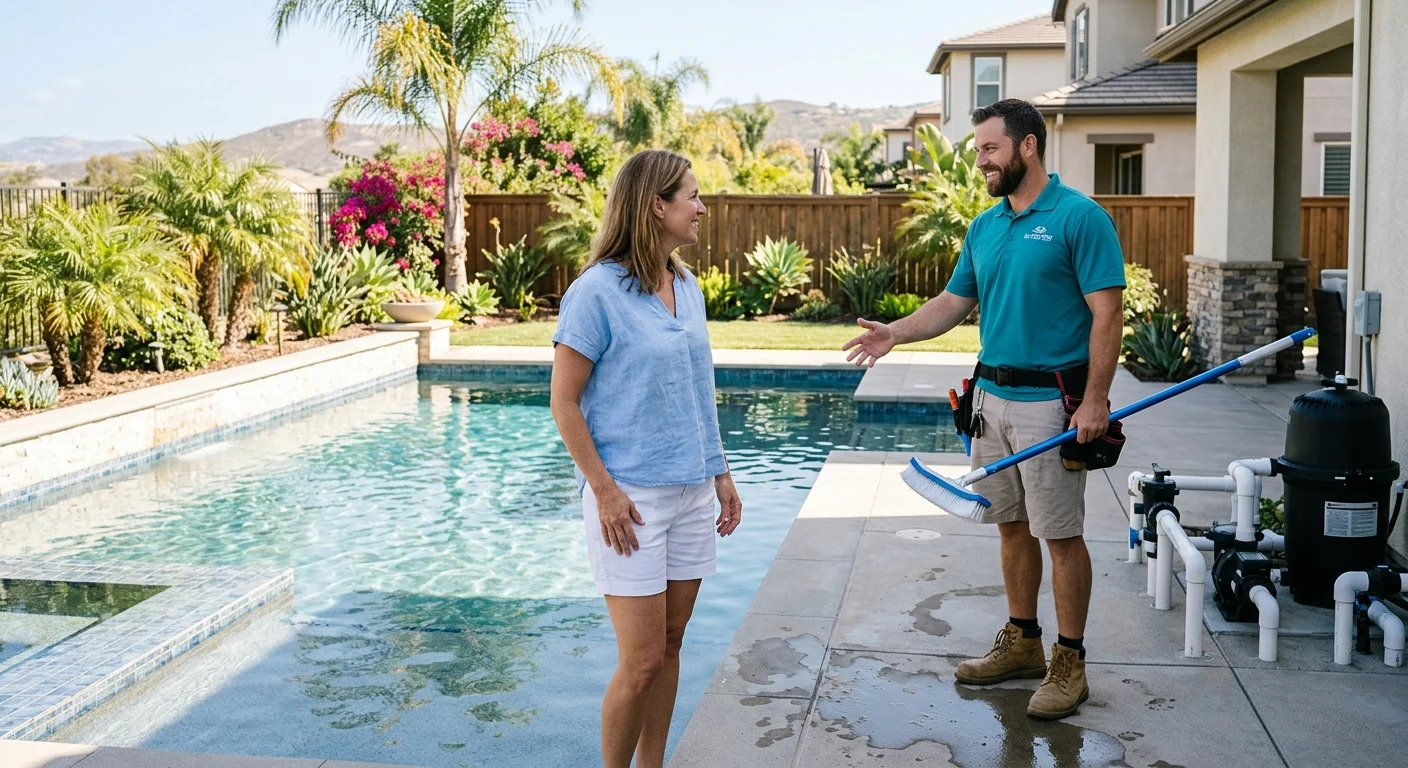
Choosing a pool cleaning company in San Diego comes down to verifying scope, confirming service area, and reading the agreement before you hand over a gate code. The county is large, the housing stock varies block by block, and not every company that answers the phone actually runs a route near your pool. Here is how to sort a real fit from a vague promise.
Cleaning and repair are different jobs
Routine cleaning typically covers skimming, brushing, emptying baskets, testing water, and adjusting chemicals. Not every company includes every task, so get the scope in writing before the first visit.
Repairs involve equipment, plumbing, wiring, or structural components. That work may require a separate business, a separate contract, and a separate license. If your cleaner notices low flow during a visit, that observation isn’t automatic approval to replace your pump. Confirm who performs the repair and whose name appears on the contract.
Cloudy or green water can exceed routine service scope. It may need extra visits, different chemicals, or equipment diagnosis. Ask whether green-water cleanup falls under your regular agreement or triggers a separate charge. Get a separate written scope for any mechanical repair before work starts.
For more on what a standard visit covers, see what’s included in pool maintenance service.
Confirm the company actually services your neighborhood
San Diego County is too large for vague coverage claims. A company may not run routes from Oceanside through San Ysidro. Confirm your address falls within their normal cleaning area during the first call.
Specify whether you are in North County, the central city, East County, or the South Bay. Name your specific community. A company that serves Carlsbad may not send a technician to El Cajon the same week. If the answer is vague, keep looking.
Access and property security
Your cleaner will likely enter the yard when nobody is home. That makes identity and communication non-negotiable.
Confirm the legal name, contact details, and billing name of the company. Know the identity of every person expected on your property. Ask whether the same person usually handles your route. If substitutes are possible, learn how they are identified.
Understand how schedule changes are communicated before you grant access. Write property instructions down rather than relying on a verbal walkthrough. Cover gate codes, pets, alarms, pool covers, and side-yard storage. Note off-limits areas explicitly.
Local details matter. A Pacific Beach alley access is different from a Chula Vista side gate or a steep El Cajon driveway. Create a separate lock code for pool access if possible. Don’t share your household alarm code unless truly required. Ask how the company stores access information and how that data is removed after cancellation.
What the agreement should contain
A solid agreement states normal-visit tasks and exclusions. “Full service” without defined tasks is a warning sign. “Chemicals included” varies in meaning between providers, so ask which products or categories are covered.
The agreement should also spell out:
- Billing dates and payment methods
- Cancellation and pause terms
- Weather interruption policy
- Gate, pet, and alarm responsibilities
- Chemical and filter-cleaning policies
- Repair authorization process
- Warranty from the actual service provider
No open-ended permission to order parts or start repairs. Set a written approval process for scope changes. Never sign with blank prices, dates, or scope fields. Keep your final copy plus any later approvals and messages.
Referral, cleaning, and repair entities may differ legally. Read names on every document carefully. Identify who receives payment and who backs each promise.
Licensing rules in California
Routine cleaning isn’t always licensed contractor work. Repair, replacement, and construction require closer scrutiny.
California’s contractor exemption changed on January 1, 2026. It is governed by Business and Professions Code section 7048. The exemption requires the aggregate price to fall below a set threshold, and the work must be casual, minor, and permit-free. Job-splitting to dodge licensing is prohibited. Advertising as a contractor voids the exemption at any price. Unlicensed contracting is a California misdemeanor absent a valid exemption.
Confirm the license before authorizing work, not after. Check the name and license number through the official CSLB lookup tool. Match the listing to the business name on the proposal. Don’t rely solely on a seller-supplied screenshot. The invoice brand may differ from the repair contractor, so clarify roles.
For a step-by-step walkthrough, read how to check a pool contractor license in California.
Three questions before approving any repair
- What business will contract for the work?
- What license applies to the proposed repair?
- Will the repair appear on a separate written agreement?
If the answers are unclear, pause. You aren’t obligated to approve work on the spot.
First-call questions that save time
Start with your neighborhood and pool type. Describe current concerns without self-diagnosing. Then ask:
- Is my address inside your regular route?
- What tasks happen each scheduled visit?
- Which tasks cost extra or need separate approval?
- Who supplies routine chemicals?
- How are water readings and service notes recorded?
- What happens when the pool turns cloudy or green?
- Who handles equipment problems found during cleaning?
- What business name appears on invoices?
- How are substitute workers identified?
- How are gate codes, pets, and alarms handled?
- What are the cancellation and billing terms?
- Can I review the agreement before providing access?
Listen for specifics, not vague sales language. A useful answer names the task, the responsible party, and the approval process. Mention site conditions like locked equipment, parking limits, covers, dogs, stairs, or shared access. State your communication expectations for visits, readings, and recommendations. Get those expectations into the written agreement.
Request current liability proof that matches the business name on the agreement. Don’t rely on a logo or verbal assurance alone. Ask which water readings are recorded each visit and how unusual readings are reported. CDC healthy swimming guidance is a useful reference point for that conversation.
Red flags to watch for
- “Full service” with no task list
- No exclusions defined
- No repair authorization process
- Missing cancellation or pause terms
- No mention of gate, pet, or alarm responsibilities
- Blank fields on the agreement
- A company that can’t tell you which entity backs the warranty
If you see more than one of these, walk away. For more on evaluating a repair pro specifically, see how to choose a pool repair pro in San Diego.
When to call us
If your pool needs more than routine cleaning, if equipment is failing, or if a repair recommendation came without a clear license and contract, that is the moment to bring in a verified professional. Call us at (858) 400-4404 and we’ll connect you with a licensed local pool specialist.
Frequently asked questions
Does a pool cleaning company need a contractor license in California?
Routine cleaning does not always require a contractor license. However, any repair, replacement, or construction work does. Check the CSLB lookup tool before authorizing regulated work.
What should a pool cleaning agreement include?
It should list every task performed each visit, exclusions, access rules, billing terms, cancellation process, chemical policy, and the approval method for any scope change.
Can the same company handle both cleaning and repair?
Possibly, but confirm which legal entity contracts each repair and verify the applicable contractor license before approving regulated work.
How do I compare pool cleaning quotes in San Diego?
Compare written scope, visit expectations, included supplies, communication process, exclusions, and repair authorization terms. A lower quote may cover fewer tasks.
Need professional help in San Diego County?
Splash Pool SD connects you with a licensed specialist for any service in this post.