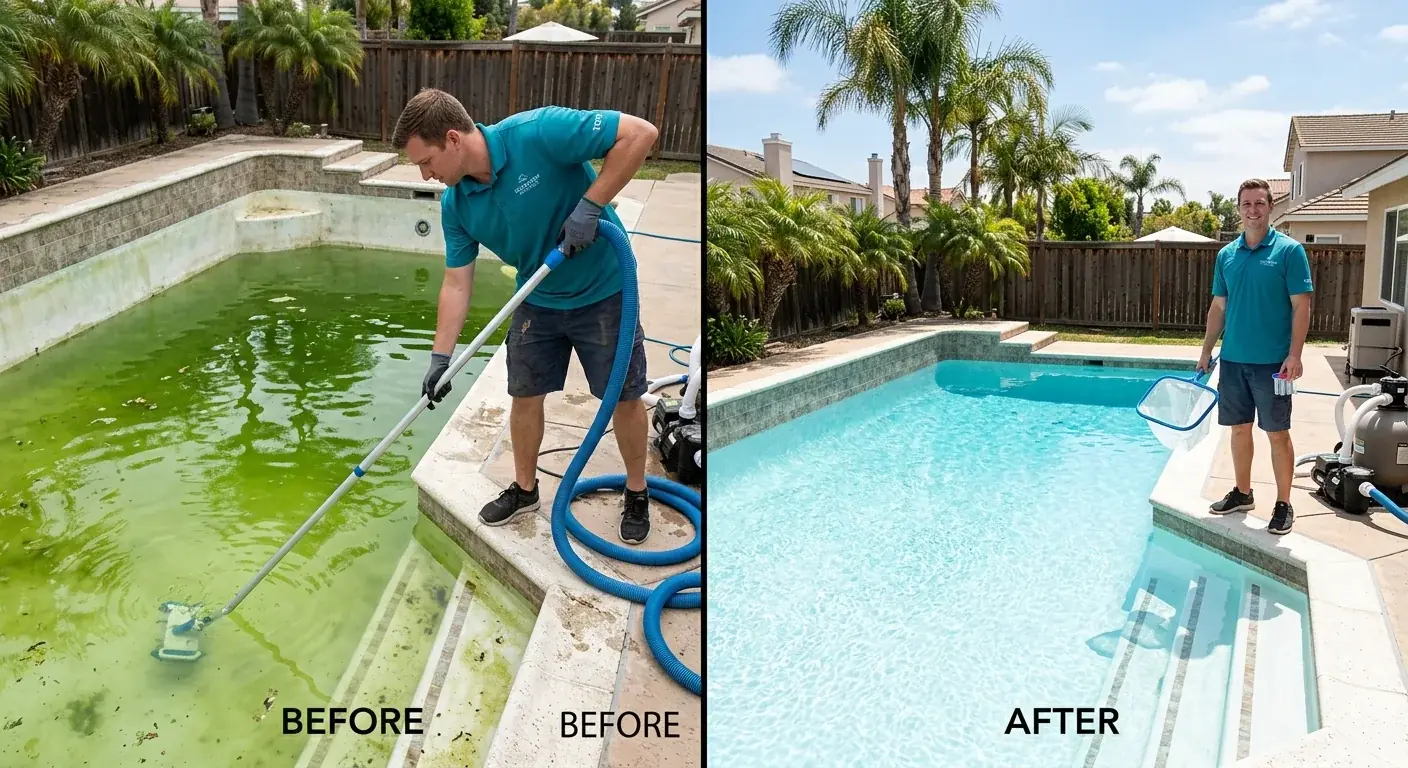
A green pool in San Diego can go from swamp to swim-ready in about three days. The process involves a heavy shock treatment, continuous filtration, brushing, rebalancing, and a final vacuum-to-waste pass. A licensed pool pro handles each step, scaling chemical doses to your pool’s size and the severity of the bloom. Here’s how the recovery breaks down, day by day.
Why San Diego pools go green fast
San Diego’s climate is nearly perfect for algae. Abundant sunshine and warm temperatures year-round mean algae can bloom at any season, not just summer. When chlorine drops, even briefly, the combination of sunlight and warm water triggers rapid growth.
Common contributors include low chlorine levels, poor circulation, a clogged or malfunctioning filter, and infrequent cleaning. Heavy bather load, rainfall that washes contaminants into the water, and organic debris like leaves and pollen all feed the problem. Phosphates in the water act as fertilizer for algae colonies.
Coastal areas from La Jolla to Carlsbad deal with salt air that can corrode equipment over time, reducing filtration efficiency. Inland areas like El Cajon and Santee see higher temperatures that accelerate evaporation and chemical loss. Both conditions set the stage for a green pool if maintenance slips.
Day 1: shock, filter, brush
The first visit starts with an on-site assessment. The pro tests the water to gauge how severe the bloom is, then applies a heavy shock treatment. Professional-grade algaecides and high-dose chlorine kill the living algae. The dose is scaled to your pool’s size and how green the water is.
After shocking, the water typically turns a cloudy blue-gray. That color change means the algae is dying. The filtration system gets inspected at the same time. The filter is cleaned so it runs at peak efficiency, and the pump runs continuously for 12 to 24 hours. That constant circulation distributes the chemicals evenly and pulls dead algae out of the water.
While the pump runs, the pro brushes the walls, floor, and steps thoroughly. Brushing dislodges algae that clings to surfaces, exposing it to the sanitizer so it dies completely.
For more on the shocking process itself, see our guide on how to shock a pool.
Day 2: assess and rebalance
The second visit is about measuring progress and correcting chemistry. The pro re-tests chlorine, pH, alkalinity, and other key levels. The water is likely still cloudy but visibly improved from day one.
Dense blooms may need a second shock, though it’s less intense than the first. pH, alkalinity, and calcium hardness are all adjusted toward balance. Balanced water ensures chlorine works efficiently, prevents future outbreaks, and protects your pool equipment from damage.
Filter pressure gets monitored closely. The pro may backwash or clean the filter again if pressure has climbed from the debris load. By the end of day two, the water clears significantly.
San Diego’s hard water adds a wrinkle here. High calcium hardness is common in the region, and if it’s already elevated, the pro accounts for that during rebalancing. You can read more about how local water chemistry affects pools in our piece on hard water and San Diego pools.
Day 3: vacuum, clarify, final test
By the third day, dead algae has settled on the pool floor. The pro uses a vacuum-to-waste procedure, which bypasses the filter and sends that debris-laden water directly out. This prevents the filter from clogging under the heavy load.
After vacuuming, a professional-grade clarifier goes in. The clarifier clumps any remaining microscopic particles together so they’re large enough for the filter to catch. A final water test follows, with chlorine and pH adjusted one last time if needed.
At the end of day three, the pool is crystal clear. The pro walks you through maintenance tips to keep it that way.
If you’re curious about the full range of algae types and what each requires, our pool algae types and treatment guide covers the differences.
Post-recovery staining
A pool that stayed green for a long time often develops brown stains on the plaster surface once the algae is gone. These stains are organic in nature. Strong shock and vigorous brushing usually lift them, though additional stain removal treatment may be needed for stubborn spots.
What affects the quote
No two green pools are identical, and the cleanup cost reflects that. Here’s what moves the number:
- Pool size: larger volumes need more chemicals and more time.
- Bloom severity: a light green tint recovers faster than a dark, opaque swamp.
- Algae type: black algae is more stubborn than green algae and requires more aggressive treatment.
- Equipment condition: if the filter needs a deep clean or replacement, that adds to the scope.
- Chemical treatments needed: the specific products and doses depend on what the water test shows.
A licensed pro provides a quote after the initial on-site assessment and walks you through the plan before any work starts.
Keeping it from happening again
The three pillars of prevention are consistent weekly cleaning, proper chemical balance, and a filtration system running at peak performance. A routine maintenance plan covers all three. If your pool has a history of going green, that’s a sign the current routine needs adjustment, not just a one-time fix.
Our post on how long it takes to clear a green pool goes deeper on timeline expectations based on severity.
When to call us
A green pool means your sanitizer has failed and pathogens are present. DIY shock treatments can work for very mild cases, but dense blooms, black algae, or equipment problems need a licensed professional who can assess, dose, and recover the water safely. Call us at (858) 400-4404 and we’ll connect you with a licensed local pool specialist.
Frequently asked questions
How long does it take to clear a green pool in San Diego?
Most green pools are swim-ready within three days when a licensed pro handles the recovery. Severity of the bloom can shift that timeline slightly.
Is it safe to swim in a green pool?
No. Green water means the sanitizer has failed, and bacteria and pathogens are present along with the algae. Exposure can cause skin rashes and ear infections.
What makes San Diego pools turn green faster than other climates?
Year-round warm temperatures and abundant sunshine create ideal conditions for algae. Low chlorine, poor circulation, and infrequent cleaning accelerate the process.
What determines the cost of green pool cleanup?
Pool size, bloom severity, algae type, and the condition of your existing equipment all factor in. A licensed pro provides a quote after an on-site assessment.
How do I keep my pool from turning green again?
Consistent weekly cleaning, proper chemical balance, and a filtration system running at peak performance are the three pillars of prevention.
Need professional help in San Diego County?
Splash Pool SD connects you with a licensed specialist for any service in this post.