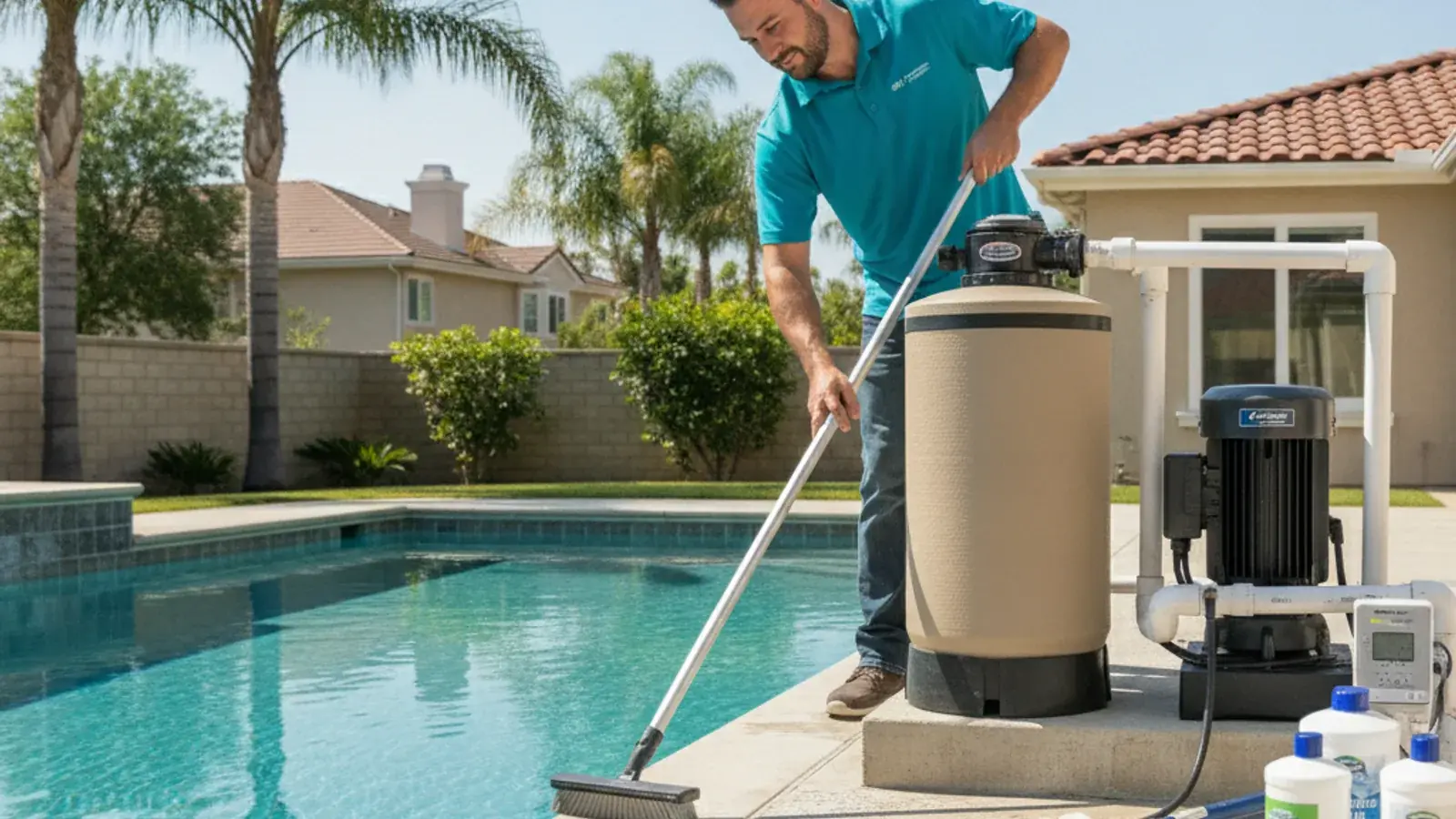
Both chlorine pools and salt water pools sanitize with chlorine. The difference is how that chlorine gets into the water. A traditional chlorine pool relies on manual dosing: liquid, tablets, or granular shock added by hand or through a feeder. A salt water pool uses a generator that converts dissolved salt into chlorine through electrolysis. The salt system is essentially a chlorine factory built into your equipment pad.
A common misconception is that salt pools are chlorine-free. They aren’t. The water still contains chlorine, just produced continuously on site rather than added in batches. If you have a true chlorine allergy, switching to salt doesn’t solve that problem.
How each system works day to day
With a chlorine pool, you or your service tech add sanitizer on a schedule. Dosing causes concentration spikes right after application, then levels taper off until the next dose. That cycle of highs and lows is normal for manual systems.
A salt generator produces chlorine at a steady rate whenever the pump runs. The result is a more consistent chlorine level with fewer spikes. Many swimmers notice the difference: salt water feels softer on skin and eyes, and people with sensitive skin often prefer it.
What San Diego adds to the decision
This county’s water supply is mineral-heavy. That hardness raises the risk of calcium scaling on salt cell plates, which reduces chlorine output and shortens cell life. If you run a salt system here, you need to check calcium hardness more often than pool owners in soft-water regions. Our post on hard water and San Diego pools covers what that looks like in practice.
Salt air along the coast is a separate factor. Coastal homes in areas like Encinitas, La Jolla, and Imperial Beach already deal with salt exposure on metal surfaces. Adding a salt chlorinator to that environment means corrosion risk on ladders, handrails, and heater components is higher than it would be inland.
Most of San Diego’s pool stock was built between the 1970s and the 1990s. Original fixtures from that era were never rated for salt water exposure. If you convert without swapping them, expect pitting and corrosion.
Conversion planning
If you are considering a switch, start with your pool’s age, surface condition, and equipment state. A newer pool with a fresh surface is a strong salt candidate. An older pool with original plaster and metal fixtures is better served staying on chlorine until a renovation addresses those components.
Angi’s salt pool conversion cost guide gives a general US planning range of about $1,000 to $2,500 for an in-ground conversion. That is a national planning figure, not a local rate. Your actual quote depends on pool size, surface material, equipment compatibility, and whether any hardware needs upgrading. The pro you are matched with will quote before any work starts.
A conversion quote should include the generator unit, initial salt, and labor. Confirm that your existing pump is compatible with the cell. Ask whether a new filter or pump is included if needed. Extra equipment raises the quote. Pool size determines which generator you need, and a specialist should walk your equipment pad before giving a firm number.
If your surface is aging, resurfacing is a separate project with its own quote. Photograph your finish before requesting numbers, describe any visible issues, and ask for written product care and warranty information. Our guide on pool resurfacing options walks through the choices.
Operating costs
Don’t assume either system is inherently cheaper. Compare chemical purchases, electricity use, and maintenance time. A salt cell is a replacement expense that a chlorine setup doesn’t carry. Cell lifespan depends on chemistry balance, scale buildup, daily run hours, and bather load.
Request written warranty terms from your contractor on any cell they install. If output drops, a pro can test whether cleaning restores it or replacement is needed. Our post on salt cell replacement in San Diego covers what that process looks like.
Repair patterns by system
Salt systems tend to see cell failure, control board issues, and metal corrosion. Chlorine systems see feeder problems, automation controller glitches, and plumbing scale. Pumps, filters, and heaters are shared by both and fail at similar rates regardless of sanitizing method.
In San Diego, the most common salt system call is cell output loss. Usually that is calcium scaling on the plates, not mechanical wear. An acid wash or cleaning often restores output without a replacement. If you see white crust on your tile line, our post on calcium on pool tile explains why it happens here.
Spas and water features
An attached spa typically shares the pool’s sanitizing system, so a salt conversion covers both. Be aware that heat cycling combined with salt wears cells faster than pool-only use. A separate spa or fountain needs its own decision about sanitizing method.
A simple decision framework
Start with three questions: how old is the pool, what shape is the surface in, and what condition is the equipment pad in?
- Newer pool, fresh surface, compatible equipment: strong salt candidate.
- Older pool, original fixtures, aging plaster: stay on chlorine for now.
- Planning a renovation anyway: convert during that project so the surface and hardware are addressed together.
A technician should inspect your pad and surface before you commit either way. If you want a deeper look at what a conversion costs locally, our post on salt water conversion cost in San Diego breaks down the factors that move the number.
Neither system is universally superior. The right choice depends on your specific pool, your water chemistry, and how much balancing effort you want to handle. If you want help weighing the options for your setup, our salt water conversion service page explains what the matched pros handle.
When to call us
If your pool’s surface is aging, your fixtures are original, or you are unsure whether your equipment pad can support a generator, a licensed pool professional needs to inspect before you commit. The wrong conversion on the wrong pool creates corrosion and scaling problems that cost more to fix than the conversion itself.
Call us at (858) 400-4404 and we’ll connect you with a licensed local pool specialist.
Frequently asked questions
Does a salt water pool still have chlorine in it?
Yes. A salt chlorine generator uses electrolysis to convert dissolved salt into chlorine. The water still contains chlorine, just produced on site rather than added by hand. If you have a true chlorine allergy or sensitivity, a salt system does not remove that concern.
Can I convert my existing pool to salt water?
Most gunite and vinyl-liner pools can be converted by adding a salt cell and control box to the existing equipment pad. However, older metal fixtures, damaged plaster, or unfinished pebble surfaces need evaluation first. A licensed pro should inspect your pad and surface before giving a written assessment.
How does San Diego's hard water affect a salt pool?
San Diego's water supply is mineral-heavy, which raises the risk of calcium scaling on salt cell plates. Buildup reduces chlorine output and shortens cell life. If you run a salt system here, check calcium hardness more often than pool owners in soft-water regions.
How long does a salt cell last?
Cell plates wear over time and output drops. Bather load, calcium hardness, scale buildup, and daily run hours all affect how fast that happens. A pro can test output and tell you whether cleaning, replacement, or further inspection makes sense. Always request written warranty terms on a replacement cell.
Is a salt pool cheaper to run than a chlorine pool?
Not automatically. You save on purchasing chlorine, but a salt cell is a replacement expense that a chlorine setup does not have. Wear speed depends on chemistry balance, scale, run hours, and bather load. Compare your chemical purchases, electricity use, and maintenance time before assuming one system costs less.
Need professional help in San Diego County?
Splash Pool SD connects you with a licensed specialist for any service in this post.