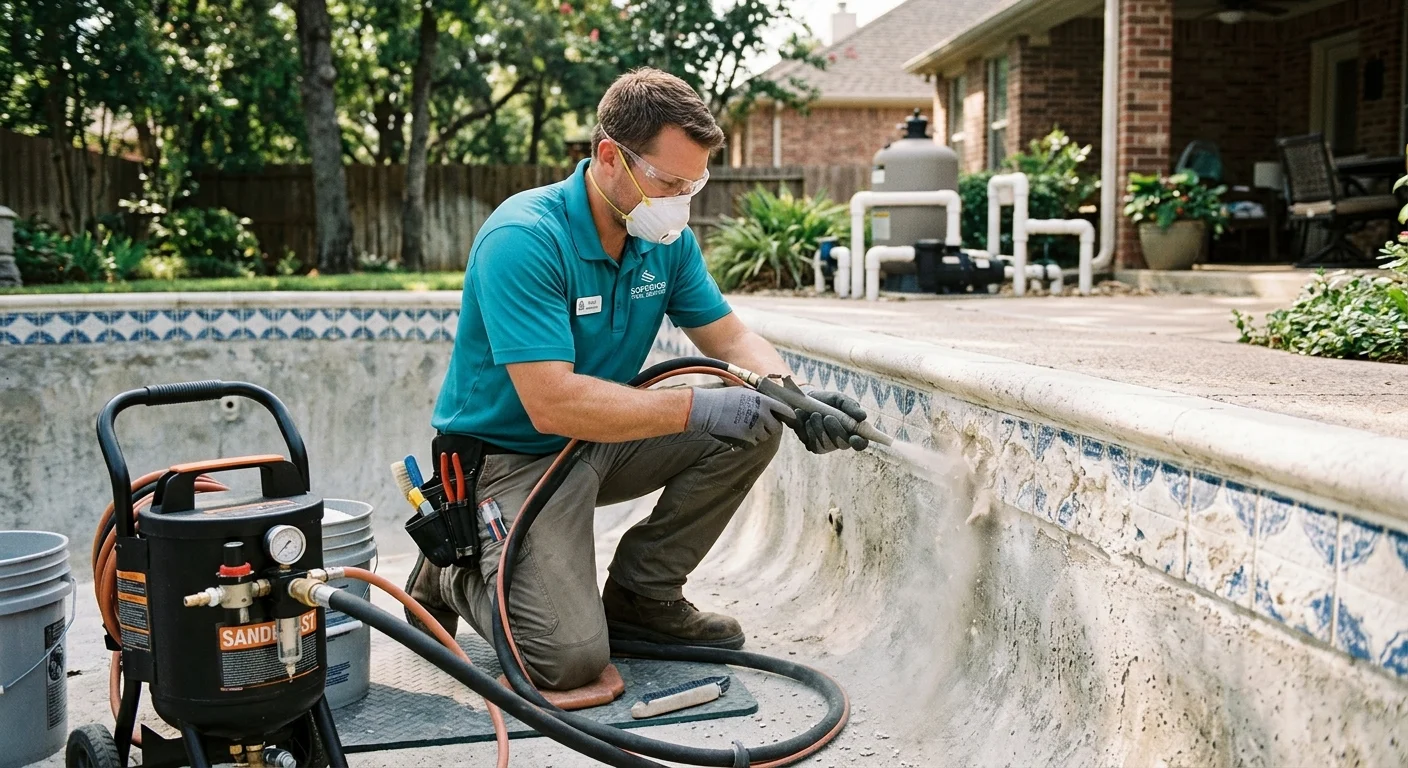
Calcium scale forms when dissolved minerals in your pool water deposit onto tile at the waterline. In Spring Valley, inland heat and evaporation cycles make this a common problem. The white or gray crust you see isn’t surface dirt. It is a bonded mineral layer that brushing won’t remove. A licensed pool pro can identify the deposit type, choose the right removal method, and help you keep it from returning.
Two kinds of scale look different but overlap
Carbonate scale is white, chalky, and forms ridges along the waterline. Thin carbonate deposits sometimes respond to chemical treatment. Thick carbonate usually requires mechanical removal.
Silicate scale is harder, gray-white, and rougher to the touch. It overlaps visually with old scale, stained grout, and embedded dirt. Color alone can’t confirm which type you have.
A proper inspection starts with a small test area on the tile. The pro assesses deposit texture, tile glaze, and grout condition. A pool-water test adds clues but doesn’t replace a surface inspection. Ask your cleaner to name the likely deposit before they recommend a method. Photo-only diagnosis always requires on-site confirmation before treatment begins.
Why your pool brush isn’t working
Established scale bonds to the tile surface. It isn’t sitting loosely on top. Nylon bristles remove dirt caught in the layer but leave the scale itself untouched. Pressing harder yields no meaningful change at the tile line.
Aggressive scrubbing creates other problems. It can hide stained grout, damage glaze, or roughen stone surfaces. The wrong abrasive may alter your tile finish before the deposit moves at all. Pumice, for example, is safe on some ceramic but can damage glass tile, decorative glaze, or natural stone.
Chemical cleaners must match both the deposit type and the surrounding materials. A small test area shows whether the product releases scale evenly without harming the finish.
Bead blasting: controlled but not universal
Bead blasting uses fine media under controlled pressure to strip scale from tile. A specialist adjusts media type, pressure, angle, and distance based on the specific surface. Glazed ceramic and some porcelain are common candidates.
The word “bead” doesn’t guarantee a gentle result. Media selection and operator control are what matter. Glass tile needs closer evaluation before blasting. Decorative finishes, painted details, and natural stone may need an alternate method entirely. Age, previous repairs, weakened grout, and worn finish all change the plan.
Before blasting, the water level drops below the working area. Nearby surfaces and openings need protection from removed material. Residue must be cleared before normal operation resumes. Ask about containment of spent media around decks, landscaping, and neighboring properties.
A test patch must show clean tile without a dull spot or grout damage before the pro continues. The joint above the tile, at the coping edge, also deserves attention. A separated or deteriorated edge can admit water after cleaning.
What cleaning can reveal underneath
Scale removal sometimes exposes problems that were hidden. Cracked grout, loose tile, and deteriorated finish below the waterline are common findings. These conditions aren’t fixed by scale removal. They may indicate a need for resurfacing or replastering.
Missing grout, hollow-sounding tile, and movement near the coping point beyond routine cleaning. If your pro finds these issues during a tile cleaning, ask whether a broader inspection is warranted. Our guide on pool tile repair in San Diego covers what comes next.
Prevention starts with water chemistry
Cleaning resets the surface but not the underlying water condition. Scale forms when dissolved minerals leave the water and deposit onto surfaces. Contributing factors include pH, total alkalinity, calcium hardness, and temperature. These factors interact, so one test result rarely tells the whole story.
After cleaning, test and record your results as a baseline. Follow guidance specific to your pool’s finish, sanitizer type, and installed equipment. Scale-control products can support your routine but don’t replace testing and balance correction. Don’t add treatment solely because tile looks white.
Evaporation leaves dissolved material behind, and each refill adds more minerals. This cycle is the engine that drives scale formation. Our post on hard water and San Diego pools explains the regional picture in more detail.
Spring Valley isn’t the coast
Spring Valley sits inland from San Diego’s coastal neighborhoods. That changes evaporation rates, refill frequency, and the mineral load your pool accumulates between fills. Advice written for a pool in Pacific Beach may not match what your tile experiences here.
Shade, wind, covers, temperature swings, and refill water all affect how quickly deposits build. No single confirmed hardness figure applies to every Spring Valley address. Check the water-quality report from the provider listed on your utility bill. The San Diego County Water Authority also offers regional water information.
After cleaning, record any returning deposits along with their location and your test results. This helps separate a broad chemistry problem from a localized surface issue. Our guide on what to test in your pool water walks through the key readings.
The waterline as a diagnostic tool
A consistent mineral band at the waterline shows repeated wetting, drying, and evaporation. Heavier patches may reflect splash patterns, flow direction, shade, or surface texture. White material may be scale. Darker material may be dirt, organic growth, metals, or stained grout. Multiple conditions can appear together on the same tile run.
This is why a visual estimate from a photo is unreliable. The pro needs to see and touch the surface to separate one problem from another.
Choosing a pro for the job
Confirm any contractor’s status through the CSLB license lookup before work begins. Splash Pool SD connects homeowners with licensed independent pool pros. The matched specialist performs the inspection and all physical work. We don’t perform work ourselves.
Our post on how to check a pool contractor’s license in California explains what to look for. You can also read about pool tile cleaning costs in San Diego to understand what drives pricing: pool size, tile material, deposit severity, access, and equipment used. Your matched pro quotes before any work starts.
When to call us
If scale resists routine brushing, if your tile looks fragile, or if buildup returns soon after cleaning, the situation calls for a licensed professional. Call us at (858) 400-4404 and we’ll connect you with a licensed local pool specialist.
Frequently asked questions
What is the white crust forming on my pool tile?
It is most likely calcium scale, either carbonate or silicate. Carbonate scale appears white and chalky with ridges at the waterline. Silicate scale is harder, gray-white, and rougher. Color alone cannot confirm the type, so a pro should inspect a small test area before recommending treatment.
Will a pool brush remove calcium scale from tile?
No. Once scale bonds to tile, nylon bristles only remove loose dirt caught in the layer. More pressure does not produce a meaningful change. Aggressive scrubbing can also damage grout, glaze, or stone surfaces without moving the deposit.
Is bead blasting safe for every pool tile?
No. Glazed ceramic and some porcelain are common candidates, but glass tile, decorative finishes, painted details, and natural stone may need an alternate method. A specialist adjusts media, pressure, angle, and distance per surface and always tests a small patch first.
How do I stop calcium scale from coming back after cleaning?
Cleaning resets the surface but not the water condition. Test and record pH, total alkalinity, and calcium hardness after cleaning as a baseline. Follow guidance for your pool's finish and sanitizer. Scale-control products support but do not replace proper balance correction.
Does Spring Valley water cause more scale than coastal areas?
Spring Valley sits inland, so evaporation and refill patterns differ from coastal neighborhoods like Pacific Beach. No single hardness figure applies to every Spring Valley address. Check the water-quality report from the provider listed on your utility bill for current data.
Need professional help in San Diego County?
Splash Pool SD connects you with a licensed specialist for any service in this post.