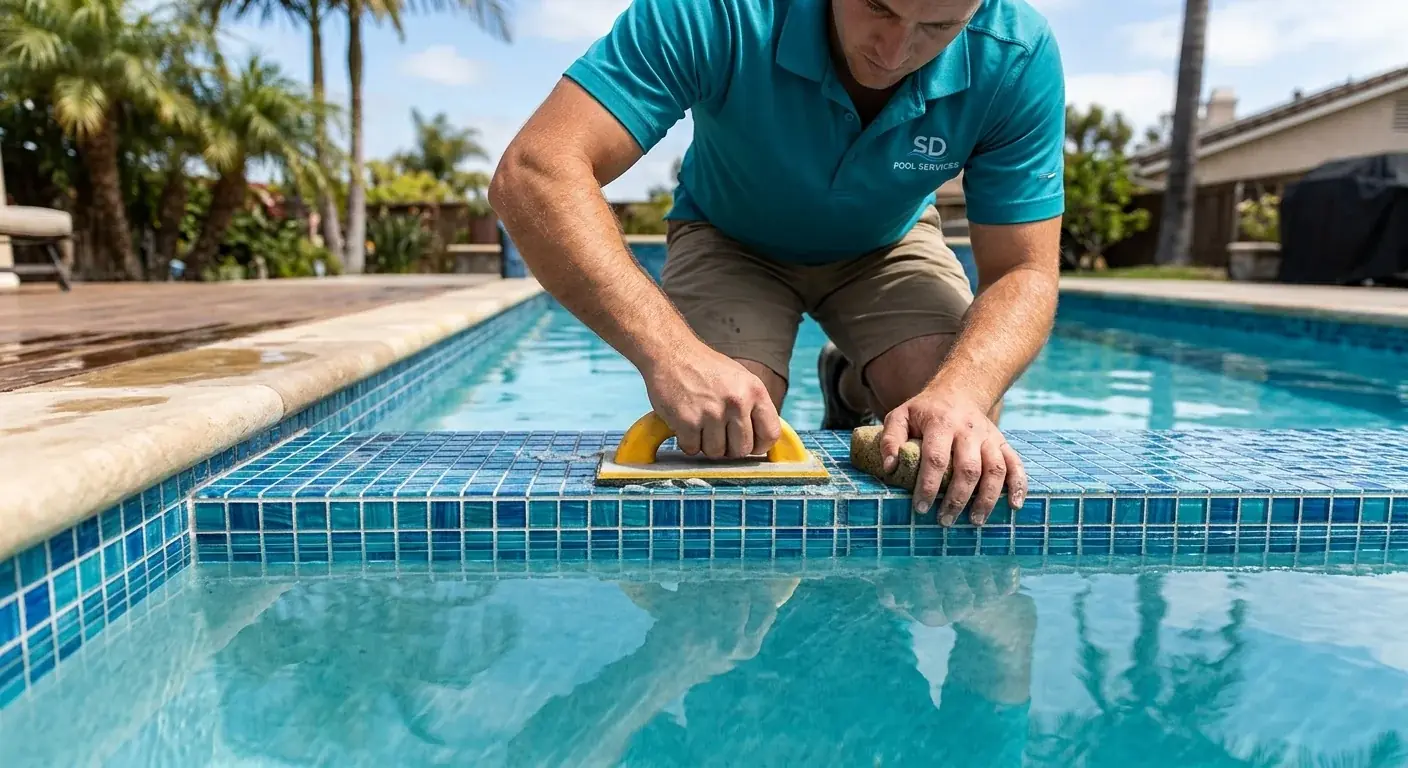
A loose, popped, or cracked tile at your pool’s waterline is a repair job. A white crust on tile that is still firmly bonded is calcium scale, and that is a cleaning job. Knowing the difference saves you from paying for the wrong service. Splash Pool SD connects you with licensed local specialists who handle tile repair across San Diego County.
How to tell repair from scale
Tap the tile gently with the plastic handle of a screwdriver. A sharp click means the tile is still bonded to the setting bed. A dull thud means there is a void behind it, and that tile is a candidate for reset or replacement. If a thick mineral crust covers the waterline, don’t scrape it off yet. Aggressive acid on a loose tile can stain the plaster behind it. Start with a small inspection area and let a pro identify what is underneath.
You can read more about scale buildup and removal in our post on calcium on pool tile in San Diego.
Why tile fails in San Diego
Freeze-thaw cycles aren’t the driver here. Hard freezes are rare in the county. The real causes are local:
- Plaster and gunite shift with heat and moisture over time.
- A poorly compacted setting bed fails years after the original install.
- Draining a pool for a remodel dries out grout and stresses the bond.
- Salt chlorine systems degrade grout and metal trim at the waterline.
- Coastal salt air also attacks grout and metal trim.
- An open mastic joint at the coping lets water travel behind the tile.
If you see a visible gap between the coping and the deck, check the mastic first. Tile repair alone leaves the same water path open, and the problem comes back. Our post on pool mastic replacement in San Diego covers that joint in detail.
Coastal vs. inland patterns
San Diego County isn’t one climate. Coastal pools in La Jolla, Pacific Beach, and Imperial Beach tend to show grout erosion and metal staining first. Thick scale crust is less common near the ocean.
Inland pools in El Cajon, Santee, and Spring Valley deal with harder water. Mineral crust can hide failed grout underneath, and loose tile is often discovered only after a cleaning. If your pool is inland, the hard water and San Diego pools post explains why scale builds faster there.
Underwater vs. dry work
Tile below the waterline is a wet job. The area needs to be isolated, and the adhesive must hold up in chlorinated water. Lowering the water level exposes the waterline for a dry inspection, but that is a separate decision. Ask the specialist before draining.
A single popped tile on a sound bed is a straightforward reset. A hollow-sounding run along the waterline points to setting bed failure, which is a bigger scope. Missing tiles require a match or a planned accent swap if the original tile is off the market.
What to document before you call
Photograph the failed tiles up close, take a wide shot of the full waterline, and note which tiles sound hollow when tapped. Record your neighborhood, because coastal and inland pools get different inspection approaches. If you have leftover original tile stored in the garage, mention it. Tile matching is often the hardest part of the quote.
For help vetting the pro who shows up, see our guide on choosing a pool repair pro in San Diego. You can also browse our full pool repair service page for the range of work the network covers.
When to call us
If tile is loose, cracked, or missing, or if a hollow sound spreads along the waterline, that is a job for a licensed pool specialist. The matched pro inspects the bed, checks tile availability, and gives you a written quote before any work starts. Call us at (858) 400-4404 and we’ll connect you with a licensed local pool specialist.
Frequently asked questions
How do I tell if my pool tile needs repair or just cleaning?
Tap the tile with a plastic handle. A sharp click means the tile is still bonded and the white ring is likely calcium scale, which is a cleaning job. A dull thud means there is a void behind the tile, and that is a repair. If you see a thick crust, do not scrape until a pro identifies what is underneath.
Why does pool tile pop off in San Diego?
Freeze-thaw is not the cause here. The common drivers are failed grout, a poorly compacted original setting bed, plaster and gunite movement from heat and moisture, salt systems degrading grout at the waterline, and open mastic joints at the coping that let water behind the tile.
Can I reset a loose pool tile myself?
A single loose tile on a dry, above-water surface might seem manageable, but the adhesive must hold up in chlorinated water. Underwater tile, hollow-sounding runs, and wet niches are pro jobs. A licensed specialist matches tile, grout, and setting material to your existing finish.
What affects the cost of pool tile repair?
The count of affected tiles, the condition of the setting bed, whether the tile is above or below the waterline, and tile availability all move the price. The matched licensed specialist prices the job after an on-site inspection. No reliable flat-rate band exists for tile repair alone.
Can a bad mastic joint cause tile to pop?
Yes. An open gap between the coping and the deck lets water travel behind the waterline tile. Repairing the tile without replacing the mastic leaves the same leak path open, so the problem returns. If you see a visible gap at the coping, mention it when you call.
Need professional help in San Diego County?
Splash Pool SD connects you with a licensed specialist for any service in this post.