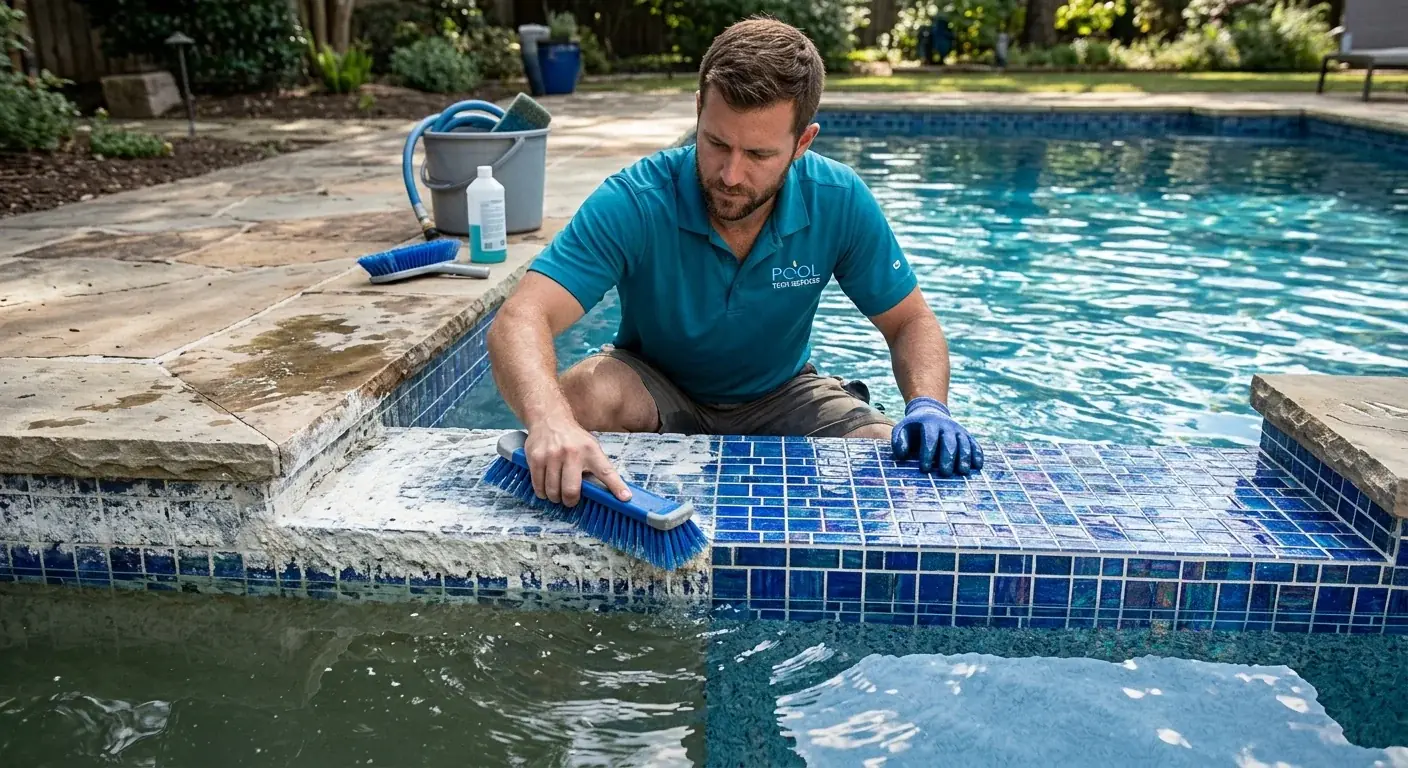
Bead blasting pool tile in San Diego usually lands at $4 to $7 per linear foot, or about $400 to $800 for a full waterline. That range covers everything from a thin seasonal film to thick, multi-year calcium scale. The exact number depends on how much buildup sits on your tile, what the tile is made of, and how many linear feet of waterline the pro needs to cover.
What moves the price
Pool tile cleaning is priced per linear foot, not per pool. A small rectangle pool around 10 by 20 feet has roughly 60 linear feet of waterline. A medium pool at 15 by 30 feet pushes closer to 90 linear feet. A large pool at 20 by 40 feet reaches about 120 linear feet. More footage means more time and media, so the total climbs.
Here is a breakdown of typical costs you can expect:
- Light to moderate calcium buildup: For pools with a relatively thin or new calcium line, you will likely pay on the lower end, around $4.00 to $5.50 per linear foot.
- Heavy or stubborn buildup: If your tiles have a thick, multi-layered calcium scale that has been accumulating for years, the cost leans toward $5.50 to $7.00 or more per linear foot.
Beyond severity, a few other factors shape the final quote:
- Tile material. Ceramic, porcelain, and natural stone all respond differently to media and pressure. Some materials need a gentler touch, which can affect time on site.
- Pool shape. Complex shapes with curves, angles, or attached spas add labor. The blasting head has to follow every contour.
- Access. Tight equipment areas or pools set below grade can slow the job down.
- Minimum service charge. Smaller jobs may carry a minimum fee that brings the per-foot math up.
The pro you are matched with through Splash Pool SD will measure your waterline, assess the tile, and give you a written quote before any work starts. No work begins until you approve it.
Why San Diego pools get calcium buildup
San Diego County tap water is high in dissolved minerals, primarily calcium and magnesium. Much of that supply comes from the Colorado River. When pool water evaporates under intense sun, those minerals concentrate at the waterline. Over time they harden into a white or gray crust called calcium scaling, sometimes referred to as efflorescence.
The scale is porous. It seeps into grout lines and can work its way into the tile body itself. The longer it sits, the harder it becomes to remove without professional equipment. You can read more about how local water chemistry affects pools in our post on hard water and San Diego pools.
Coastal areas like Encinitas or La Jolla see salt air on top of mineral-rich water, which can accelerate surface deposits. Inland areas like El Cajon or Santee deal with higher temperatures and faster evaporation, meaning the waterline concentrates minerals more quickly between fills.
What happens if you skip cleaning
Calcium doesn’t stay cosmetic. Left alone, it eats into grout. Cracked grout leads to loosened tiles. Prolonged contact can permanently etch or discolor the tile surface. The rough texture of scale also gives algae more places to grip, which makes your regular maintenance harder.
By the time tiles are loose or etched, repair costs exceed what a cleaning would have run. If you are already seeing cracked grout or shifting tiles, our guide on pool tile repair in San Diego covers what comes next.
How bead blasting works
Bead blasting, also called soda blasting or salt blasting, is the preferred method for removing calcium from pool tile. A low-pressure air compressor projects fine inert media onto the tile surface. The media options include glass beads, salt, and Kieserite, a soft mineral. All are pH neutral. No harsh chemicals are introduced.
The process strips calcium and mineral deposits without harming the tile underneath. It is safe on ceramic, porcelain, and natural stone. The media dissolves naturally or filters out, so there is no toxic runoff.
Here is what the service typically looks like from start to finish:
- Assessment. The technician checks your tile type, the severity of buildup, and the best method for the job.
- Water level drop. The water is lowered so the tile is dry and accessible.
- Calcium removal. The chosen blasting method removes the core deposits.
- Cleanup. Post-blast dust is vacuumed or brushed from the pool floor.
- Filter check. The filter is inspected and rinsed. A full cleaning may happen if heavy debris accumulated.
- Final rinse and inspection. The pro does a finish check and offers maintenance advice.
A qualified technician using bead blasting shouldn’t damage your tile. The risk comes from wrong methods or harsh chemicals, which is why choosing an experienced pro matters. Our post on how to choose a pool cleaning company in San Diego walks through what to look for.
Why acid washing is wrong for tile
Acid washing is designed for plaster or pebble finishes, not tile. The process involves draining the pool and applying muriatic acid to dissolve a thin layer of the surface. On plaster, that works. On tile, it etches, discolors, and destroys the glaze. It also damages grout.
Acid washing requires protective gear, alters water chemistry, and produces acidic water that needs neutralization and proper disposal. It is priced as a whole-pool service, not per foot, and it isn’t the right tool for calcium on tile.
If a provider suggests acid washing for your tile calcium, that is a red flag. We cover the details in our post on pool acid washing in San Diego.
How the quote process works
When you call Splash Pool SD at (858) 400-4404, here is what to expect:
- Phone call. A tech asks about your pool size, shape, and how thick the scale looks.
- Photos. Close-up shots of your waterline help tighten the estimate.
- Onsite visit. The pro measures linear footage, identifies the tile type, and checks access.
- Written quote. You get a scope of work and timeline in writing.
No work begins until you approve. The pro you are matched with handles the job from there. If you want a sense of how tile cleaning fits into your overall pool budget, our post on pool maintenance cost in San Diego gives a broader picture.
How often to schedule
Most San Diego pools need professional tile cleaning every two to three years. If you can see a visible calcium line forming at the waterline, that is your cue to schedule. Waiting longer means thicker deposits, a higher per-foot cost, and more risk to the tile underneath.
Pools in hotter inland zones may need cleaning on the shorter end of that range because evaporation concentrates minerals faster. Coastal pools with salt air exposure can also build deposits more quickly on exposed surfaces.
DIY or call a pro
Very light buildup can sometimes be managed with specialized brushes and products sold at pool supply stores. If the scale is thin and recent, a patient homeowner can make progress.
Heavy deposits are a different situation. Scrubbing thick calcium with the wrong tool or chemical risks scratching the glaze, chipping edges, or grinding grout. Professional bead blasting removes the same deposits without that risk. For most San Diego pools that have gone more than a season without cleaning, the professional route is both safer and more effective.
If you have been dealing with calcium for a while and want to understand the full picture, our post on calcium on pool tile in San Diego covers causes, prevention, and treatment options in depth.
When to call us
If your waterline has visible white or gray crust, if grout is starting to crack, or if you have tried brushing and the scale won’t budge, that is the point where a licensed pool pro should take over. Bead blasting requires the right media, the right pressure, and experience reading tile surfaces to avoid damage. Call us at (858) 400-4404 and we’ll connect you with a licensed local pool specialist.
Frequently asked questions
How is pool tile cleaning priced in San Diego?
Most pros price by the linear foot, not by the pool. Bead blasting in San Diego typically runs $4 to $7 per linear foot, or about $400 to $800 for a full waterline, depending on calcium thickness and tile material.
What makes the price go up or down?
Calcium thickness, tile material, perimeter footage, and pool shape all affect the quote. Heavy multi-year buildup costs more per foot than a light seasonal line. Complex shapes and attached spas can add to the total.
Can I remove calcium from pool tile myself?
Very light buildup can sometimes be handled with specialized brushes and products. Heavy deposits are a different story. DIY methods risk damaging tile and grout, so professional bead blasting is the safer choice.
How often should I have pool tile cleaned?
Most San Diego pools need professional tile cleaning every two to three years. If you can see a calcium line forming at the waterline, that is your signal to schedule.
Is acid washing a good option for tile calcium?
No. Acid washing is meant for plaster or pebble finishes, not tile. It can etch, discolor, and destroy the glaze on tile and damage grout. Stick with bead blasting for calcium on tile.
Need professional help in San Diego County?
Splash Pool SD connects you with a licensed specialist for any service in this post.