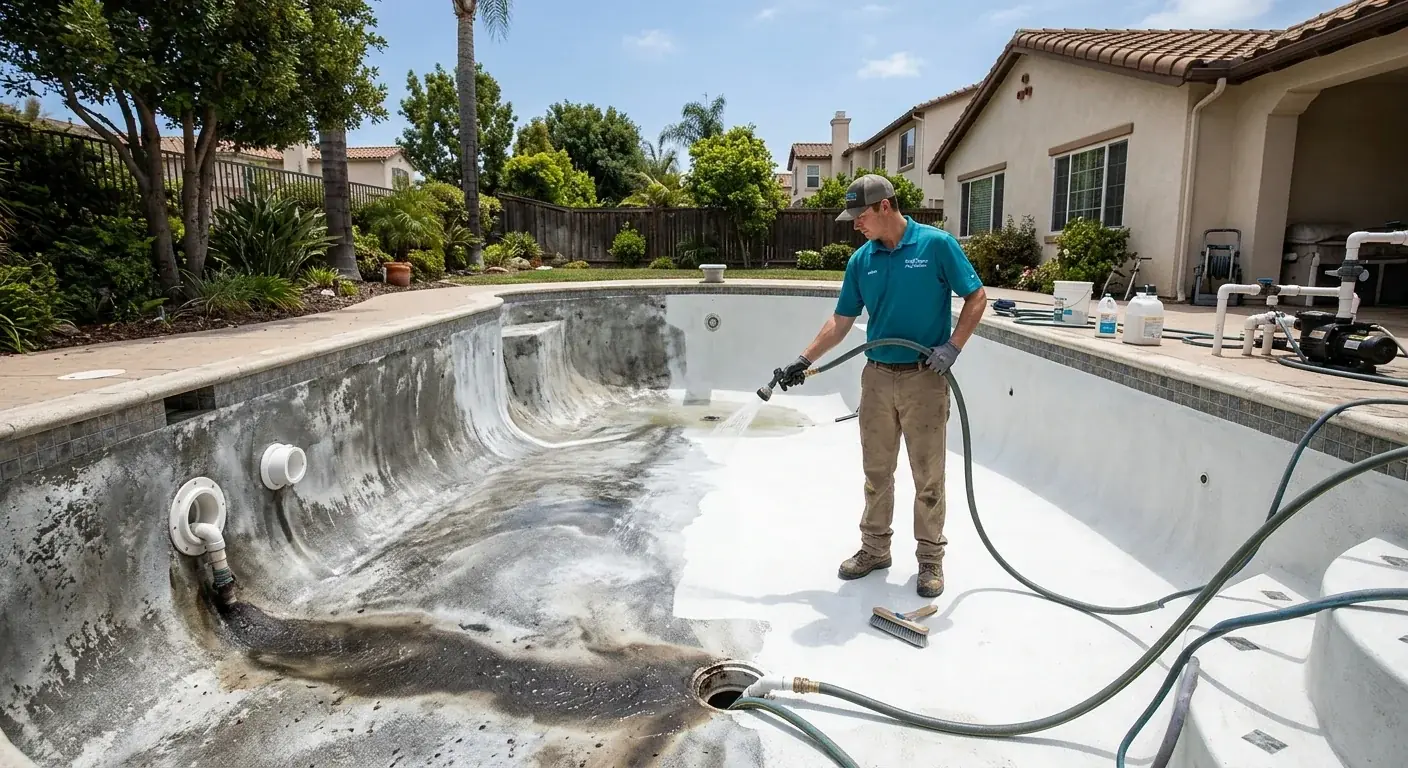
An acid wash is a drained-shell chemical clean that lifts surface stains and a thin layer of plaster. It works when the finish underneath is still smooth and well bonded. It doesn’t work when the plaster is rough, pitted, or delaminating. Knowing the difference saves you from paying for a treatment that can’t deliver what you need.
What an acid wash does and doesn’t do
The pool is fully drained first. A specialist applies a controlled acid solution to the exposed shell. The reaction dissolves a thin surface layer along with the stains sitting in it. What is left is the plaster beneath, cleaner and often brighter.
That is the entire scope. No new material goes on. No thickness is restored. If the existing finish is already thin or failing, the wash makes the problem more visible, not less. It isn’t a cheaper substitute for resurfacing. It is a different tool for a different condition.
San Diego stain patterns by region
Where your pool sits in the county matters. Inland areas like El Cajon, Santee, and Escondido sit on hard water. Pools there tend to build up mineral film that can look like surface failure but is actually a deposit sitting on top of sound plaster. An acid wash often handles that well.
Coastal pools show a different pattern. Organic staining and different waterline buildup are more common near the ocean. The water chemistry and the type of deposit aren’t the same, so the treatment plan shouldn’t be the same either.
Color alone doesn’t tell you which method is right. A specialist inspects texture, bond strength, and how much finish remains before recommending anything. If you are dealing with hard water buildup, that context helps the pro narrow the approach faster.
Metal stains and their limits
Metal staining from older plumbing or corroded fixtures is a separate issue. An acid wash may lighten some metal marks, but it often leaves others untouched. This limitation should be documented before the pool is drained so expectations are clear going in. If metal staining is your main concern, stain removal specialists can assess whether a wash or a different treatment fits better.
Wastewater, safety, and licensing
An acid wash combines a drained shell, chemical handling, and wastewater disposal in one job. The runoff must be neutralized and routed according to local rules. City and district requirements vary by address, and the specialist you work with handles the drain, application, neutralization, and refill.
California Business and Professions Code section 7048, amended effective January 1, 2026, exempts only casual minor work that requires no permit. Advertising or employing someone for the job voids that exemption. A drained-shell acid wash isn’t casual minor work. It should go through a licensed pool professional.
Acid wash versus tile cleaning
These two services get confused because they both involve acid and waterline areas. An acid wash treats the pool shell finish. Tile cleaning targets mineral or organic deposits on the tile and grout at the waterline. Different deposits, different surfaces, different methods. One doesn’t replace the other.
Before you schedule a resurfacing quote
If you are considering resurfacing options and someone suggests an acid wash first, ask the resurfacing specialist before anything is drained. A wash can thin or mask a finish that is already failing, which changes the scope and the quote. The sequence should appear in writing before work begins.
When to call us
If your pool is discolored but the plaster still feels smooth, an acid wash may bring it back. If the surface is rough, pitted, or showing gray, you likely need resurfacing instead. Either way, a licensed specialist should make that call on site. Call us at (858) 400-4404 and we’ll connect you with a licensed local pool specialist.
Frequently asked questions
What does a pool acid wash actually do?
It is a controlled chemical clean applied to a fully drained pool shell. The solution lifts surface stains and a thin layer of plaster. It does not install a new surface or restore lost thickness.
Can an acid wash fix rough or pitted plaster?
No. If the plaster feels gritty or you can see gray substrate, the finish is worn through. An acid wash cannot rebuild thickness. Resurfacing is the correct next step.
Is a pool acid wash a DIY project?
California Business and Professions Code section 7048 exempts only casual minor work that needs no permit. Wrong concentration or dwell time etches plaster permanently. Wastewater must be neutralized and routed legally. A drained-shell wash should go through a licensed professional.
How is an acid wash different from tile cleaning?
An acid wash treats the shell finish itself. Tile cleaning targets mineral or organic deposits on the waterline tile and grout. Different deposit types require different methods, and one does not replace the other.
Should I acid wash before getting a resurfacing quote?
Ask the resurfacing specialist first. A wash can hide or thin an already-failing finish, which changes the scope. The sequence should be spelled out in the written proposal before any work starts.
Need professional help in San Diego County?
Splash Pool SD connects you with a licensed specialist for any service in this post.