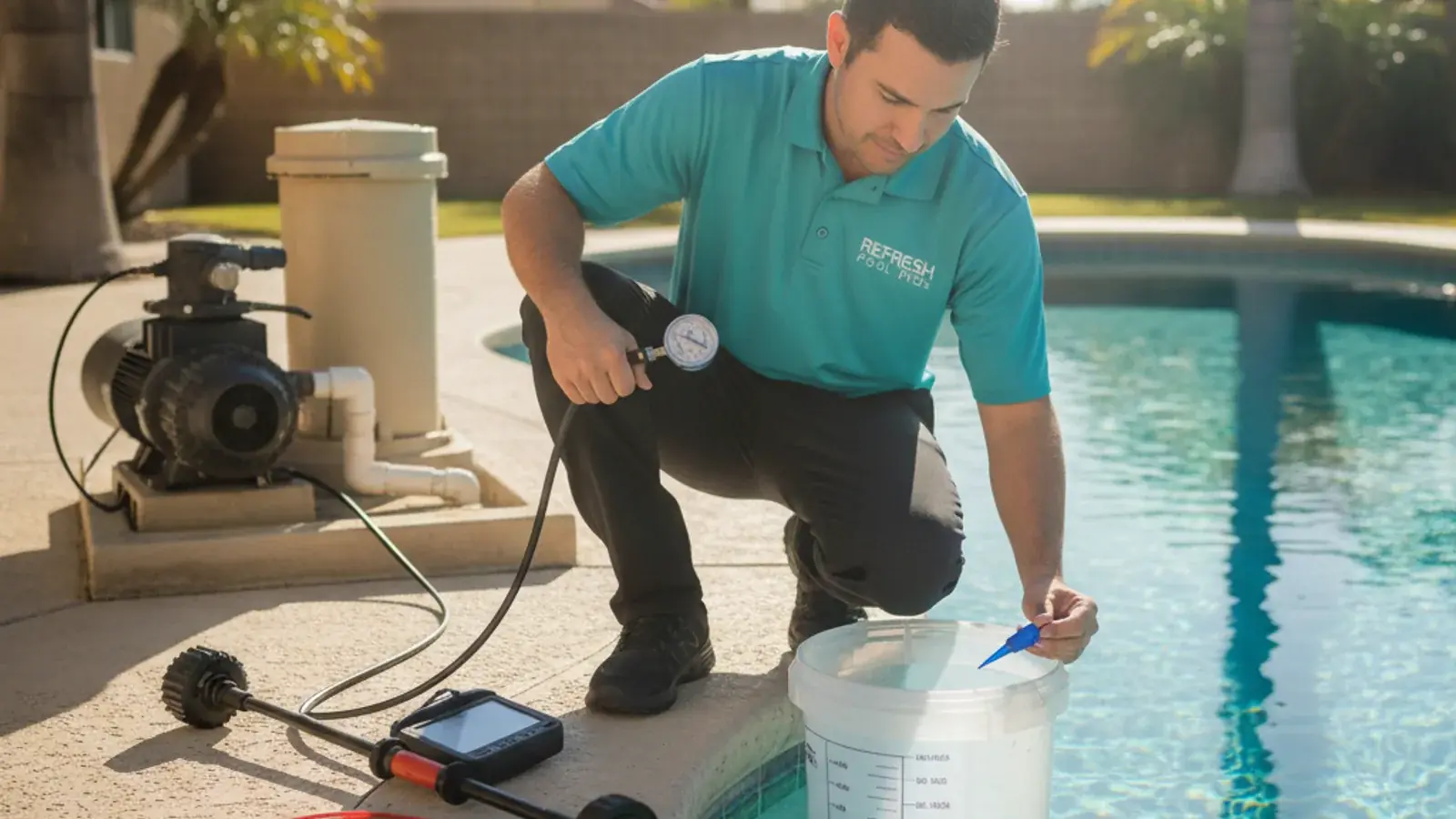
Pool leak detection works by isolating three systems one at a time: the shell, the plumbing, and the equipment pad. A licensed specialist rules out each system using pressure tests, dye tests, and electronic listening equipment in sequence. Most leaks are confirmed by the second or third test. The process is methodical, and it doesn’t require draining your pool.
Start with the bucket test
Before any paid diagnostic work, run a bucket test. Place a bucket on a pool step and fill it to the same level as the pool water. Mark both waterlines. Recheck after 24 hours. If the pool dropped more than the bucket, you have a real leak beyond normal evaporation.
San Diego’s dry air and coastal wind increase evaporation, so the test needs to run long enough to separate a leak from expected water loss. No county-wide inches-per-day evaporation figure is published, so rely on the comparison rather than a fixed number. Ask your specialist how they interpret the marks.
The bucket test only confirms a leak exists. It shows approximate daily water loss volume. It can’t identify the location or which system is losing water. For that, you need professional detection.
Pump-on versus pump-off comparison
This is the fastest method for separating a plumbing leak from a shell leak. Mark your water level. Run the pump for several hours and recheck. Then let the pump sit off overnight and check again.
If water loss happens only while the pump runs, the leak is in pressurized plumbing. Suction and return lines carry water only during circulation. If loss is equal both ways, the problem points to the shell, a skimmer throat, a light niche, or an always-wet fitting.
This comparison gives your specialist a starting direction before any equipment comes out.
Pressure testing
Pressure testing narrows a plumbing leak down to one specific line. Each line gets capped individually at the equipment pad. The lines tested are the skimmer, the main drain, and each return. A gauge connects to the capped line, and the line is pressurized with air or water.
Steady pressure over several minutes means that line is sound. A pressure drop indicates a break somewhere along that run. The rate of loss helps estimate the size of the crack or separation.
This method is specifically designed to catch underground leaks that produce no surface signs. Sandy, fast-draining soil common in San Diego disperses water before it reaches the surface. A return or suction line can lose hundreds of gallons weekly with no yard evidence at all.
Dye testing
Dye testing works because water flows toward a leak even when the pool is still. The pump is turned off so the water sits motionless. Colored dye is released near a suspect crack or fitting using a syringe or squeeze bottle. If the dye gets pulled into the crack, that confirms the exact spot.
Dye testing isn’t effective for searching an entire pool from scratch. It works best as a final confirmation after other tests have narrowed the area. Think of it as the last step that pins down what pressure testing or the pump-on comparison already pointed toward.
Electronic listening equipment
When a pressure test confirms a leak but the location stays unclear, electronic listening equipment comes in. A sensitive microphone probe is placed on the ground or on exposed pipe. It detects the acoustic signature of water escaping a pressurized line. That sound is distinct from normal background noise.
This method can locate a leak several feet underground without digging. That matters in San Diego, where mature landscaping, hardscape, and concrete decking often cover plumbing runs. Electronic listening is slower and harder to interpret than dye testing. It is reserved for plumbing leaks that pressure testing alone can’t pinpoint.
If you want more detail on underground line repairs, read our guide to pool plumbing repair for underground lines.
What happens after the leak is found
Once the source is located, the next step is a quoted repair plan. Small cracks may need only a simple patch. Extensive cracking or broken pipes require more involved work. Here is what to ask before agreeing to anything:
- What does the written scope cover?
- Is the repair quoted separately from the detection?
- If resurfacing is proposed, what does that scope include?
- If a buried pipe is involved, what is the access plan?
- If the issue is a pump seal or housing, is it quoted as equipment repair?
Record your equipment model and describe the visible issue when you request the quote. Ask for scope, warranty, and care instructions in writing.
If resurfacing ends up on the table, our post on pool resurfacing options walks through what each finish involves. For general repair planning, see our pool repair service page.
Spas, hot tubs, and water features
Spas and attached hot tubs have separate plumbing loops. They are diagnosed separately by a spa or hot tub technician. Detached water features are handled by a fountain service pro. A full pool repair visit covers the remainder of the system.
If your spa is losing water, our post on spa and hot tub leak repair covers what to expect.
Salt water systems and active leaks
If you are considering a salt water conversion, mention any active leak before a new salt cell is installed. The conversion specialist needs to know about the leak beforehand. Installing new equipment on a system that is already losing water creates a problem that will surface quickly.
What moves the price
Detection and repair costs vary by pool size, finish type, access difficulty, equipment brand, and whether a permit is needed. The matched pro gives you an actual quote after discussing your specific situation. Ask what testing the quote covers and whether repair is a separate line item.
For a broader look at what drives repair pricing in San Diego, see our post on pool repair cost.
Leak versus evaporation in San Diego
San Diego’s climate makes this question come up often. The dry air and coastal breeze pull water from pool surfaces faster than many homeowners expect. The bucket test is your control. Compare pool drop to bucket drop over the same period. If the pool drops more, you have a leak beyond evaporation. A continued drop with the pump off points to the shell or a static fitting.
We go deeper on this topic in our post on pool leak or evaporation in San Diego.
Emergency situations
Two scenarios shouldn’t wait for a scheduled appointment. First, water loss fast enough to expose your pump to air. Second, a leak threatening a retaining wall or nearby structure. If either applies, treat it as urgent.
When to call us
If your bucket test confirms a leak, or if you are losing water and can’t tell why, a licensed leak-detection specialist can isolate the source without guesswork. The right pro brings pressure testing, dye, and electronic listening to pinpoint the exact location so the correct repair happens the first time. Call us at (858) 400-4404 and we’ll connect you with a licensed local pool specialist.
Frequently asked questions
Can a pool leak be found without draining the water?
Yes. Pressure testing, dye testing, and electronic listening all work with the pool full. The goal is locating the escape point under normal operating conditions. Draining is sometimes needed afterward for the repair itself, especially for structural cracks below the waterline.
What is the bucket test and does it actually help?
The bucket test confirms whether you have a real leak or just evaporation. A bucket filled to pool level sits on a step for 24 hours. If the pool drops more than the bucket, you have a leak. It cannot tell you where the leak is or which system is losing water.
Why can't I see wet spots if my pool is leaking underground?
Sandy, fast-draining soil common in San Diego disperses water before it reaches the surface. A return or suction line can lose hundreds of gallons weekly with no visible yard evidence. Pressure testing is specifically designed to catch this type of hidden leak.
How long does a leak detection visit take?
It depends on how many systems need isolation. A single-fitting leak confirmed by dye test takes less time than a multi-system leak requiring pressure testing and electronic listening. Ask your matched pro how they sequence their tests and what to expect for your specific pool.
Is the repair included in the detection quote?
Not always. Some pros quote detection and repair separately. Ask what testing the quote covers, whether the repair is quoted as a separate line item, and what written scope you will receive before any work begins.
Need professional help in San Diego County?
Splash Pool SD connects you with a licensed specialist for any service in this post.