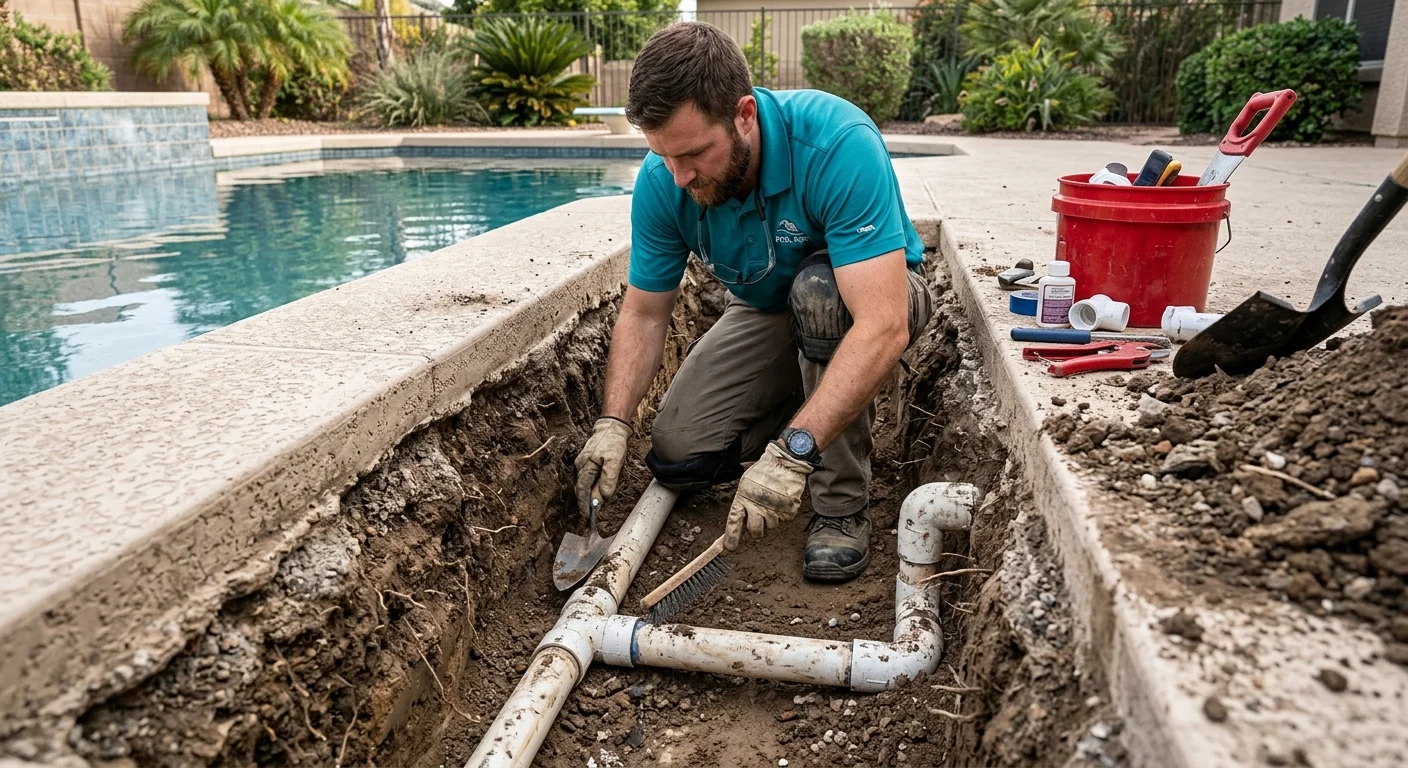
Pool plumbing repair when the leak is underground
When your pool loses water and the equipment pad checks out dry, the problem is likely in a buried line. Underground plumbing repair starts with identifying which line failed, then choosing a fix method that limits how much deck or landscape gets opened. The matched pro handles detection, excavation, repair, and restoration as a coordinated scope.
Signs the leak is below the surface
Before suspecting buried pipe, rule out everything above ground. Inspect the pump, filter, heater, valves, and every visible connection. Damp concrete or white mineral residue on the pad points to a surface-level issue. A dry pad with unexplained water loss shifts focus underground.
A few patterns help narrow things down. If the water level changes when the pump runs versus when it sits off, that helps isolate which circuit is involved. Air bubbling at return inlets or near the pump suggests a suction-side problem. A return-side leak releases water below the surface, so you may never see a puddle. Soil, drainage paths, and hardscape can redirect water far from the actual break.
Spa loops and heater circuits may respond differently when you change valve positions. Record those valve positions and note pump behavior before your appointment. Photograph any wet spots, deck discoloration, or settling you notice. That information gives the pro a starting point.
One caution: plumbing symptoms alone don’t confirm a diagnosis. Shell cracks, light niche seals, and fitting penetrations can mimic underground leaks. A licensed specialist rules those out before recommending excavation. For more on telling a real leak from normal evaporation, see pool leak or evaporation in San Diego.
How pros locate a buried leak
No responsible pro cuts into a deck without first isolating the failing line. The process works in stages.
The system gets divided into testable sections: suction, return, spa, heater, and any auxiliary runs like a cleaner line or water feature. Each circuit is isolated and pressure tested individually. Controlled pressure testing reveals which section can’t hold. Listening equipment can then detect escaping air or water near the failure point. Tracer methods are usable when the layout and site conditions permit them.
No single method suits every buried line. Thick decking, irrigation systems, and ambient noise all complicate the search. Prior remodels can obscure original routing. Deck extensions may conceal old connections. Landscaping can hide where plumbing exits the pad area.
The result of location work is a supported target, not a guaranteed certainty. Before any cutting happens, ask the pro what evidence backs the proposed access point and how the line was isolated from the rest of the system. A written scope should name the planned access area and address what happens if the opening misses the failure.
For a deeper look at detection methods, read how pool leak detection works.
San Diego County site factors that complicate access
Where you live in the county shapes how hard a buried repair is to reach.
In Clairemont, narrow side yards restrict equipment access and limit where a pro can position tools. La Mesa’s hillside layouts create elevation changes in plumbing runs that affect pressure readings and drainage. Chula Vista and National City homes often have added hardscape that covers original pipe paths, making routing harder to trace. Coastal North County properties frequently have multiple improvements between the pool shell and the equipment pad, each one potentially hiding a connection.
These aren’t minor details. They change the repair plan, the access strategy, and the restoration scope. A pro familiar with your area’s typical construction will account for them during diagnosis.
Repair, reroute, or reline
Once the failed section is located, three main approaches exist.
Spot repair replaces or reconnects only the failed section. It works when the problem is limited and access is workable. The opening must be large enough for inspection and connection work.
Reroute runs new pipe along a different path, bypassing the damaged section entirely. The old section is abandoned in place rather than traced through concrete or hardscape. This can spare a large deck area, but the new path still needs proper connections and protection.
Relining treats the inside of the existing pipe without full replacement. It isn’t suitable for all diameters, bends, connections, or damage types. If a pro proposes relining, confirm the line has been inspected for compatibility with the method. The scope should state the lined portion and the verification method used afterward.
The right choice depends on the remaining condition of the line, access at each end, valve positions, and what surfaces sit above. Plain concrete is one thing. Stone, steps, or an outdoor kitchen above the pipe is another. For more on what drives repair pricing in this market, see pool repair cost in San Diego.
Deck and landscape restoration
Plan restoration before the first cut is made. Plumbing repair and surface finish are separate scopes. Confirm whether the same contractor or a different trade closes the opening.
Initial access size may change once the pipe is exposed. Concrete gets clean saw cuts to define the opening. Pavers may be lifted, stored, and reset. Planting beds require planning for soil, roots, irrigation lines, and debris. Matching existing finish is tricky: concrete, grout, stone, and pavers all age differently. The repaired section may remain visually distinct.
Confirm reuse versus replacement of materials before digging. Drainage and finished elevation must be addressed so the restored area doesn’t create a low point. Identify irrigation lines before any excavation begins.
Before the opening is closed, photograph the completed plumbing work. Include wide views and close-ups of connections. Record measurements from fixed features like the pool edge or equipment pad. Those records help any future service and preserve the new route if a reroute was done.
The final scope should include testing, backfill, deck repair, cleanup, and landscaping. Don’t assume all of those items are included in the plumbing proposal. Ask for separate descriptions of plumbing work versus surface restoration.
What to ask before work starts
A few questions protect you.
Ask what evidence supports the proposed access point. Ask how the line was isolated from the rest of the system. Confirm permit responsibility if the scope requires one. Ask about a written warranty and get the terms directly from the contractor. Verify the contractor through the CSLB license lookup before signing anything. Our guide on checking a pool contractor’s license in California walks through that process.
If the repair involves suction lines specifically, this post on suction line repair covers what to expect.
When to call us
Underground plumbing work requires a licensed specialist for isolation, pressure testing, excavation, and repair. Guessing at the location or opening deck without a confirmed target wastes money and creates bigger restoration problems. Call us at (858) 400-4404 and we’ll connect you with a licensed local pool specialist.
Frequently asked questions
How do I know if my pool leak is underground rather than in the equipment?
Start by inspecting the pump, filter, heater, valves, and all visible connections. If the pad is dry and water loss continues, the problem likely sits below the surface. A licensed pro isolates each circuit with pressure testing to confirm which buried line is failing before any deck is opened.
Can a buried pool leak be found without removing the entire deck?
Yes. Pros divide the plumbing into testable sections, isolate each circuit, and use pressure testing or listening equipment to narrow the failure to a specific area. The goal is a targeted access point, not a full deck removal. Some opening is still required, but it should be as small as the repair allows.
What is the difference between a spot repair, a reroute, and relining?
A spot repair replaces only the failed section. A reroute runs new pipe along a different path, bypassing the damaged section entirely. Relining treats the inside of the existing pipe without full replacement. The right choice depends on the line's overall condition, access, and what surfaces sit above it.
How do I verify a pool contractor's license in California?
Use the CSLB license lookup tool online. Enter the contractor's name or license number and confirm the license is active and covers the type of work being quoted. Do this before signing any agreement.
Need professional help in San Diego County?
Splash Pool SD connects you with a licensed specialist for any service in this post.