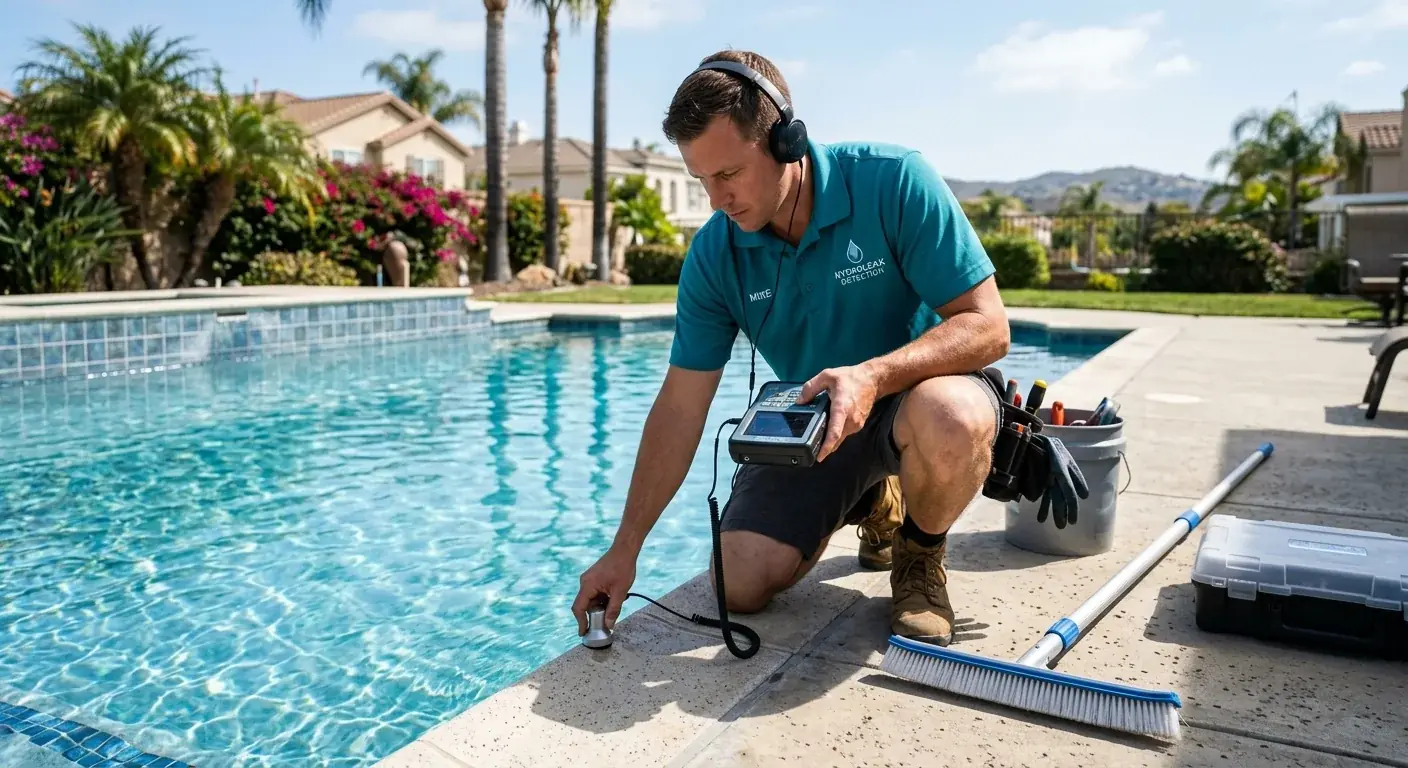
A dropping waterline in San Diego doesn’t automatically mean you have a leak. The county’s low humidity pulls water from exposed pool surfaces every day, and features like spillover spas or rock waterfalls speed that loss even more. The only reliable way to separate normal evaporation from a real leak is a side-by-side comparison, and the bucket test gives you that answer in 24 hours.
Why San Diego pools lose water fast
San Diego’s coastal climate keeps humidity low year-round. That dry air draws moisture off any exposed water surface. Hot breezy afternoons evaporate more than calm overcast days, and unheated pools lose additional water overnight as the air cools and dries.
Santa Ana events make the difference dramatic. Hot, dry, fast-moving air accelerates surface evaporation significantly. If you notice a bigger waterline drop during a wind event, that is normal. A bucket test during those stretches is especially important because your gut feeling about the waterline isn’t enough.
Certain features add to the loss. Raised spa spillovers increase surface evaporation. Rock waterfalls and any moving water lose volume faster than still water. If your pool has been uncovered for weeks during a hot or windy spell, expect a noticeable drop.
How to run the bucket test
The 24-hour bucket test is the standard first diagnostic step. Here is the procedure.
- Turn off your auto-fill valve before starting.
- Skip running the pump if possible for the first round.
- Place a standard five-gallon bucket on the second or third step of the pool.
- Partly submerge the bucket so the rim stays above the waterline.
- Fill the bucket with pool water until the inside level matches the outside level.
- Mark both levels with waterproof tape or a grease pencil.
- Leave everything undisturbed for 24 hours. No swimming.
After 24 hours, compare the two marks. If both dropped equally, you are looking at evaporation. If the pool level dropped more than the bucket level, you likely have a leak.
Pump-on versus pump-off retest
Run the test a second time with the pump running. This tells you where the leak might be.
- Faster loss with the pump running points to a pressure-side plumbing leak.
- Equal loss both ways points to a suction-side leak or a shell issue.
This comparison narrows the search area before a pro ever arrives.
Warning signs of a real leak
Beyond the bucket test, several physical clues suggest water is escaping where it shouldn’t.
- Soft or unusually green grass patches near the pool can indicate an underground line leak. San Diego’s sandy, fast-draining soil may hide wet patches, so look carefully.
- Narrow plaster cracks are often cosmetic only. Wide structural cracks, though, can lose significant volume.
- Deck pavers or concrete that is lifting or settling may signal subsurface washout from escaping water.
- A sudden increase in chemical demand can mean dilution from constant fresh refill.
- Standing water or drips at the pump, filter, or heater point to an equipment-pad issue.
Start at the equipment pad
If you suspect a leak, begin your inspection at the equipment pad. Check the pump, filter, heater, valves, and unions. Look for drips, spray, or a damp base. Pad leaks are the easiest to self-diagnose, and ruling them out saves time before you assume a shell or underground problem.
If you see moisture at the pump seal or fittings, our post on pool pump leaks walks through what that means.
How pros find leaks without draining
Professional detection works with the pool full. The goal is to find the escape point under normal operating conditions.
- Pressure testing isolates plumbing leaks by pressurizing individual lines.
- Dye testing pinpoints shell or fitting leaks by showing where dye gets pulled in.
- Electronic listening equipment locates underground escapes by sound.
These methods identify whether the leak is in the shell, the plumbing, or the equipment pad. Prolonged leaks can damage the shell or the soil near the pad, so finding them early matters. Draining is sometimes needed for the repair itself, especially for structural cracks below the waterline, but not for locating the problem. You can read more about the full process in our guide on how pool leak detection works.
Pool covers reduce evaporation
A cover reduces the exposed surface area that sun and air can reach. Solar covers are effective at cutting evaporation, and vinyl safety covers work well too. If your pool sits uncovered during hot or windy stretches, the waterline drop will be noticeably larger than a covered pool’s. We cover options in our post on pool covers in San Diego.
What affects repair scope
If a leak is confirmed, the repair scope depends on several factors: where the leak is located, the size of the affected area, the finish material, access to the plumbing lines, and the equipment brand involved. A matched pro will assess all of this and provide a quote before any work starts. Our pool repair service page explains what to expect.
When to call us
If your bucket test shows the pool dropping more than the bucket, or you see standing water at the pad, soft ground near the shell, or unexplained chemical demand, it is time for a licensed detection specialist. Call us at (858) 400-4404 and we’ll connect you with a licensed local pool specialist.
Frequently asked questions
How much water loss is normal for a San Diego pool?
There is no single number that applies to every pool. San Diego's low humidity, afternoon breezes, and Santa Ana events all increase evaporation. The bucket test is the only reliable way to separate normal loss from a leak.
What is the bucket test for a pool leak?
Place a five-gallon bucket partly submerged on a pool step, fill it with pool water to match the outside level, mark both levels, and wait 24 hours. If the pool drops more than the bucket, you likely have a leak.
Do Santa Ana winds cause extra water loss?
Yes. Hot, dry, fast-moving Santa Ana air accelerates surface evaporation significantly. A larger waterline drop during wind events is normal, but the bucket test confirms whether the loss exceeds evaporation.
Can a pool leak be found without draining?
Yes. Pressure testing, dye testing, and electronic listening equipment all work with the pool full. Draining is sometimes needed for the repair itself, not for locating the leak.
What is the first thing to check if I suspect a leak?
Start at the equipment pad. Look for drips, spray, or damp spots around the pump, filter, heater, valves, and unions. Pad leaks are the easiest to spot yourself before assuming a shell or underground issue.
Need professional help in San Diego County?
Splash Pool SD connects you with a licensed specialist for any service in this post.