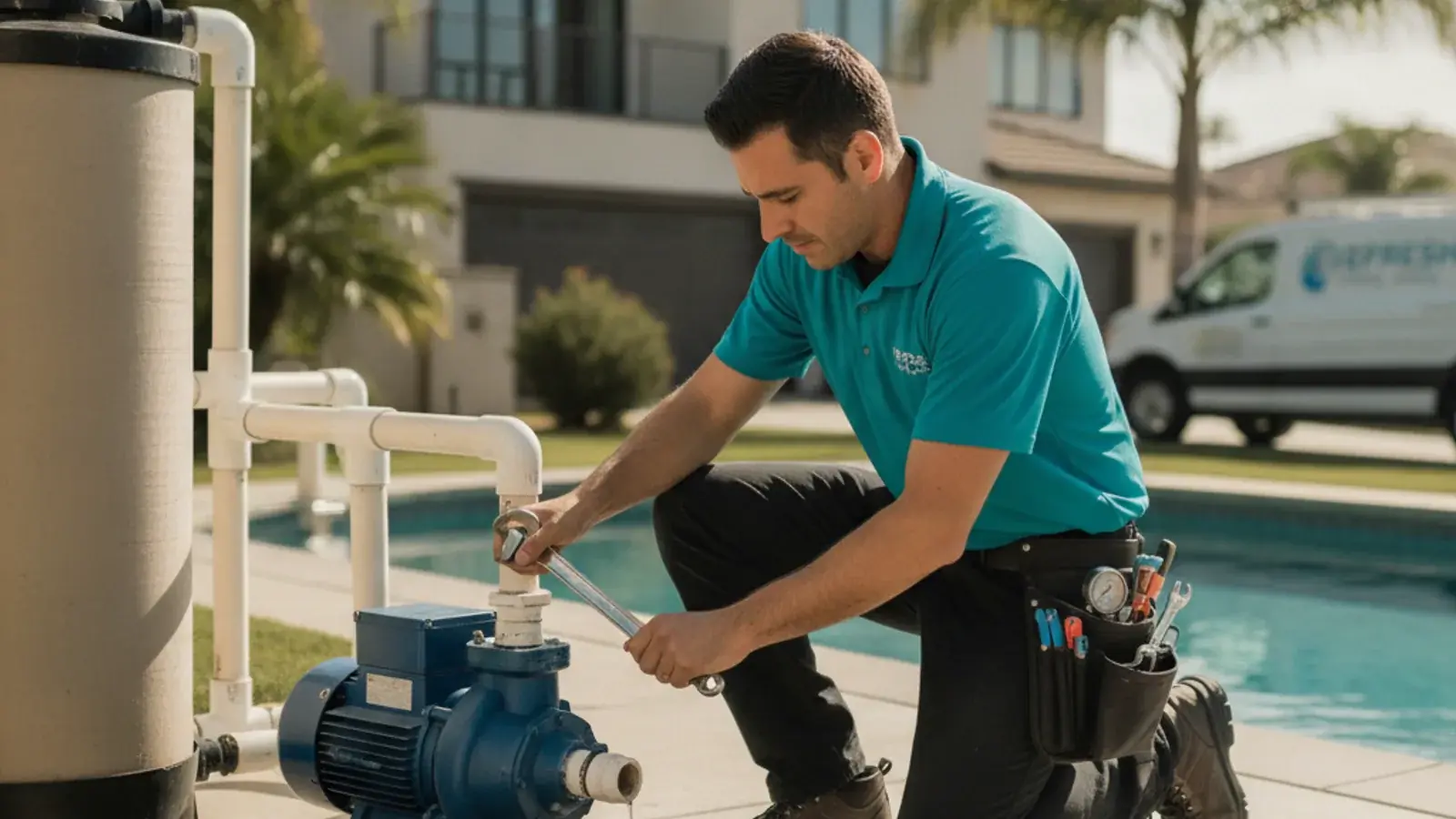
A pool pump leaking water almost always comes from one of three spots: the shaft seal, the lid o-ring, or a union fitting. Each one shows a different pattern, and knowing which pattern you’re seeing tells you how urgent the fix is. San Diego’s hard water and long swim season make these leaks more common here than in softer-water regions, because mineral scale builds up on sealing surfaces and extended run time wears parts faster.
The three common leak sources
Shaft seal
The shaft seal is a mechanical ring that sits between the motor and the wet end of the pump. Its job is to keep water from traveling along the spinning shaft into the motor. When it fails, you’ll see water pooling under the motor while the pump runs.
This is the most common of the three leak sources. In San Diego, hard water is the main reason. Mineral scale deposits on the sealing face prevent the ring from seating flat. The seal needs a clean, flat surface to work correctly, and even a thin crust of calcium can break that seal. Inland East County pads, where water hardness runs higher, see this problem frequently. You can read more about how local water chemistry affects pool equipment in our hard water and San Diego pools guide.
Replacing a shaft seal is harder than the other two fixes. The seating surface has to be perfectly clean and flat, and mineral deposits complicate the job. If you’re not comfortable disassembling the pump housing, this one belongs with a pro.
Lid o-ring
The lid o-ring seals the clear strainer basket lid. When it fails, you’ll see seepage around the lid at startup. This is the cheapest and easiest of the three common leaks to fix.
The o-ring dries out from sun exposure, especially on equipment pads without overhead cover. A coat of pool-safe lubricant often restores the seal. If the ring is cracked or flattened, a replacement o-ring is a simple swap that most homeowners can handle.
Union fittings
Union fittings are the two large plastic collars that connect the intake and return pipes to the pump. Over years of vibration, they can loosen. You’ll see a drip or spray at the pipe collar joints.
A quarter turn with a strap wrench may stop a mild leak. If the internal o-ring inside the union is worn, it needs replacement just like the lid o-ring. A cracked union collar requires the full part to be swapped out.
Constant leaks: cracked housing or drain plug
If the pump leaks whether it’s running or not, the cause is usually a cracked housing or a stripped drain plug. Plastic pump housings don’t patch reliably under pressure, so this typically means full part replacement rather than a reseal.
Housings rarely crack on their own. The usual culprits are freeze damage or plastic that has gone brittle from years of UV exposure. In San Diego’s coastal zones, salt air can also corrode fittings and weaken connections over time. Both conditions, mineral crust inland and corrosion at the coast, belong in any thorough inspection.
San Diego-specific factors
The county’s long swim season means pumps run more hours per year than they would in colder climates. More run time means more vibration, more wear on o-rings, and more opportunity for seals to degrade.
Hard water is the other big one. San Diego’s supply carries high mineral content, and that calcium builds up on the shaft seal’s seating face. The result is a seal that can’t close fully, even when the ring itself looks intact. Coastal homes face a different issue: salt air corrodes metal fittings and can pit plastic collars over time.
These regional differences matter when a pro diagnoses the leak. A pump in El Cajon with mineral-crusted seal plates needs a different approach than one in Encinitas with corroded union threads. If you want a deeper look at how leak detection works, our pool leak detection explainer covers the process.
When it’s urgent and when it can wait
Not every leak needs same-day attention. Here’s how to sort it:
Shut off immediately if:
- Water is pooling near or under the motor housing
- The pump trips the breaker on startup
- Water is spraying near electrical connections
A tripped breaker means moisture has already reached the motor windings. Don’t reset it. Shut off power at the breaker and call for service.
Can wait for a scheduled visit if:
- The leak is a slow drip away from the motor
- The pump still runs normally without tripping the breaker
- The water isn’t reaching any electrical component
DIY or call a pro
O-ring swaps and snugging a loose union are DIY-friendly for most homeowners. Shaft seal replacement is harder. It requires a clean, flat seating surface and careful reassembly. If mineral scale has built up, the job gets more involved.
For any seal work beyond a simple o-ring, get a written quote with warranty terms before the work starts. The pro you’re matched with through Splash Pool SD will diagnose the source rather than guess and swap parts. You can also check our pool pump repair guide for what that process looks like.
When the motor is already damaged
If water has reached the motor windings, the decision shifts from seal repair to whether the motor is still worth saving. A shorted motor often means the repair cost approaches or exceeds the cost of a new pump.
HomeGuide lists a variable-speed pump at $800 to $2,000 installed as a general U.S. figure. Your actual price depends on pool size, equipment brand, plumbing access, and whether any permits apply. The matched pro will quote the exact number before any work starts. For more on what drives replacement pricing, see our pool pump replacement cost breakdown.
Early detection matters more than the size of the puddle suggests. A small drip at the shaft seal today can become a dead motor next month if the seal keeps degrading. Catching it early keeps the fix simple and cheap.
Preventing the next leak
A few habits reduce repeat failures:
- Lubricate the lid o-ring every time you open the strainer basket
- Check union fittings for moisture after the pump has been running an hour
- Inspect the shaft seal area for mineral buildup every few months
- Shade the equipment pad if it sits in full sun, especially the strainer lid
For a broader look at keeping equipment in good shape, our pool equipment repair estimate guide walks through what to expect when something needs attention.
When to call us
If water is reaching the motor, the breaker is tripping, or the leak keeps coming back after a DIY fix, you need a licensed pool professional to diagnose the source and recommend the right repair. Call us at (858) 400-4404 and we’ll connect you with a licensed local pool specialist.
Frequently asked questions
Where do pool pumps most often leak?
The three most common spots are the shaft seal, the lid o-ring, and the union fittings. The shaft seal is the most frequent culprit. It sits between the motor and the wet end and keeps water from traveling along the spinning shaft.
Is it safe to keep running a leaking pool pump?
A slow drip away from the motor can usually wait for a scheduled visit. If water is pooling near the motor housing, spraying near electrical connections, or the breaker trips on startup, shut the pump off at the breaker immediately and do not reset it.
When does a leaking pump become an emergency?
It becomes urgent when water reaches the motor housing or the breaker trips on startup. A tripped breaker means moisture has already entered the motor windings. At that point, shut off power and call for service right away.
How much does it cost to replace a pool pump if the motor is damaged?
If water has damaged the motor windings, replacement may make more sense than repair. HomeGuide lists a variable-speed pump at $800 to $2,000 installed as a general U.S. figure. Your actual cost depends on pool size, equipment brand, and access. The matched pro quotes before work starts.
Why does my pool pump only leak when it's running?
Leaks that appear only during operation usually point to the shaft seal or a union fitting. Pressure builds while the pump runs, forcing water past a worn seal or loose connection. A leak present even when the pump is off suggests a cracked housing or stripped drain plug.
Need professional help in San Diego County?
Splash Pool SD connects you with a licensed specialist for any service in this post.