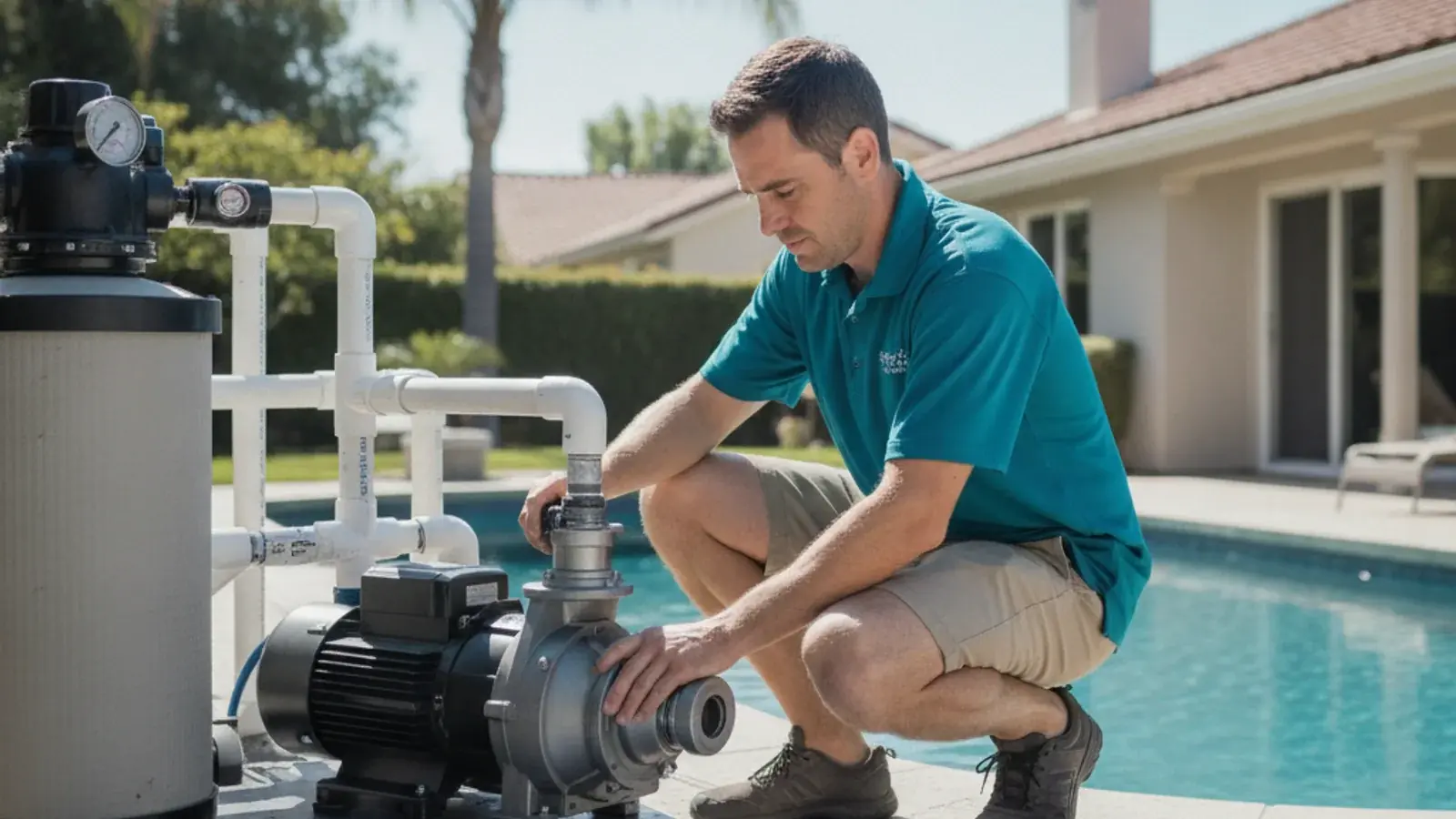
HomeGuide’s published planning figures put variable-speed pool pumps at $700 to $1,600 for the unit or $800 to $2,000 installed. Those are national planning ranges, not a quote for your backyard. In San Diego County, the final number depends on your plumbing, your electrical setup, and how accessible your equipment pad is. A licensed pro assesses all of that on site and gives you a firm price before any work begins.
What moves the price
Several factors push a quote up or down from the baseline:
- Horsepower and flow needs. A larger pool with spa jets or a waterfall needs a bigger motor than a small plunge pool. The pro calculates your turnover rate, the time it takes to circulate your full volume, and sizes the motor to match.
- Plumbing age and condition. Older PVC may be undersized or corroded. If the pro opens the union and finds cracked or brittle pipe, partial re-plumbing adds labor and material.
- Electrical work. A dedicated circuit, a larger breaker, or a new sub-panel raises the quote. If the equipment pad moves, wiring has to be rerun.
- Pad access. Tight side yards, steep grading, or a pad buried behind landscaping slow the crew down.
- Equipment brand and model. Different brands carry different price points. You can read more about how brands compare in our guide to pool equipment replacement costs.
The matched pro quotes the full scope before work starts. You aren’t guessing.
Like-for-like swap vs. full rework
The simplest scenario is a like-for-like swap. The new pump bolts onto your existing plumbing and electrical with no modifications. If your current wiring is sound and your pipe is in good shape, this is the fastest and least expensive path.
Things get more involved when the replacement reveals problems. A pump from the 1990s or earlier might sit on corroded unions or pipe that was never up to code. In that case the pro may recommend re-plumbing a section or upgrading the electrical feed. That is a different scope and a different price.
San Diego-specific factors
Coastal corrosion
Salt air eats motor housings, unions, and electrical connections faster than inland conditions. Homes in Pacific Beach, Ocean Beach, Coronado, and La Jolla see this most. Fittings that last years inland may need replacement in half that time near the coast. If your pump is within a few miles of the ocean, expect the pro to inspect fittings closely.
Inland heat
Santee, El Cajon, and Escondido get long stretches of triple-digit heat. Pumps run longer in summer to keep water clear, and that sustained runtime stresses bearings and seals. Inland pools also deal with hard water scale that builds up inside the volute and on the impeller over time.
Older plumbing in East County
Many pools in La Mesa and El Cajon were built in the 1960s. The original PVC was often undersized for today’s variable-speed motors. When a pro removes the old pump and finds corroded or undersized pipe, partial replacement becomes part of the job.
Warning signs your pump is failing
Catch these early and you may avoid damage to your filter or heater:
- Pump won’t prime or loses prime repeatedly
- Visible leak at the seal plate
- Motor housing hot to the touch
- SDG&E bill jumps without a change in run time
- Pump cycles on and off on its own
- Noticeably louder operation, which points to bearing wear
If you see one or two of these, a pool pump repair visit may be enough. If the motor is shot or the housing is cracked, replacement makes more sense.
Permit requirements
A same-spec swap on your current wiring doesn’t need a permit in most San Diego jurisdictions. The city or county treats it as a like-for-like equipment change.
If the replacement involves new electrical circuits, a sub-panel, or moving the equipment pad, the city or county will require an electrical permit, which a licensed pool repair pro pulls as part of the job. You don’t file it yourself. The pro handles the paperwork and schedules any required inspection.
Getting the size right
Pump sizing isn’t about matching the horsepower label on your old unit. It depends on your pool’s volume, pipe diameter, and the number of water features. Spa jets and waterfalls add demand. A specialist calculates the turnover rate and selects a motor that hits it without overworking your plumbing.
If you added a spa or a waterfall after the original install, the old horsepower label is no longer reliable. Oversizing wastes energy every month. Undersizing leaves you with cloudy water and strains the filter. The pro sizes it correctly for your current setup.
You can learn more about variable-speed options in our post on variable-speed pool pumps in San Diego.
Repair or replace
There is no universal age cutoff. The decision comes down to the specific failure and the condition of the rest of your equipment pad. A licensed pro diagnoses the problem, then quotes the right path. Sometimes a $200 seal kit gets you another three years. Sometimes the motor is done and the housing is corroded, and replacement is the smarter spend.
If you are weighing options, our guide on choosing a pool repair pro in San Diego covers what to look for.
What to ask before the work starts
- Get the quote in writing with a line-item breakdown.
- Ask whether the price includes hauling away the old pump.
- Request written warranty terms from the contractor.
- Confirm whether a permit is needed and who pulls it.
- Ask about the expected lifespan given your location and water chemistry.
Regular inspection of the housing, bearings, and seals extends the life of any pump. If you are near the coast, ask the pro about corrosion-resistant fittings.
When to call us
A failing pump can take your filter and heater down with it if you wait too long. A licensed pool specialist can diagnose the issue, size the right replacement, and handle any permits. Call us at (858) 400-4404 and we’ll connect you with a licensed local pool specialist.
Frequently asked questions
How much does a variable-speed pool pump replacement cost in San Diego?
HomeGuide's published planning figures put variable-speed pumps at $700 to $1,600 for the unit or $800 to $2,000 installed. Your actual quote depends on plumbing condition, electrical work, and pad access. A licensed pro assesses your setup and quotes before any work starts.
Do I need a permit to replace my pool pump in San Diego?
A same-spec swap on existing wiring typically does not require a permit in most San Diego jurisdictions. If the job involves a new dedicated circuit, a larger breaker, or moving the equipment pad, the city or county will require an electrical permit. A licensed pool repair pro pulls it as part of the job.
What shortens pool pump lifespan in San Diego?
Coastal salt air corrodes motor housings and unions faster, especially in Pacific Beach, Ocean Beach, and Coronado. Inland heat in Santee, El Cajon, and Escondido stresses bearings and seals during long summer runs. Hard water scale buildup also contributes to premature wear.
Should I repair or replace my pool pump?
The decision depends on the specific failure and the condition of the rest of your equipment pad. A licensed pro diagnoses the issue and quotes the appropriate path. There is no universal age cutoff that dictates replacement.
Need professional help in San Diego County?
Splash Pool SD connects you with a licensed specialist for any service in this post.