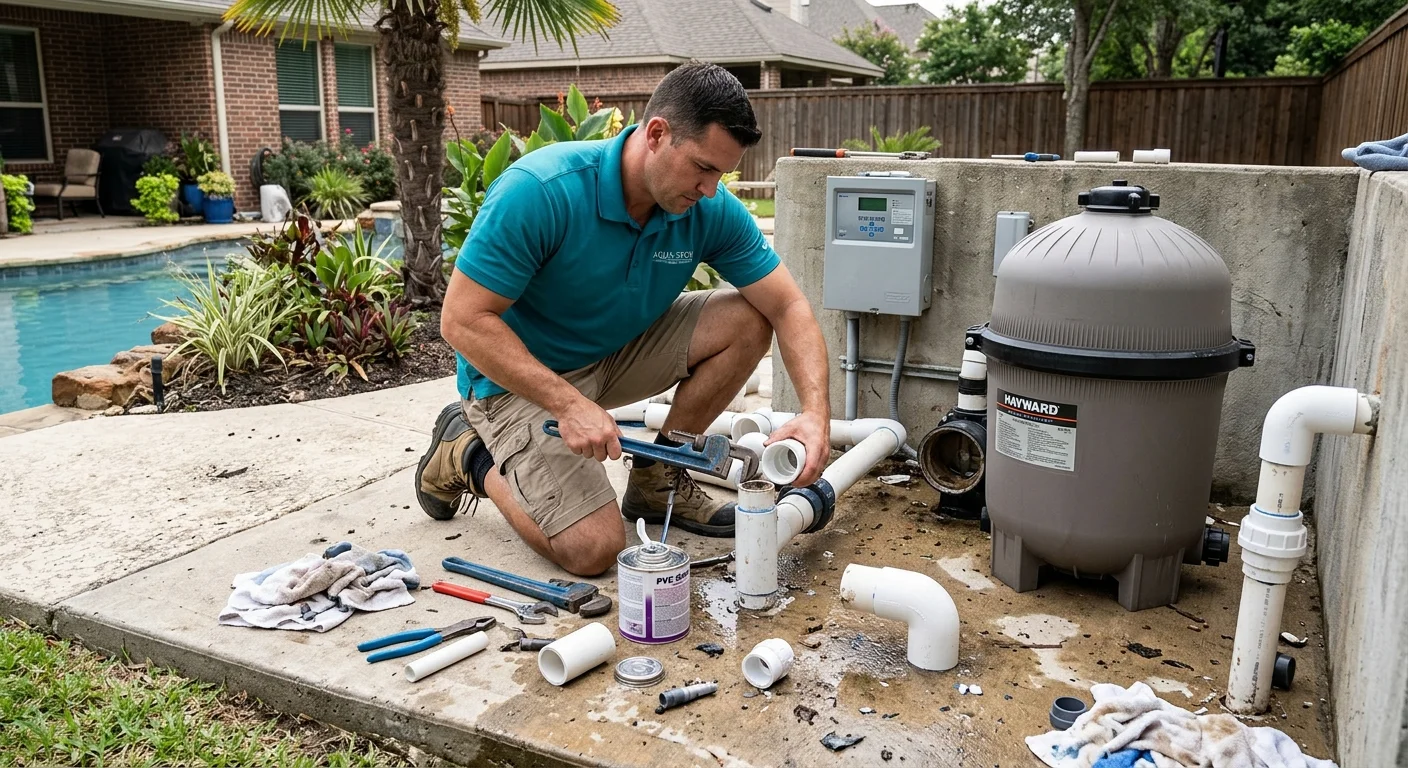
The cost of replacing pool equipment depends on how many units you swap, what changes around them, and how much access the crew has. There is no flat number that applies across San Diego County. Pad scope, plumbing, electrical work, permits, and site conditions all move the price. A licensed pro who inspects your setup will quote before work starts, and that quote should spell out every task included.
Direct swap vs. pad rework
A direct swap keeps the existing layout. The new unit goes where the old one sat, and the connections stay mostly the same. A pad rework is different. It may reposition equipment, alter plumbing runs, add new valves, change supports, or rewire control connections. Each added task belongs in writing on the quote.
Even a compact unit doesn’t guarantee a simple swap. Connection points, control wiring, and service clearance differ between models. A written scope should show what stays, what moves, and what gets removed.
Cracked supports, leaking joints, corroded connections, standing water, and crowded plumbing all broaden the scope. Separate the equipment purchase from the surrounding work so you can see what each piece costs.
Access and site conditions
Access changes the labor. A narrow side gate in Pacific Beach limits what a crew can bring in. An open rear yard in Poway makes the same job easier. Walls, fences, landscaping, and stored items all affect how the crew works.
Send access photos before the site visit. They help the pro plan, but they may miss wiring condition, hidden plumbing damage, or tight clearances. Confirm the plan on site after photos. Ask whether the quote depends on an in-person inspection.
Equipment-specific scope
Pump replacement
The bid should list the exact proposed model. It should explain how that pump fits your existing plumbing and controls. Identify which valves, pipe sections, and wiring are included. Note any programming work in the scope.
Filter replacement
Name the proposed unit and describe surrounding work. Include removal, plumbing changes, and drain arrangements. Startup and cleanup should appear in the quote. The final position must allow routine service access. If valves or pipe change, get a written reason.
Heater replacement
State the energy source in the proposal. List electrical, fuel, and venting work included. Plumbing and placement work must appear. Exclusions in one bid distort comparisons when you line up quotes side by side.
Automation
Identify which existing pumps, heaters, and lights connect to the new system. Note valve, sensor, and control compatibility. Separate required changes from items that already work. If phone or network setup is offered, it belongs in the written scope.
Whole-pad projects combine all these decisions. More coordination means more assumption risk. Build your equipment list before requesting quotes. Record model labels, pipe sizes, and fuel source. Note the control system and any known problems. Photos from several angles help all bidders price the same job.
Electrical scope
Panel capacity, circuits, conduit, disconnects, and bonding all get inspected. The scope can expand after an on-site visit. A quote that says “electrical as needed” is vague and unacceptable. It must specify who performs the work and what was observed.
Whether the new component talks to an automation controller or a local switch matters. Panel distance from the pad affects the plan. Finished walls, hardscape, attic routes, and buried conduit can all limit routing options.
Mark any electrical allowance or exclusion before signing. Never approve added work from a verbal description. Request a written change order that identifies the issue and the correction. If another trade is needed, assign responsibility clearly.
Permits and inspections
No single verified rule covers all of San Diego County. The county stretches from Oceanside to Chula Vista, and inland communities like Escondido and El Cajon have their own processes. The City of San Diego differs from unincorporated areas. Don’t rely on rules from another community.
The correct starting point is the authority that governs your property address. Your quote should state who prepares the application, who pays the government charge, and who coordinates the inspection. Clarify whether inspection corrections are included or separate.
If no permit is needed, get that in writing. Confirm with the responsible city or county office. Provide the actual scope including all change types. “Permit included” alone isn’t enough detail. Ask which authority issues it and what work it covers.
Keep the permit record, inspection result, and related documents together. Don’t cover uncertainty with a guessed fee. Get the current requirement from the responsible office and make sure every bidder prices the same obligation.
Comparing quotes
A lower total may mean a smaller scope. Convert each proposal into the same checklist. Record manufacturer, model, size, controls, and accessories. Phrases like “new filter” or “upgraded pump” aren’t specific enough.
Review removal, disposal, plumbing, valves, electrical connections, control setup, startup, and cleanup. Mark each item as included, excluded, or unclear. Identify who handles permits, inspections, and any additional trades.
Ask how changes get documented before work starts. California limits home-improvement down payments, so review the current rule with your contractor. Verify the CSLB license before signing and match it to the business name on the proposal. Our post on how to check a pool contractor license in California walks through that process.
Give every bidder the same photos, equipment list, and notes. State whether you want a direct swap, upgrades, or a full pad rework. If one pro proposes more work, ask why. It may reveal a genuine condition or an optional recommendation.
Coastal pads near Encinitas and Oceanside differ from inland properties around El Cajon and Poway. Location alone doesn’t determine the quote. The actual equipment, access, connections, and scope do.
For more on what a quote should cover, see our guide to pool equipment repair estimates. If you are weighing pump options specifically, pool pump replacement cost in San Diego breaks down the variables. For heaters, pool heater replacement cost in San Diego covers the same ground.
Replacing everything at once
Replacing all pad items together isn’t automatically necessary. Document each component individually. Explain compatibility concerns between units to your pro. Separate required work from optional upgrades so you know what you are paying for and what you can defer.
If you are planning a larger project, pool equipment pad layout covers how placement affects service access and future swaps. Our post on what to expect during pool equipment installation walks through the process from start to finish.
When to call us
Call a licensed pool pro when a failing component is affecting other equipment, when the pad needs reworking, or when your quotes don’t describe the same scope. A local specialist inspects the complete setup and gives you a written quote before any work starts. Call us at (858) 400-4404 and we’ll connect you with a licensed local pool specialist.
Frequently asked questions
Why do pool equipment replacement quotes vary so much in San Diego?
Quotes vary because each pad has different access, plumbing, electrical needs, and scope. A direct swap costs less than a pad rework. Location, equipment brand, and permit requirements also shift the total.
Do I need a permit to replace pool equipment in San Diego County?
There is no single verified rule for the entire county. The correct starting point is the authority that governs your property address. Your city or county office can confirm current requirements.
Should I replace all my pool equipment at once?
Not automatically. Document each component individually and explain compatibility concerns between units. Separate required work from optional upgrades before requesting quotes.
How do I compare pool equipment replacement quotes fairly?
Convert each proposal into the same checklist. Record manufacturer, model, size, controls, and accessories. Mark each item as included, excluded, or unclear. Give every bidder the same photos and written scope.
Need professional help in San Diego County?
Splash Pool SD connects you with a licensed specialist for any service in this post.