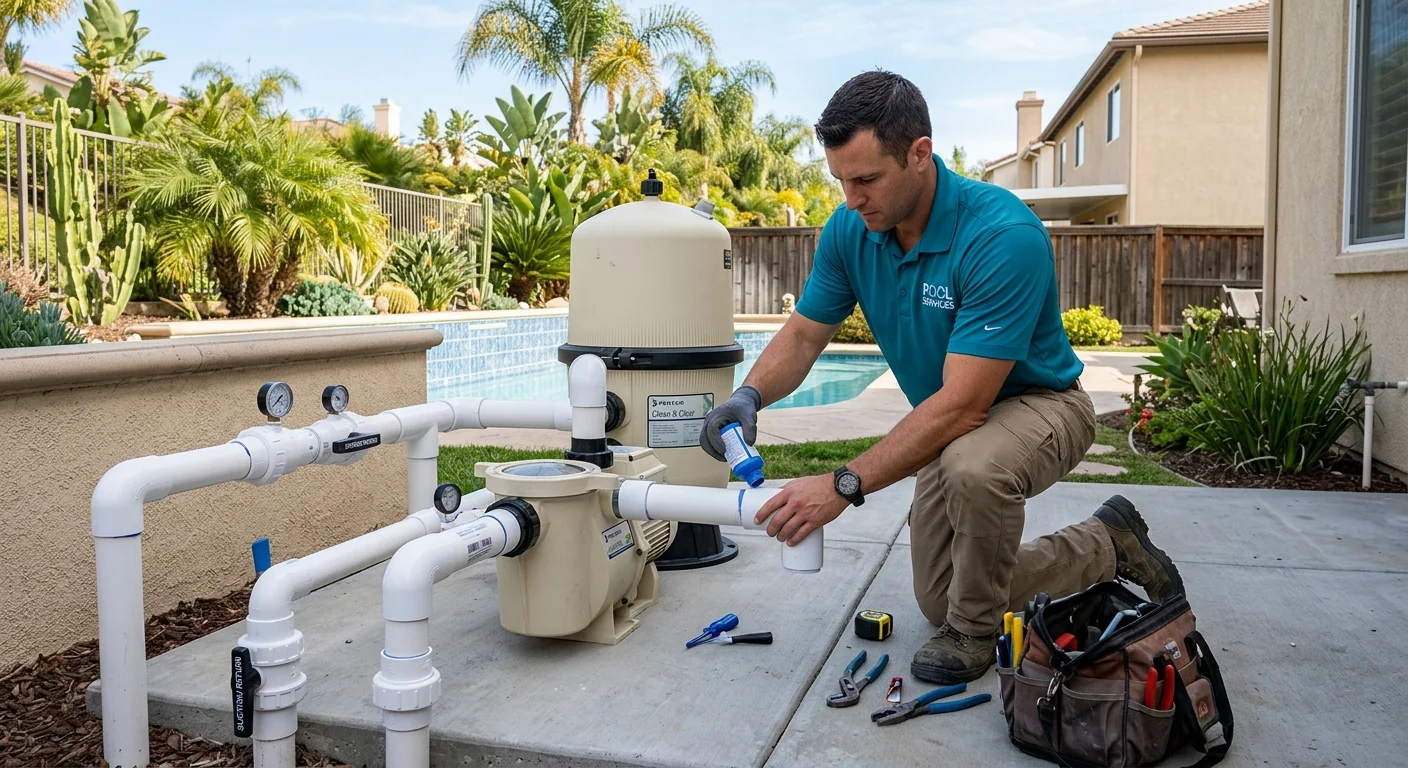
A proper pool equipment installation isn’t just swapping one box for another. It is a whole-system job that touches plumbing, electrical, valves, controls, and the pad itself. The scope of work should document every new component, every reused part, and every connection before anyone cuts a pipe. If your proposal doesn’t do that, it is incomplete.
The written scope comes first
Before any installation starts, you need a documented plan that separates new equipment from reused components. The scope must name each model being installed. It must also identify every retained valve, wire, pipe, control, and support. This isn’t paperwork for its own sake. It is the only way to catch conflicts before they become expensive surprises.
The existing pad may not fit the planned equipment. Different connection locations can force plumbing changes. A larger housing may block valve access or make future service impossible. A written scope catches these problems on paper, not on installation day.
What lives on the equipment pad
A typical pad holds the pump, filter, heater, sanitizer, valves, controls, and plumbing manifolds. Replacing one component affects the space and connections around it. Retained parts need more than youth to justify keeping them. They need compatibility.
The installer must justify each kept part in writing. That justification covers condition, connections, controls, and service access. If a valve is old but works and fits the new layout, it can stay. If it blocks the new filter or sits where a union needs to go, it gets replaced. The scope says which is which.
Sizing and circulation matching
An old label on a pump doesn’t prove the original sizing was correct. Your pool may have changed since that equipment was chosen. Maybe a spa was added, or a water feature, or a solar loop. Any of those changes alters the required operating modes.
The installer should inspect the full circulation path: pool, spa, pipes, returns, suction lines, and water features. The pump must match the filter, the controls, the electrical supply, and the operating schedule. Filter and pump function as a single circulation unit, not as independent choices.
The proposal must name the filter model and explain its relationship to the pump. Leave adequate room for cleaning and servicing. Waterfalls, raised spas, cleaners, solar loops, and automation all add operating modes. A photo-only proposal may miss feature connections. Request the sizing basis explained in plain language. If any detail can’t be confirmed remotely, it should be flagged for an on-site check.
Compatibility outweighs brand alone. A pump from one manufacturer can work with a filter from another if the sizing and connections are right. Read more about how different brands compare in our pool equipment brands guide.
Plumbing work
Installation involves removing old connections, planning new runs, setting components, reconnecting, and running startup checks. Ask which pipes will be cut or rerouted. New equipment may shift unions, inlets, and outlets.
The layout must allow access to valves, baskets, and drains. Each new pipe run needs a stated purpose. The scope should show water entry and exit points per component. Confirm which valves govern the pool, spa, cleaner, and heater. Labels simplify future troubleshooting and save time when something needs attention.
For more on how the pad layout affects long-term maintenance, see our post on pool equipment pad layout.
Electrical work
The scope must identify the power connection, controls, breakers, disconnects, grounding, and bonding work. It must state who handles each electrical task. For a heater, the responsibilities divide into electrical, plumbing, controls, and fuel. Never rely on vague language like “complete installation.” Each responsibility must be individually named.
If automation is part of the job, confirm that the pump, heater, sanitizer, and controller communicate properly. Identify which functions are available through wall controls, apps, and schedules. Our pool automation systems guide covers what to expect from modern controllers.
Permits and legal requirements
Permit needs vary by equipment type, connections, and scope. No single San Diego County rule covers every situation. Check with the building department for your specific property address. The contract should name who applies for the permit, coordinates inspection, and provides the record. If no permit is needed, get that confirmed in writing.
A few legal points matter here. In California, unlicensed contracting is a misdemeanor. Building-permit jobs don’t qualify for the minor-work exemption. Splitting contracts doesn’t create an exemption. Advertising as a contractor also voids any exemption. Use the CSLB official license lookup before signing anything. Match the license listing to the person or business named in your contract. Don’t trust logos, ads, or copied numbers alone.
One more point: a pool construction or remodel permit triggers the drowning-prevention rule under California HSC §115922. That rule requires at least two of seven listed safety features. It applies to private single-family homes only, and it isn’t a blanket retrofit for all existing pools. Confirm applicability with your permitting authority and keep the permit answer with your contract and records.
Site access and local considerations
Delivery path matters. In North Park, narrow side yards are common. Check gate clearance before installation day. Confirm the delivery route for every large component. Wall and fence proximity can block filter lid or basket access, so verify that during planning.
Take photos before approving the scope: the pad, labels, plumbing, panels, and obstacles. Compare those photos against the final written scope. This protects you if something changes between planning and installation.
Coastal and inland sites present different questions. In Encinitas, exposed coastal sites raise hardware suitability concerns due to salt air. In El Cajon, strong afternoon sun may affect equipment placement. These are planning questions to raise with your installer, not universal prescriptions.
Startup and handoff
The system gets tested as a connected whole at startup. That means checking priming, leaks, valve operation, filter readings, controller communication, and each operating mode. Record any unresolved issues before handoff. The finished layout must match the approved scope.
Handoff documentation should include model and serial numbers, manuals, controller settings, and operating instructions. The installer demonstrates valves and the normal startup sequence. Photograph the completed pad and all labels. Preserve access for cleaning, inspections, and future repairs.
Change orders and hidden conditions
Hidden damage, undocumented wiring, or incompatible controls can alter the scope once work begins. The contract must explain the change documentation and approval process. You should never be surprised by a charge you didn’t authorize.
What drives the price
Every installation is different, and the cost reflects that. Pool size, finish, access difficulty, equipment brand, and permit requirements all move the number. The matched pro quotes the full scope before work starts, so you know exactly what you are paying for. For a deeper breakdown of what affects pricing, see our post on what drives pool equipment replacement cost.
When to call us
New equipment, altered plumbing, electrical changes, controls integration, or permit questions all call for a licensed pool professional who can inspect the full system and write a proper scope. Call us at (858) 400-4404 and we’ll connect you with a licensed local pool specialist.
Frequently asked questions
Do I need a permit for pool equipment installation in San Diego?
It depends on the equipment, the connections involved, and your local jurisdiction. No single San Diego County rule covers every scenario. Check with the building department for your specific property address, and put permit responsibility in writing in your contract.
How do I verify a pool contractor's license in California?
Use the CSLB official license lookup tool online. Match the result to the person or company named in your contract. Do not rely on logos, advertisements, or copied license numbers alone.
Can I reuse my existing plumbing during an equipment swap?
Some plumbing may stay if it is compatible and properly supported. The installer must identify each reused part in writing and justify keeping it based on condition, connections, controls, and service access.
What should a pool equipment installation contract cover?
It should name every new component by manufacturer and model, list all reused parts, specify plumbing and electrical work, state permit responsibility, define startup testing, address cleanup and disposal, and identify warranty terms and the responsible party.
Need professional help in San Diego County?
Splash Pool SD connects you with a licensed specialist for any service in this post.