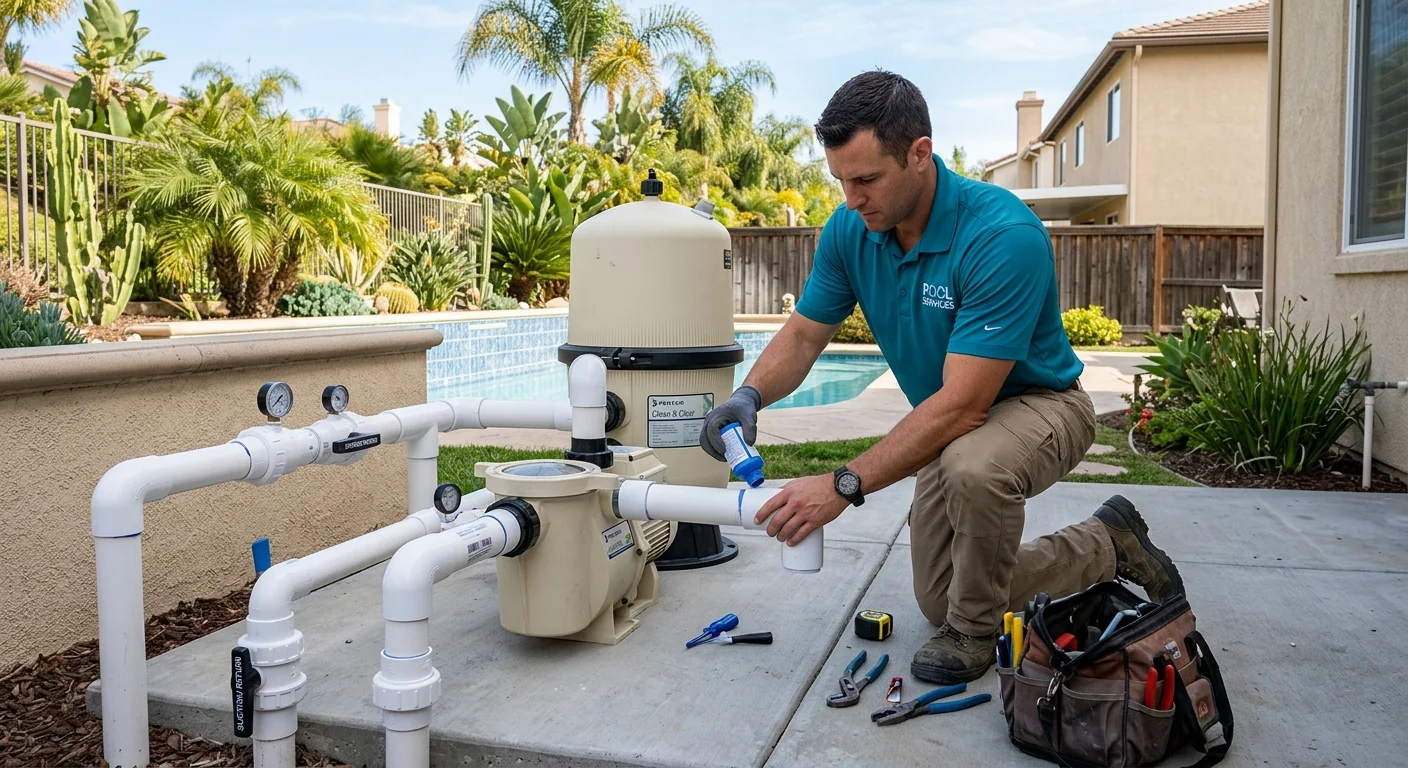
A pool equipment pad layout is the spatial plan that keeps your pump, filter, heater, valves, and sanitizer serviceable on a shared slab. In San Diego, where tight side yards and coastal corrosion are everyday realities, a pad that looked fine at install can become a problem the first time something needs repair. Splash Pool SD connects you with licensed local pros who design and build these pads. We don’t pour concrete ourselves.
Clearance is the first rule
Every component on the pad needs room to be opened. The filter lid must come off freely. The pump basket must be removable without contortion. The heater access panel must swing open fully. Unions need enough space that a wrench fits without stepping into a planter or scraping a wall.
Adding a salt cell, a larger filter, or a heater to an existing pad without redrawing the layout is the most common failure we hear about. Each new piece of equipment needs its own drainable run and its own service envelope.
In neighborhoods like North Park, where side yards are narrow and gate widths are tight, the delivery path matters as much as the pad itself. Your installer should plan how equipment gets in before the slab is set.
Drainage keeps motors alive
The slab must shed water away from motors. Minor weepage from fittings is normal on older pads, but it should never pool against equipment. Good drainage isn’t a substitute for fixing a shaft seal or a leaking union. It prevents slab damage while you wait for parts.
If your pad holds standing water, the cause is usually a leak, not the slope. Read our guide on standing water on pool equipment pads for how to tell the difference.
Bonding and electrical belong in the drawing
Bonding and electrical covers are part of the layout, not an afterthought. The bond must be demonstrable by your specialist during inspection.
Coastal pads, think La Jolla or Imperial Beach, need corrosion-resistant covers because salt air eats standard hardware. Inland pads in places like El Cajon face a different problem: sustained heat degrades plastic lids and stresses motors. Both are inspection items your installer should address on paper before the pour.
What drives the quote
No published price band covers pad work because every job is different. Pool size, the equipment you’re adding, gate access, and the finish you choose all move the number. Your matched pro measures the specific equipment and access, then quotes before work starts. If you’re planning an upgrade, our pool equipment upgrade guide walks through what to expect.
For broader context on what installation day looks like, see pool equipment installation: what to expect.
When to call us
If your pad is too small for the gear you need, if drainage is pooling against motors, or if you’re adding a heater or salt cell to a 1990s-era slab, a licensed pro should redraw the layout before anything is ordered. Call us at (858) 400-4404 and we’ll connect you with a licensed local pool specialist.
Frequently asked questions
What does a proper pool equipment pad layout include?
A level base under each component, drainage that sheds water away from motors, enough clearance to remove filter lids and pump baskets, and a bonding and electrical path your installer can document.
Is standing water on my pad a layout problem?
Usually not. Standing water typically points to a fitting or seal leak. Poor drainage can make things worse, but the first step is diagnosing the leak itself.
Can I reuse my existing pad when upgrading equipment?
Sometimes. A larger filter or heater can steal the service clearance you need. Ask your installer for a paper layout before ordering new gear.
Does a pad replacement need a permit in San Diego?
It depends on the scope and your local building department. Make sure permit responsibility is spelled out in your contract before work starts.
Need professional help in San Diego County?
Splash Pool SD connects you with a licensed specialist for any service in this post.