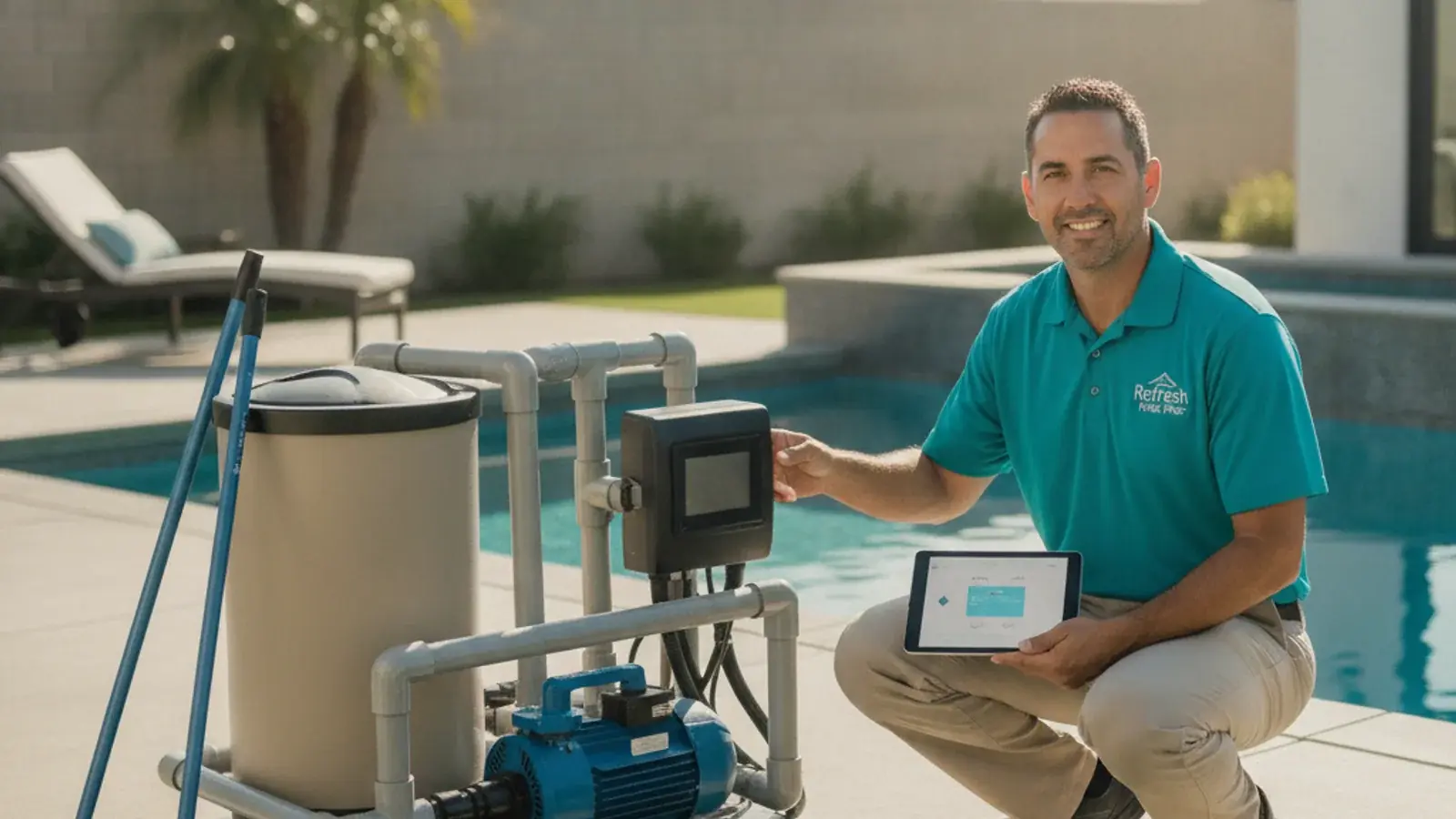
A pool automation system replaces the individual timers and switches on your equipment pad with a single wall-mounted panel. That panel communicates with relays wired to each piece of gear: pump, heater, lights, valves, and water features. You control everything from one interface, often through an app. For San Diego homeowners managing year-round swimming or a separate spa, that consolidation removes a lot of daily fuss.
What the system controls
Pump speed and scheduling is the most common starting point. It also yields the largest energy savings, especially if you are moving off a single-speed pump. Heater temperature setpoints and on/off timing come next. That matters here because many San Diego pools run a spa or heat the pool through cooler coastal mornings.
Beyond those two, the panel can operate pool and spa lighting circuits, water feature valves, and salt or chlorine generator output levels. Hand-turning three-way valves accelerates mechanical wear over time. An actuator-driven valve on a schedule lasts longer and removes the guesswork.
If you are comparing brands, our posts on Hayward vs. Jandy automation and Pentair vs. Jandy automation break down the differences.
How the panel works
The panel sits on a wall near your equipment pad. It sends signals through wired relays to each connected device. You set schedules, adjust temperatures, and toggle features from the panel itself or from a phone app. The system logs run times and flags non-responding gear, which speeds up diagnosis when something stops working.
When Wi-Fi drops, the panel retains its last schedule in onboard memory. Pumps, heaters, and lights keep running on their programmed timers. App control and remote alerts go offline, but the pool keeps circulating. San Diego has occasional utility outages, so this fallback matters. A panel that needs constant internet to run its schedules is weak design. Ask about this before you buy.
Pre-installation checklist
Before requesting a quote, record the model numbers from each unit on your pad. Describe the pad layout to the specialist so they can assess compatibility with your existing gear. The quote should cover automation on your current equipment first. Any pump or heater repairs belong as separate line items. A combined visit doesn’t guarantee reduced labor.
If your pad layout feels cramped or disorganized, our guide on pool equipment pad layout covers what a clean setup looks like.
Pairing automation with a renovation
If your pad is already open during resurfacing, re-plumbing, or a salt water conversion, adding automation at the same time can make sense. Request it as a separate line within the renovation quote. Compare the combined plan against pricing it as a standalone job. Don’t assume a bundled visit is cheaper or faster.
One caution: if you have visible water loss, request leak detection before automation. Describe the leak to the technician first. Decide on automation only after the source is identified.
Repair vs. replacement signs
Automation panels fail in specific ways. A panel ignoring app commands suggests a relay or firmware fault. A pump skipping its programmed schedule points to relay failure. A heater firing at wrong times indicates the same. On salt pools, a corroded pad connection can interrupt communication between the panel and the salt cell.
A technician isolates the fault to the panel, the wiring, or the equipment itself. A relay board swap differs from a full panel replacement. Diagnosis comes first. If an actuator is stuck or clicking, that signals a separate repair need. Our post on pool actuator repair in San Diego covers what that looks like.
Spa and water feature automation
Automation is most valuable when a spa or water feature is attached. A shared-plumbing spa requires manual valve turning to switch between pool and spa modes. Automated actuators switch flow on schedule without you touching anything. Fountain timing keeps the feature running set hours only, which prevents the pump from running unscheduled with no timer.
If you are considering a variable-speed pump alongside automation, the two pair well. The panel manages the speed schedule, and the pump delivers it efficiently.
What to confirm before hiring
Confirm the quote covers hardware plus wiring labor. Some estimates include the panel only and exclude installation. Ask how the system behaves when Wi-Fi drops. Ask about after-hours emergency service availability. A stuck-open valve or runaway heater needs urgent response.
In San Diego’s central metro, specialists typically walk the pad in person before quoting. That in-person visit catches wiring issues a phone estimate would miss. Specify which equipment the quote will control. A single-function tier might cover only the pump and one heater. A fuller tier adds valve actuators, spa control, salt cell output, and app access.
For a broader look at planning equipment changes, our pool equipment upgrade guide for San Diego walks through the process.
When to call us
Automation involves wiring relays to high-voltage equipment and programming logic that controls heaters and pumps. That work belongs with a licensed pool professional who can assess your pad, confirm compatibility, and pull any required permits. Call us at (858) 400-4404 and we’ll connect you with a licensed local pool specialist.
Frequently asked questions
What does a pool automation quote typically cover?
A quote should specify which equipment it controls: pump, heater, lights, valves, or salt cell. Confirm whether hardware and wiring labor are both included. Some estimates list the panel only and exclude installation. The matched pro issues the quote after an on-site pad assessment.
Can automation work with an older pool?
It depends on whether your existing pump, heater, and filter are compatible with new controls. Record the model numbers on your pad and describe the layout to the specialist. They assess compatibility and quote based on your current equipment. Any pump or heater repairs get listed as separate line items.
Will automation lower my energy bill?
Savings depend on your current pump, its schedule, and your rate plan. Pump control is the most common starting point and yields the largest energy savings. Ask the pro how a proposed schedule suits your existing equipment and request written product info for any new pump they suggest.
What happens to my pool during a power outage or Wi-Fi drop?
The panel retains its last schedule in onboard memory. Pumps, heaters, and lights keep running on their normal timers. App control and remote alerts go offline, but the pool continues circulating and does not sit unfiltered. San Diego has occasional utility outages, so this matters.
Is automation worth it for a small pool?
Benefit depends on how many separate systems you have. A single-speed pump with no heater gains little from a panel. But if you have a heater, spa spillover, water feature, or salt system, automation eliminates daily juggling of multiple switches and timers.
Need professional help in San Diego County?
Splash Pool SD connects you with a licensed specialist for any service in this post.