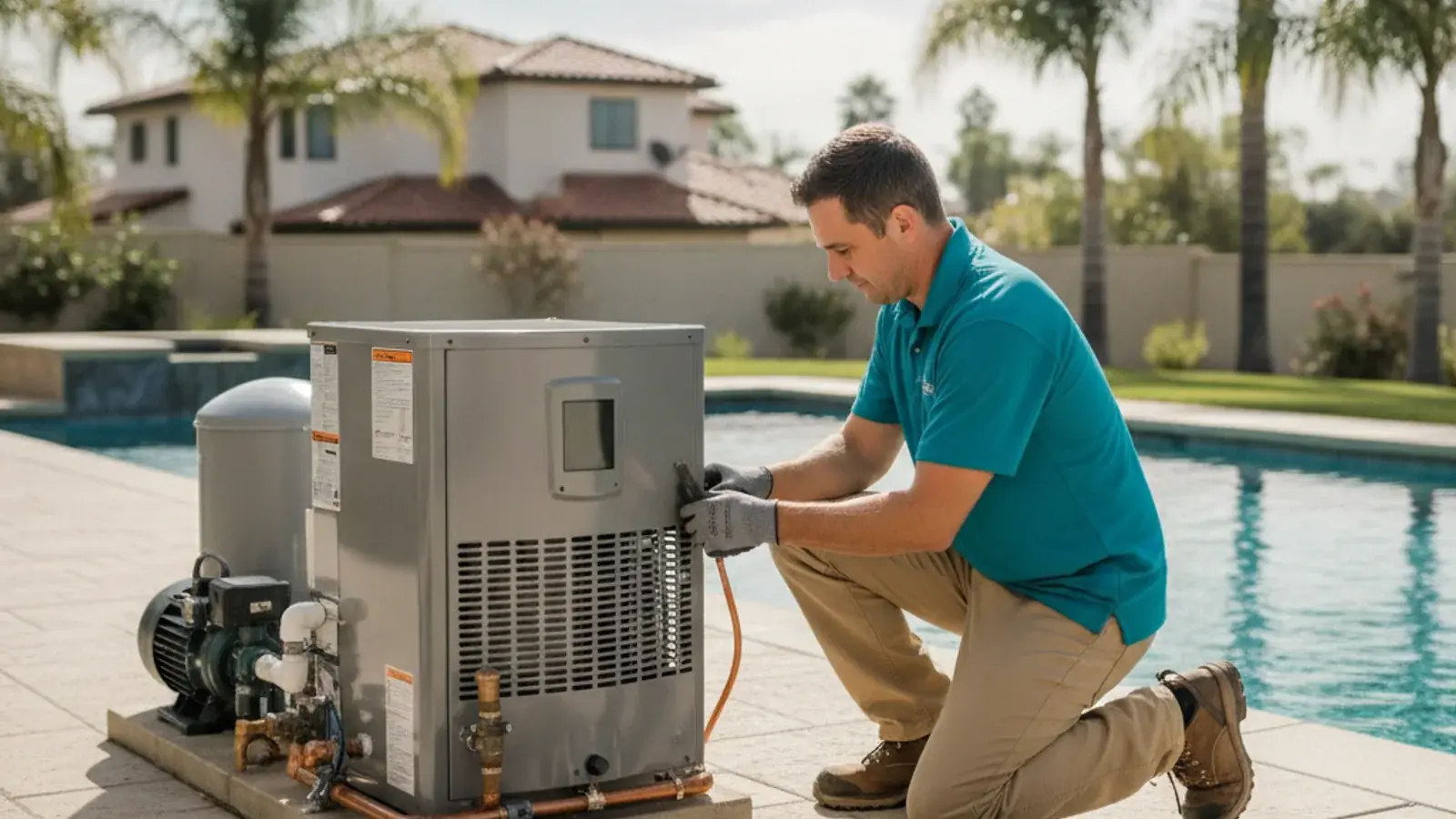
Pool heater replacement cost in San Diego depends on several moving parts: the heater type, BTU rating, gas-line condition, electrical needs, and your pool’s size. No flat number covers every job. A licensed specialist assesses your setup and provides a quote before work begins. Splash Pool SD connects you with that specialist.
What drives the price
Three heater types serve San Diego pools: gas, heat pump, and solar. Each carries a different installed cost profile.
Gas heaters generally sit at the lower end of installed pricing. Heat pumps cost more upfront. Solar systems, which depend on panel count and whether the array mounts on your roof or the ground, often come in highest.
Beyond the unit itself, these factors shape your quote:
- BTU sizing matched to your pool volume
- Gas-line distance and whether the existing line needs upsizing
- Electrical circuit work for heat pumps
- Plumbing modifications
- Labor and permit fees
A bid should cover the unit, labor, and any line or circuit work. Compare quotes by heater type, not by parts-only sticker price. Ask each pro how the system uses fuel or electricity so you understand ongoing costs too. For a deeper look at what moves equipment pricing, see our guide on what drives pool equipment replacement cost.
Heat pump vs. gas in San Diego’s climate
Heat pumps pull warmth from the surrounding air. San Diego County rarely hits extreme cold, which keeps them efficient most of the year.
Coastal areas like La Jolla and Pacific Beach see mild temperatures nearly year-round. Heat pumps perform well there with minimal efficiency loss. Inland spots like Alpine and Ramona get colder mornings that slow output slightly, but heat pumps still beat daily gas efficiency over a full season.
Gas heaters win when you need fast warm-ups on short notice, like a weekend swim you decided on Thursday. They also take up less physical space on the equipment pad. Heat pumps have a larger footprint.
The right choice comes down to how often you swim and how quickly you need the water warm. We cover this comparison in more detail in our post on gas heater vs. heat pump in San Diego.
Why cost varies across the county
San Diego’s housing stock isn’t uniform, and that affects installation complexity.
Older neighborhoods like South Park and North Park often have undersized gas lines. If your existing line can’t supply enough BTUs to the new heater, the pro adds line-upsizing work to the quote. That adds labor and material.
Newer builds in areas like 4S Ranch and Carmel Valley typically have modern infrastructure already in place. Installation stays more straightforward, which keeps the quote tighter.
Pool size matters too. A larger pool or a raised spa requires a bigger heater. Undersizing leaves the water lukewarm. Oversizing wastes fuel. A licensed pro calculates the right BTU match for your specific volume.
San Diego’s hard water also plays a role over time. Scale buildup inside heat exchangers reduces efficiency and shortens lifespan. Our post on hard water and San Diego pools explains the chemistry behind it.
Signs it is time to replace
Watch for these indicators:
- The heater won’t ignite
- Water never reaches the temperature you set
- Visible rust or cracking on the cabinet
- A heat pump runs constantly with no temperature gain
- A gas unit short-cycles, turning on and off repeatedly
Any of these warrants an inspection from a licensed independent pro. They can tell you whether the unit is salvageable or past its useful life.
Repair vs. replacement
Not every failure means a full replacement. Sometimes a single component, like an igniter or a heat exchanger, is the fix. The distinction comes down to what the inspection finds.
A licensed pro diagnoses the problem, then quotes either the repair or the replacement path. You get the full picture before committing. If you want to understand what a repair visit looks like first, our post on pool heater repair in San Diego walks through the process.
Permit requirements
Permit rules vary by jurisdiction within the county.
In unincorporated San Diego County, a like-for-like swap sometimes doesn’t require a permit. The City of San Diego often requires one for gas work. Relocating the heater always triggers a permit. Upsizing the gas line requires one. Adding a new electrical circuit requires one.
The licensed contractor pulls the permit, not the homeowner. Confirm the specifics with your pro before work starts. If you want to verify a contractor’s license before hiring, our guide on checking a pool contractor license in California shows you how.
Lifespan factors in San Diego
How long a heater lasts depends on equipment type, run hours, water chemistry, scale buildup, heat exposure, and installation quality.
Coastal locations from Coronado to Del Mar face a specific challenge: salt air. It corrodes heat exchangers and cabinet housings faster than inland conditions. Coastal heaters typically lose a couple of years of life compared to the same unit inland.
Inland areas like Santee and El Cajon avoid most airborne corrosion. But hotter summers mean heavier year-round use, and that added runtime creates its own wear.
Ask your contractor about written warranty terms before you commit. Coverage varies by manufacturer and installer.
When to call us
A pool heater replacement involves gas lines, electrical circuits, plumbing, and permits. That is licensed work, and it needs a pro who knows San Diego’s local codes. Call us at (858) 400-4404 and we’ll connect you with a licensed local pool specialist.
Frequently asked questions
How much does pool heater replacement cost in San Diego?
No single number applies. The price depends on heater type, BTU rating, gas-line work, electrical upgrades, and pool size. A licensed pro assesses your setup and quotes before any work starts.
Should I choose a heat pump or gas heater in San Diego?
Heat pumps suit the mild coastal climate and run efficiently nearly year-round. Gas heaters warm water faster, which helps for short-notice use. Your swim frequency and speed needs guide the choice.
How long does a pool heater last in San Diego?
Coastal salt air corrodes heat exchangers and cabinets, shortening lifespan by a couple of years. Inland areas see less corrosion but heavier summer use adds its own wear. Maintenance history matters too.
Do I need a permit to replace my pool heater in San Diego?
A like-for-like swap sometimes skips the permit in unincorporated areas. Upsizing a gas line, adding a circuit, or relocating the unit triggers a permit. The licensed contractor pulls it, not you.
Should I repair or replace my pool heater?
An inspection determines the path. Temperature failure could go either way. A licensed pro diagnoses the unit and quotes accordingly, so you know the full picture before deciding.
Need professional help in San Diego County?
Splash Pool SD connects you with a licensed specialist for any service in this post.