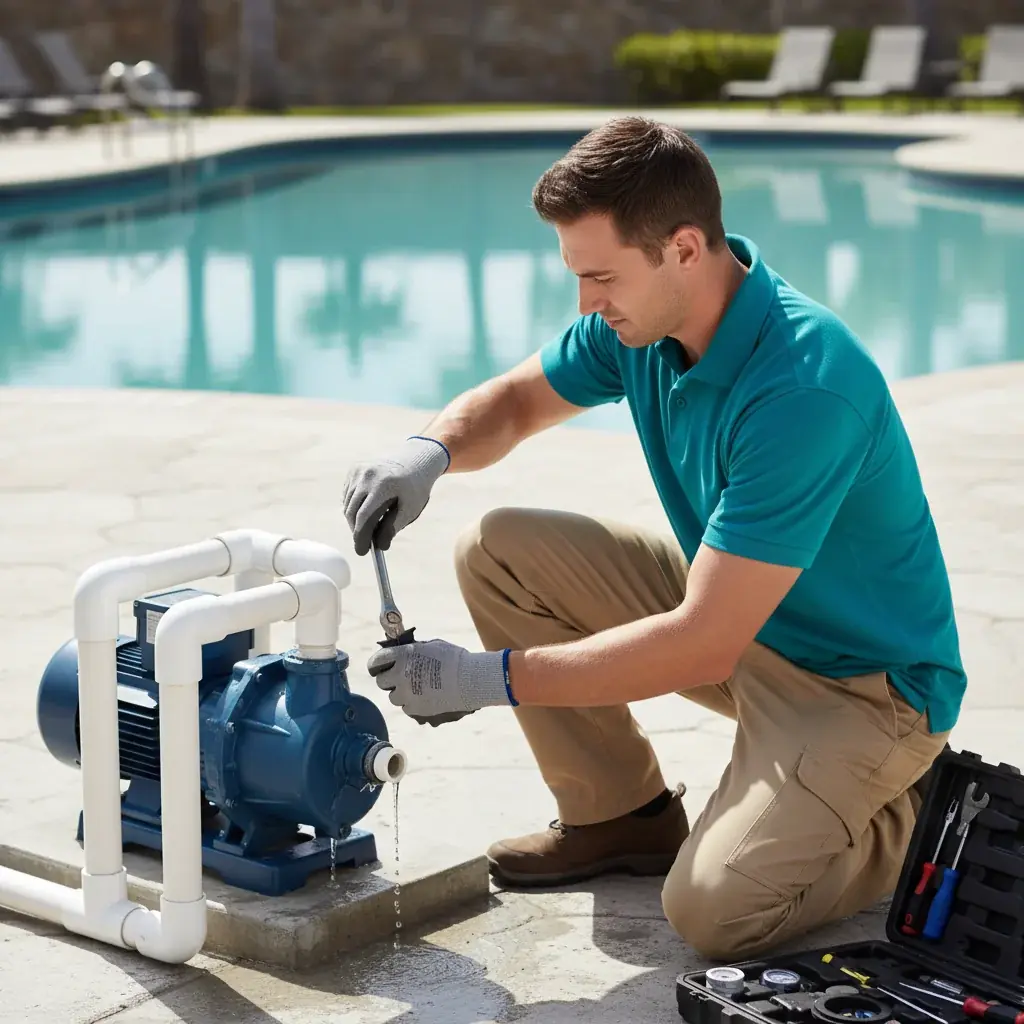
A pool pump that leaks, loses prime, hums without turning, or stays completely silent is telling you something specific. Each symptom points to a different fault, and the fix depends on where you live in San Diego County. Inland pads in El Cajon, Escondido, and Santee tend to show mineral scale on the seal plate and impeller. Coastal pads in La Jolla, Coronado, and Imperial Beach more often show corroded fittings and hardware from salt air. Knowing which pattern you are dealing with helps the pro arrive prepared.
The four symptom categories
Leaking, prime loss, humming, and silence are four distinct jobs. A leak usually means a failed seal or a loose union. Prime loss often traces to an air leak on the suction side or a clogged impeller. A humming motor that won’t spin typically points to a bad capacitor or a seized impeller. A silent pump with a tripped breaker suggests an electrical fault. If the breaker trips again immediately after you reset it, don’t keep resetting. Note how fast it trips and tell the pro.
Diagnosing a leak by location
Where the water appears matters. Water at the shaft means the shaft seal has failed. Water at a union fitting points to a gasket issue or a loose connection. A cracked housing is a separate component failure and usually means replacement. Photograph the wet spot while the pump is running so the pro can see exactly where the water originates.
Inland vs. coastal equipment pads
San Diego’s geography splits pump problems into two camps. Inland areas with harder water leave mineral scale on the seal plate and impeller over time. That buildup restricts flow and stresses the motor. Coastal locations expose metal fittings and hardware to salt air, which corrodes connections and weakens housings. No per-city hardness figures are published for the county, but the pattern is consistent enough that experienced pros check for it first.
Title 20 and replacement rules
If your pump needs a full replacement, California’s energy code applies. The California Energy Commission governs replacement pool pump motors under CCR Title 20, section 1605.3(g)(6). Effective July 19, 2021, any replacement motor rated at 0.5 total horsepower or above must be variable-speed. The rule covers manufacture and sale, not existing installations, so your current single-speed pump isn’t illegal to keep running. Previously certified models may still be sold through existing inventory. HomeGuide lists $800 to $2,000 installed for a variable-speed pump as a general U.S. planning estimate. Your matched pro provides an actual quote after an on-site assessment.
Repair or replace
Isolated fixes like a shaft seal, lid O-ring, basket, or capacitor usually warrant repair. A failing motor, unavailable parts, or a pump that falls under Title 20 scope typically means replacement. Record your pump’s model number and symptom, then compare written scopes from the pro before deciding. Brand-specific guidance is available for Hayward, Jandy, and Pentair pumps, including Pentair sub-models like IntelliFlo, SuperFlo, and WhisperFlo.
What to do before calling
Photograph the nameplate, any wet spot, and the full equipment pad. Note whether your pump is single-speed or variable-speed from the label. Record your neighborhood and any salt-air exposure. Clear the baskets and confirm the dedicated breaker is on. Never run the pump dry while waiting for service. If you notice standing water on the pad, our guide on pool equipment pad drainage covers what that means. For prime loss specifically, see our post on why a pool pump won’t prime. For leak-focused troubleshooting, check pool pump leaking water.
When to call us
Motor work, capacitor replacement, and bonding all require a licensed professional. If your pump is silent, tripping the breaker, or leaking from the housing itself, that isn’t a DIY fix. Call us at (858) 400-4404 and we’ll connect you with a licensed local pool specialist.
Frequently asked questions
What are the most common pool pump problems in San Diego?
The four most common issues are leaking at the shaft seal or unions, loss of prime, a humming motor that will not start, and a completely silent pump with a tripped breaker. Each points to a different repair.
Does California require variable-speed pumps for replacements?
Yes. Under CCR Title 20, section 1605.3(g)(6), any replacement pool pump motor rated at 0.5 total horsepower or above must be variable-speed. The rule took effect July 19, 2021, and governs manufacture and sale, not existing installations.
Should I repair or replace my pool pump?
Isolated fixes like a shaft seal, lid O-ring, basket, or capacitor usually warrant repair. A failing motor, unavailable parts, or a pump that falls under Title 20 scope typically means replacement. A licensed pro compares written scopes before you decide.
What should I do before calling for pool pump repair?
Photograph the nameplate, any wet spots, and the equipment pad. Note whether the pump is single-speed or variable-speed. Clear the baskets and confirm the dedicated breaker is on. Never run the pump dry while waiting for service.
Need professional help in San Diego County?
Splash Pool SD connects you with a licensed specialist for any service in this post.