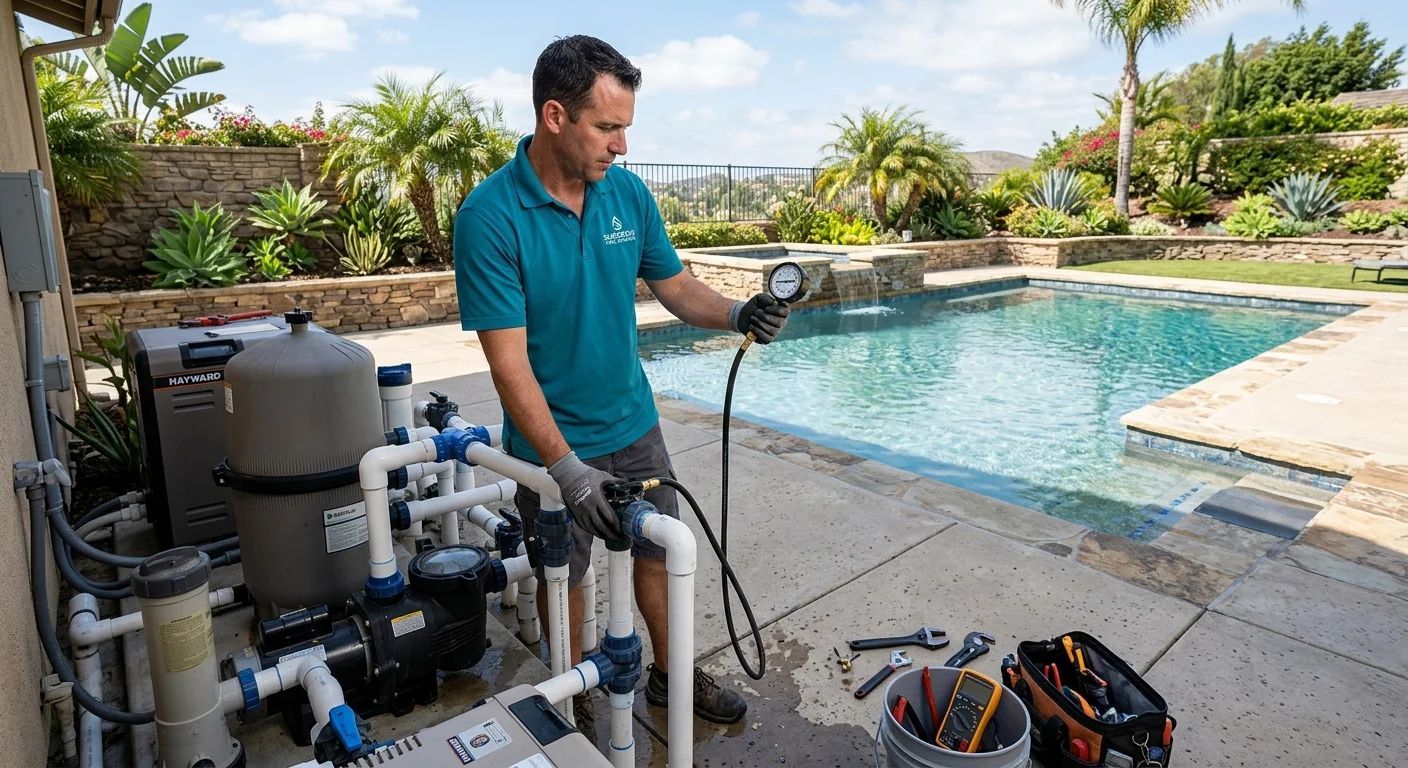
A suction line carries water from your pool toward the pump. When that pipe cracks or separates underground, air gets pulled in and the pump struggles to move water. In San Diego County, suction lines run under concrete decks, pavers, narrow side yards, and planting beds, so a leak here often hides completely from view. The fix starts with testing, not digging.
What the suction side does
Your pool’s circulation loop has two halves. The suction side pulls water in through the skimmer, the main drain, and sometimes a dedicated vacuum line. Those lines run underground to valves on the equipment pad, where the pump draws water through them. The return side pushes filtered water back into the pool through jets.
A break on the suction side behaves differently from a return-side break. Because the pump is pulling, a suction leak draws air inward rather than pushing water outward. You might see bubbles but very little standing water. That makes the problem harder to spot and easier to misdiagnose.
Symptoms that point to a suction problem
Several signs suggest the suction side is compromised:
- Air bubbles visible under a clear pump lid while the system runs.
- Bubbles exiting the return jets.
- The pump loses prime or never fully primes.
- The skimmer pulls weakly when its valve is open.
- Bubbles appear on one line and ease when you close that valve.
These symptoms overlap with other issues. A low water level, a clogged basket, a closed valve, or a worn seal can mimic a suction leak. Check the visible system first: pump connections, valve positions, lid O-rings, and basket seats. If everything above ground looks tight, the problem is likely buried.
Wet soil or shifting deck material near a pipe run is a clue, but it doesn’t identify which pipe is leaking. Surface moisture alone can’t confirm the source.
Pressure testing narrows it down
A pressure test converts a broad suspicion into a line-specific finding. Here is the general sequence:
- The pro maps every suction line as far as the visible layout allows.
- One line is isolated from the rest of the circulation system.
- Both ends of that line are sealed with test plugs, accessed through the skimmer, a suction fitting, or pad connections.
- Pressure is applied and a gauge monitors the reading.
- A falling reading supports a leak within that isolated section. A stable reading shifts attention to the next branch.
Each line gets tested as its own path. A whole-system test confirms that a leak exists but doesn’t tell you which branch is failing. And even a confirmed leak on one line doesn’t reveal the exact underground point. Listening equipment or other methods help narrow the spot, though site noise, soil type, depth, and bends limit precision.
Ask your specialist to explain findings in plain language. The explanation should name the line, describe the isolation method, and state the result. Distinguish confirmed evidence from layout-based inference. If you want to verify the contractor’s credentials before authorizing work, the CSLB license check walks through the process.
Repair options once the leak is confirmed
A confirmed suction leak doesn’t automatically mean full pipe removal. The right approach depends on location confidence, access, pipe condition, and what sits above the line.
Spot repair
Targeted excavation at a narrow leak point. The sequence is open, expose, fix, and retest. This works well when the leak location is confident and the surface above is manageable.
Reroute
Abandon the damaged path and create a new route. This avoids a difficult crossing under a wide deck or a built feature. A reroute needs a workable connection at both ends. Discuss valve placement, elevation, and future access before committing to this option.
Relining
A new inner pathway is created inside the existing pipe. This can reduce excavation, but pipe size, tight bends, fittings, and transitions can disqualify a line. Ask the specialist why your specific line qualifies.
Never select a method from symptoms alone. A low-excavation bid is useless if it targets the wrong branch. Compare bids by scope, not price. The scope should list the confirmed line, the access point, the method, a retesting plan, and surface-restoration duty. Get the full scope in writing from your matched contractor. For a broader look at underground plumbing work, see pool plumbing repair for underground lines.
Deck and access considerations in San Diego
Access routes here vary within a short drive. Point Loma’s narrow side yards limit equipment and staging space. Poway’s open lots offer different choices. Chula Vista, La Mesa, Clairemont, and coastal areas each present their own constraints. Every address needs its own access plan.
Before anyone cuts, decide removal and restoration responsibility. Have the specialist mark the proposed opening on a plan or photo. If the route crosses pavers, ask whether they can be lifted and reused. For concrete, ask how the patch boundary will be chosen and discuss color and texture matching before work begins.
Identify irrigation tubing, lighting cable, drains, and roots near the dig path. A pool contractor may need another trade for surface restoration. The written scope must state where plumbing work ends and where another party’s responsibility begins.
Photograph deck joints, coping, pavers, walls, and planting edges before work starts. Request a final pressure test before the access area is closed. That gives you a checkpoint while the repair is still visible.
Permit requirements vary by jurisdiction and scope. The exact requirement for your address is something your licensed contractor and the local building authority confirm together. Don’t assume one answer covers all of San Diego County.
Suction versus return: why the distinction matters
A return-side break releases more water while the pump runs and doesn’t pull air toward the pump. A suction-side break does the opposite: it draws air in and may show very little water loss at the surface. Confusing the two leads to wasted excavation. If you are unsure which side is failing, a pool leak detection specialist can separate the two before any repair plan is set.
What moves the cost
No standard price applies to suction line repair. Each route, depth, and access situation differs. Factors that shape the quote include pool size, the number of suction lines, the finish and hardscape above the pipe, equipment brand and age, and whether a permit is required. Your matched pro quotes the full scope before work starts. For a general framework on what drives repair pricing in this market, see pool repair cost in San Diego.
When to call us
If suction symptoms persist after you have checked visible connections, or if the repair may cross buried hardscape, a licensed pool professional should isolate the line and recommend the least-disruptive fix. Splash Pool SD matches you with licensed local specialists who handle exactly this kind of work.
Call us at (858) 400-4404 and we’ll connect you with a licensed local pool specialist.
Frequently asked questions
How do I know if my pool has a suction line leak?
Persistent air bubbles under the pump lid, loss of prime, and weak skimmer pull are common signs. These symptoms overlap with other issues, so a pressure test is needed before any excavation.
Can a suction line be repaired without removing the deck?
Sometimes. Spot repair, rerouting, and relining are three options. The right one depends on where the leak sits, how deep the pipe runs, and what hardscape covers it.
What does a suction line pressure test involve?
The pro isolates one line at a time using test plugs at both ends, applies pressure, and watches the gauge. A falling reading points to a leak in that section. A stable reading shifts attention to the next branch.
Do I need a permit for suction line repair in San Diego?
Permit requirements vary by jurisdiction and scope of work. Your matched licensed contractor and the local building authority can confirm what your specific address requires.
Need professional help in San Diego County?
Splash Pool SD connects you with a licensed specialist for any service in this post.