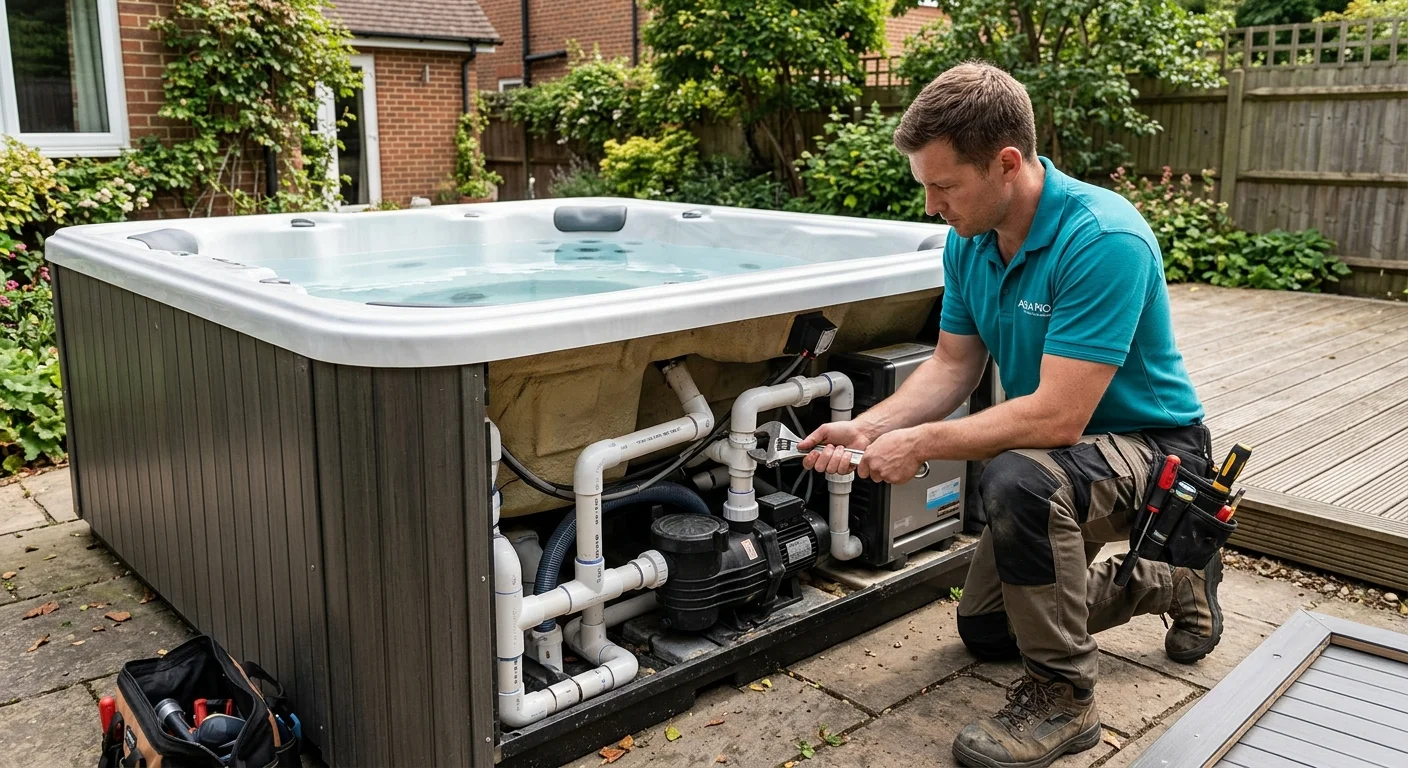
A spa or hot tub that loses water faster than evaporation explains is leaking until proven otherwise. In San Diego County, the pros we connect you with diagnose leaks in both portable hot tubs and attached spas, tracing the water path from the first wet spot back to the failed component. The repair starts with finding the source, not with guesswork.
Common places spa leaks start
Most spa leaks trace back to a handful of locations. Knowing them helps you describe what you see when you call.
Unions and threaded joints. Unions connect plumbing to pumps, heaters, and other equipment. Inspect the union gasket and the pipe next to it for moisture. A small drip here often leaves mineral residue or a clean dust path on the surface below.
Heater assembly. A leak can come from the heater union, a plug, a fitting, or an internal part. The wettest visible spot isn’t always the original source. Water travels along foam, framing, or pipe before it drips where you see it.
Pump seal. When the seal between the pump and motor fails, water appears at that junction. In tight equipment bays, a seal leak can look like a loose fitting. The distinction matters because the fix is different.
Shell penetrations. Cracks at jets, lights, drains, or other points where hardware passes through the shell are another source. A surface mark alone doesn’t confirm an active leak. Controlled testing shows whether water actually moves through that spot.
For a deeper look at how specialists isolate the source, see how pool leak detection works.
Plumbing leak vs. shell leak
The waterline stopping point narrows the search but doesn’t prove the source. Compare the level to the height of jets, fittings, lights, drains, and plumbing routes.
A plumbing leak shows moisture near a union, valve, pump, heater, or joint. Some plumbing leaks appear only during circulation. Others show only when the system sits idle.
A shell leak presents as a visible crack, a damaged fitting, or a penetration path. But evaporation, splashing, and bather carry-out also lower the water level. Before assuming a shell failure, mark the waterline with removable tape, stop using the spa, and record the level over time. Note whether equipment ran during the observation period.
Don’t add dye, sealant, or any product unless a specialist directs you to. These alter findings and can mask the real problem. If you are unsure whether the drop is a leak or normal loss, this guide on leak vs. evaporation in San Diego pools covers the same principles.
Cabinet access for portable hot tubs
Portable hot tub plumbing hides behind removable side panels. Inside, you will find pumps, heater connections, manifolds, valves, hoses, and jet lines. Correct panel removal gives a direct view of these components and separates a plumbing leak from rainwater, splash-out, or external moisture.
Wet insulation complicates the trace. A distant jet leak can soak foam long before water reaches the equipment bay. The specialist may need access from another side or limited insulation removal to follow the path.
Before the appointment, clear furniture, planters, storage bins, and loose covers from around the cabinet. Don’t remove electrical covers or disconnect plumbing. If a panel is already open, keep the screws and clips together. Never force a swollen, locked, or fastened panel.
Attached spas and shared plumbing
An attached spa shares valves, pumps, heaters, filters, and lines with the pool. A falling spa level doesn’t always mean the spa shell failed. The problem may sit in a shared component.
Record the timing: does the level drop during a run, after shutdown, or during spillover mode? Note whether the pool level changes at the same time. A spa draining toward the pool behaves differently from one leaking externally. External leak signs include damp soil, standing water, or moisture at the equipment pad.
Neither pattern alone identifies the failed component. Photograph the original valve positions before changing anything. Note the active automation mode when you first noticed the level change. These observations guide which valves, lines, and fittings the specialist tests first.
If the spa pump itself is suspect, this post on spa pump repair in San Diego covers what that job involves.
San Diego specifics: permitting and license checks
San Diego County includes incorporated cities and unincorporated communities, each with its own rules. City of San Diego permitting requirements don’t apply in Chula Vista, Oceanside, El Cajon, or unincorporated areas. Confirm requirements with the authority that governs your specific address before any repair that might need a permit.
Before hiring any contractor, verify their license through the CSLB lookup tool. Confirm the displayed license number matches the person presenting the proposal. This post on checking a pool contractor’s license in California walks through the steps.
What to do before the specialist arrives
Preparation speeds up diagnosis and keeps the visit focused.
- Mark the waterline with removable tape. Add the date, time, and a photo.
- Record the spa state: running, heating, or idle.
- Photograph the wet cabinet, equipment pad, and any damp ground.
- If moisture returns after you wipe it, note where it reappears first. The largest puddle isn’t necessarily beneath the failed part.
- Gather the brand, model, and serial label photo.
- Note when you first noticed the loss and whether it changes during circulation.
- Note whether the spa is detached or attached.
- Note any recent equipment, plumbing, or landscaping work nearby.
- Note the lowest waterline stopping point.
Don’t keep adding water to mask the change. Follow the manufacturer’s operating and shutdown instructions. Keep people out of the spa during an unresolved leak. Don’t touch electrical or gas components. Don’t tighten unions or fittings without knowing their condition: a cracked fitting and a loose connection look similar from the outside.
Ensure clear access to the cabinet, equipment pad, and pool controls. Secure pets and unlock the access gate. Keep photos of normal valve and automation settings ready.
For general spa and hot tub service in the area, see spa and hot tub repair in San Diego.
When to call us
Continued water loss, wet insulation, or moisture at the equipment pad means it is time for a licensed specialist. The matched pro diagnoses the source, quotes the repair, and handles the fix. Call us at (858) 400-4404 and we’ll connect you with a licensed local pool specialist.
Frequently asked questions
How do I know if my spa is actually leaking or just losing water to evaporation?
Mark the waterline with removable tape, stop using the spa, and record the level over 24 hours. Note whether the equipment ran during that window. Evaporation, splashing, and bather carry-out also lower the level, so a controlled observation is the first step before assuming a leak.
Can a spa leak be repaired without replacing the whole hot tub?
Many leaks come from unions, pump seals, heater fittings, or shell penetrations that a licensed specialist can repair in place. The pro you're matched with will diagnose the exact source and quote the fix before any work starts. Full replacement is only considered when the shell or structure is beyond repair.
If my attached spa is leaking, does it affect the pool too?
Attached spas share valves, pumps, heaters, filters, and plumbing lines with the pool. A falling spa level can point to a shared component rather than the spa shell itself. Recording when the level drops, whether the system is running, and how the pool level behaves at the same time helps the specialist narrow the search.
How do I verify a pool or spa contractor's license in San Diego?
Use the CSLB license lookup tool online. Confirm the displayed license number matches the contractor presenting the proposal. Rules also vary by jurisdiction: City of San Diego permitting does not apply in Chula Vista, Oceanside, El Cajon, or unincorporated areas, so check requirements with the authority for your specific address.
Need professional help in San Diego County?
Splash Pool SD connects you with a licensed specialist for any service in this post.