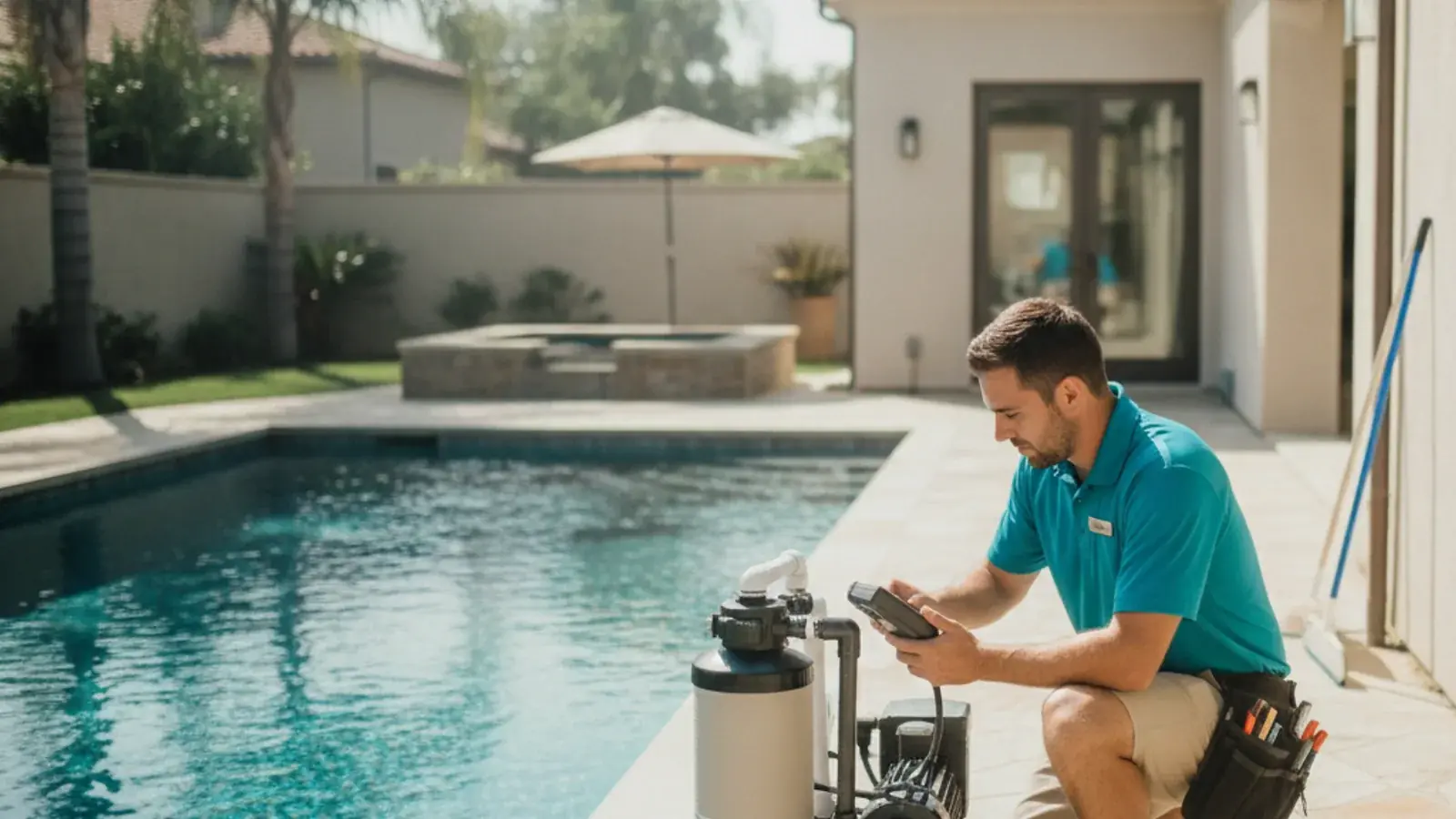
Salt water pool conversion cost in San Diego depends on your pool’s volume, the condition of its surface and fixtures, and whether the electrical pad needs upgrades. There is no flat rate. A licensed specialist inspects the pool, sizes the generator to match your water volume, and provides a written quote before any work starts.
What a conversion quote covers
A typical quote includes the salt chlorine generator, the salt itself, and installation labor. Your existing pump may be reusable, which keeps costs lower. If the pro determines you need a new pump or filter, that increases the total.
Pricing is volume-based. A bigger pool demands a higher-output generator, and that unit costs more than one sized for a smaller pool. Additional equipment or repairs found during inspection also raise the final number. The matched pro quotes after evaluation, so the figure you receive reflects your specific pool rather than a generic average.
Ask the contractor which cell fits your volume. Request written warranty terms before you select a cell. A worn cell assembly is orderable as a replacement part later, but starting with the right size matters.
What moves the price
Several factors shift the quote up or down:
- Pool size. More water means a larger generator and more salt.
- Surface condition. Plaster that is chalking or etched may need attention before conversion.
- Fixture compatibility. Metal ladders, handrails, and light niches that aren’t salt-rated require replacement.
- Electrical work. Tying into existing wiring differs from running a new circuit. A larger breaker or pad rewiring is possible.
- Equipment brand and model. Different generators carry different price points.
The pro you are matched with walks through each of these during the assessment and puts the scope in writing.
Older pools and original fixtures
Plaster and fixture condition matter more than the age of the pool itself. That said, many San Diego County pools built between the 1970s and 1990s still have their original metal fixtures. Those fixtures are often not salt-rated. Salt accelerates pitting and corrosion on them.
If your pool falls into that era, expect the specialist to recommend swapping fixtures during the conversion. Addressing the surface first is also important. Salt accelerates wear on already-degraded plaster, so a pool with chalking or etching needs that resolved before the generator goes in. You can read more about surface options in our guide to pool resurfacing options.
Permits and electrical considerations
Ask your pro in writing whether your conversion requires an electrical permit. The answer depends on your pad’s current setup. If the existing wiring supports the new load, the job is simpler. If the pad needs a larger breaker or a new circuit, the scope expands.
Older pads that haven’t been opened in years need extra caution. Wiring may be brittle, connections may be corroded, and the layout may not match current code. A licensed electrician or pool contractor handles this safely.
DIY versus professional installation
Some salt conversion kits are marketed to handy homeowners. For most San Diego pools, professional installation is the better path. Here is why:
- The cell must be correctly sized to your pool’s volume. An undersized cell underproduces chlorine. An oversized or wrong cell burns out prematurely.
- Electrical work at the pad requires safe execution.
- A pro checks surface and fixture compatibility before the generator goes in.
If you are considering the equipment side, our post on pool equipment replacement and what drives cost covers the factors that affect pricing on pumps, filters, and automation.
How long the conversion takes
A cell-and-salt-only job is a shorter visit. If the scope includes electrical upgrades, plumbing modifications, or fixture swaps, the timeline extends. Get a written scope from your matched pro so you know what to expect on installation day.
Ongoing ownership costs
A salt water pool has a different cost structure than a traditional chlorine pool. You will buy salt, perform generator upkeep, and eventually replace the cell. You are no longer purchasing chlorine separately, but the generator and cell have their own maintenance schedule.
Ask the pro whether chemistry changes affect your cell cleaning routine. Request written care instructions. San Diego’s hard water can influence scale buildup on the cell, so understanding your local water profile helps. Our post on hard water and San Diego pools explains the connection.
If you want a broader comparison of the two systems, our guide on chlorine versus salt water pools in San Diego breaks down the differences.
Eligibility: not every pool converts without prep
Surface condition, fixture compatibility, and pad condition all factor into whether your pool is ready. A specialist checks these before giving a firm quote. If prep work is needed, it gets scoped into the project so there are no surprises mid-installation.
You can verify a contractor’s license before hiring through the state’s license check tool. Our post on how to check a pool contractor’s license in California walks through the process.
When to call us
A salt water conversion involves electrical work, plumbing, and surface assessment that requires a licensed pool professional. If your pool has older fixtures, degraded plaster, or an outdated equipment pad, a specialist needs to evaluate before you commit. Call us at (858) 400-4404 and we’ll connect you with a licensed local pool specialist.
Frequently asked questions
Is there a flat rate for salt water pool conversion in San Diego?
No. Pricing is volume-based, not flat rate. A bigger pool needs a higher-output generator, and additional equipment or repairs raise the total. A licensed pro quotes after inspecting your pool.
Can I convert my pool to salt water myself?
Some kits exist for handy homeowners, but professional installation is recommended for most San Diego pools. The cell must be correctly sized to your pool volume, and electrical work at the pad requires safe execution.
Do older pools need extra work before converting to salt water?
Often yes. Chalking or etched plaster weakens candidacy because salt accelerates wear on already-degraded surfaces. Metal fixtures from the 1970s through 1990s, common in San Diego County, are often not salt-rated and may need replacement.
What ongoing costs come with a salt water pool?
You will buy salt, maintain the generator, and eventually replace the cell. The cost structure differs from purchasing chlorine separately. Ask your matched pro for written care instructions.
Need professional help in San Diego County?
Splash Pool SD connects you with a licensed specialist for any service in this post.