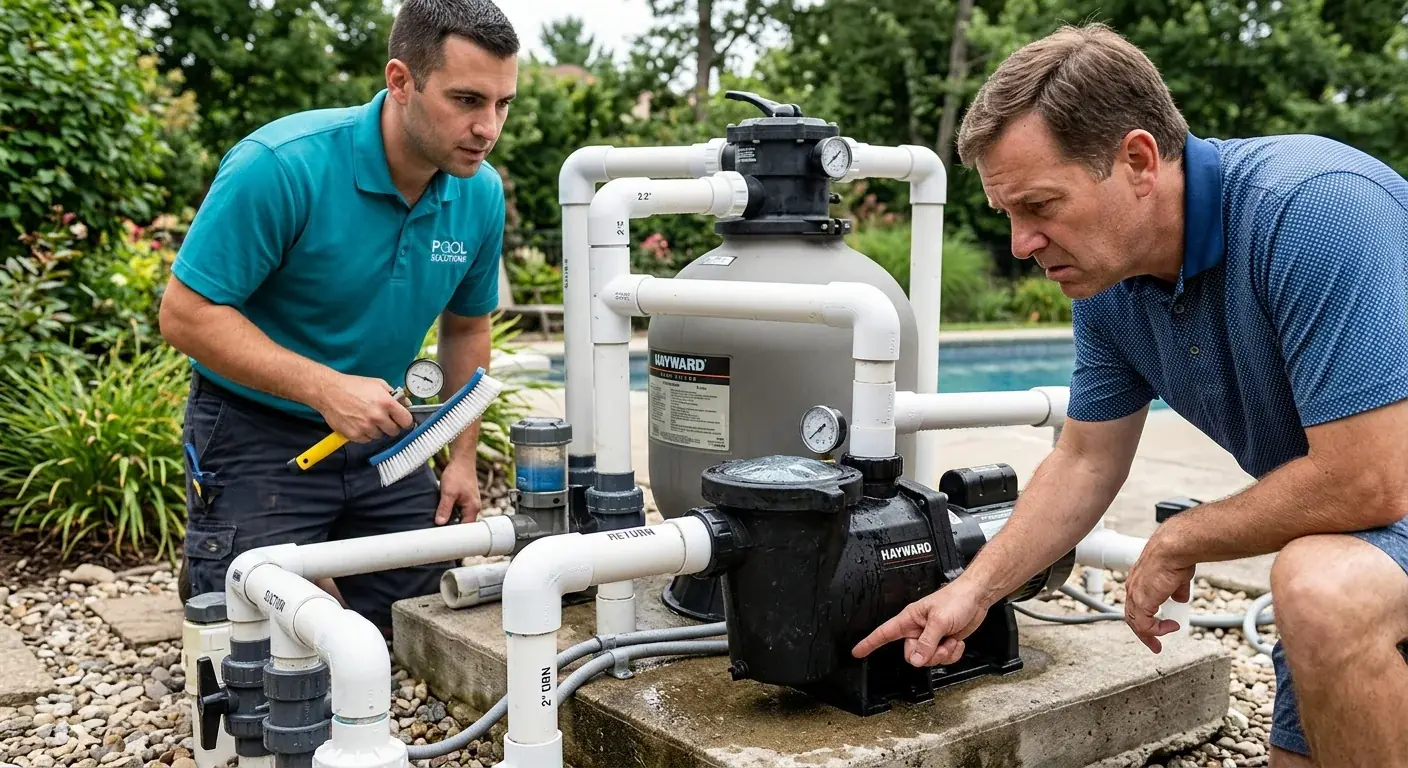
A humming pool pump means the motor is energized but the shaft isn’t turning. The sound is electrical, not mechanical. Shut the pump off immediately. A motor that hums without spinning builds heat fast, and continued operation can burn out windings that a specialist might otherwise save.
This is different from a pump that spins but fails to prime. If you hear the motor running and see an empty strainer basket, that is a suction or air-leak issue, not a motor failure. The humming-with-no-spin symptom points to something preventing the shaft from rotating.
What causes the hum without rotation
Three things commonly lock a pump shaft in place. A failed start capacitor is the most frequent culprit. The capacitor gives the motor the initial torque to begin spinning. When it dies, the motor draws current and hums but never gets that first push.
Seized bearings are the second cause. Bearings that have dried out or corroded will grip the shaft and prevent movement. This requires motor-level work, not just a quick part swap.
The third is debris locked inside the impeller. A small piece of debris can wedge the impeller blades so tightly that the motor can’t overcome the resistance. Until the wet end is opened, this can look identical to a dead motor.
A licensed specialist tests each possibility rather than guessing by sound alone. The diagnostic approach matters because a bad capacitor is a straightforward fix while seized bearings may justify a full pump replacement.
What to note before the specialist arrives
Write down the brand and model number from the motor label. Note whether your pump is single-speed or variable-speed. Record whether the breaker trips when you try to start it. Note any burning or heat smell near the equipment pad. Take a photo of the pad showing clearance around the fan cover.
This information helps the specialist arrive prepared with the right parts and testing tools. It also shortens the time spent on initial diagnosis.
San Diego conditions that affect pump failures
Coastal locations like Oceanside and Imperial Beach expose electrical covers and motor housings to salt-air corrosion. That corrosion can compromise the capacitor housing or allow moisture into the bearing assembly. Inland areas like Escondido subject motors to sustained heat stress that degrades insulation and dries out bearings faster than coastal installations do.
These details change how a specialist approaches the inspection. A pro working a coastal property will check for corrosion on electrical connections before testing the capacitor. An inland call might start with bearing condition given the heat exposure.
If you have hard water feeding your pool, mineral buildup can also contribute to impeller restriction over time. Our post on hard water and San Diego pools covers how that buildup affects equipment.
Planning for repair or replacement costs
HomeGuide lists general pump repair planning at $50 to $650. That range covers typical fixes like capacitor replacement or minor bearing work. If the motor is beyond saving and you need a full replacement, HomeGuide’s pump cost guide lists variable-speed units at $700 to $1,600 and installed work at $800 to $2,000.
These are planning figures, not quotes. Your actual cost depends on pump size, equipment brand, access to the pad, and whether any plumbing or electrical changes are needed. The specialist you are matched with will quote the exact scope before any work starts.
For more on what drives equipment replacement pricing, see our guide on pool equipment replacement costs. If you are considering upgrading to a variable-speed model, our post on variable-speed pool pumps in San Diego walks through the options.
Leave the power off until help arrives
Don’t keep resetting the breaker or trying to force the pump to start. Each attempt pushes current through a locked rotor and generates heat. A motor that could have been repaired with a capacitor swap can become a total loss after repeated forced starts.
Keep the breaker off. Note your observations. Then call for a specialist who can test the motor properly.
For broader pump issues beyond humming, our pool pump noise troubleshooting guide covers other sounds and what they indicate. If you need general pump repair information, our pool pump repair page outlines the full range of services available.
When to call us
A humming pump that won’t spin needs hands-on electrical and mechanical testing. That is licensed work, and guessing by sound alone risks misdiagnosis. Call us at (858) 400-4404 and we’ll connect you with a licensed local pool specialist.
Frequently asked questions
Why does my pool pump hum but not start?
The hum tells you the motor is receiving power but the shaft is not turning. Common causes include a failed start capacitor, seized bearings, or debris locked inside the impeller. Shut the pump off right away to prevent overheating.
Should I keep resetting the breaker when my pump hums?
No. Repeated breaker resets force current through a motor that cannot turn. That heat can destroy a motor that a specialist might otherwise have saved. Leave the power off until a licensed pro inspects it.
Is a humming pump the same as a priming problem?
No. A priming failure shows a spinning motor with an empty strainer basket and no water flow. A humming pump with no spin points to a motor-level issue like a bad capacitor or locked impeller.
How much does it cost to fix a humming pool pump?
HomeGuide lists general pump repair planning at $50 to $650. If the motor needs full replacement, HomeGuide's pump cost guide lists variable-speed units at $700 to $1,600 and installed work at $800 to $2,000. Your matched specialist quotes after on-site testing.
Should I repair the motor or replace the whole pump?
That depends on the pump's age, speed type, and the condition of the wet end. Record the brand, model, and symptom before the visit. A specialist can then tell you whether a motor swap or a full replacement makes more sense for your setup.
Need professional help in San Diego County?
Splash Pool SD connects you with a licensed specialist for any service in this post.