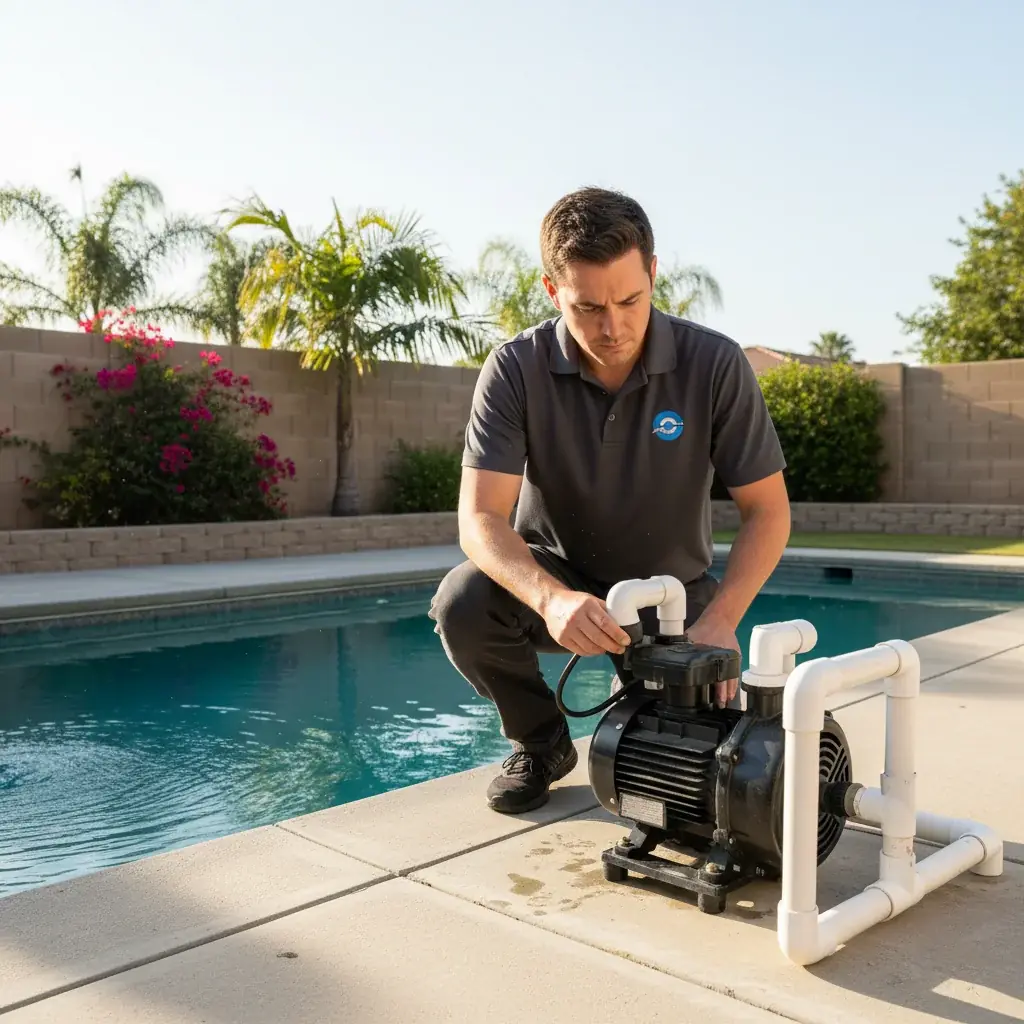
A loud pool pump is telling you something specific. The type of sound, grinding, screeching, humming, or rattling, points to a different mechanical problem each time. Identifying the noise narrows the cause and helps you decide whether this is a quick fix or a call for professional help. Here is what each sound means and what to do about it.
Grinding noise: worn motor bearings
Grinding is the most common loud pump complaint, and it almost always means the motor bearings are failing. Bearings are small steel rings that let the shaft spin freely. When they wear down, you get metal-on-metal contact, and that is the sound you hear.
Bearings fail for a few reasons. Age is the most common. Most last 8 to 12 years before the grease breaks down and the races pit. Moisture intrusion is another cause. If the shaft seal degrades, water seeps into the motor cavity and corrodes the bearings from the inside. Dry running destroys them even faster because there is no water jacket for cooling.
Coastal salt air makes this worse. If your home is in La Jolla, Del Mar, or Oceanside, oxidation on the bearing races happens faster than it does inland. Salt accelerates the pitting process and shortens bearing life.
Grinding is progressive. It won’t get better on its own. Most pumps go from a noticeable grind to full seizure within days to a few weeks. Once the shaft seizes, the motor windings can burn out, and that turns a bearing replacement into a full motor replacement.
You can check this yourself with the power off. Try hand-spinning the shaft. If you feel roughness, wobble, or grit, the bearings are going. The repair involves removing the end caps, pressing out the old bearing, and pressing in a new one. If the motor is otherwise sound, it is worth doing.
For more on pump repair options in San Diego County, see our guide to pool pump repair.
Screeching noise: shaft seal or start capacitor
A high-pitched screech or squeal, especially at startup, usually points to one of two things: a failing shaft seal or a struggling motor.
The shaft seal sits where the shaft passes through the housing into the wet end. Its job is to keep water out of the motor. When the seal wears or cracks, it binds against the shaft and produces a sharp sound. A leaking seal also lets water into the motor cavity, which attacks the bearings. Seal problems and bearing problems often show up together.
If the screech only happens at startup and fades after a few seconds, the seal is likely dry or glazed. Shaft seals are inexpensive parts, but replacing one requires draining the pump and disassembling the wet end.
The other cause is a failing start capacitor. The capacitor gives the motor its initial torque kick. When it weakens, the motor labors and screams trying to spin up. Capacitors are cheap to replace and the fix is straightforward.
Either way, screeching always worsens. The downstream damage compounds, so addressing it early saves money.
Cavitation hum: water isn’t reaching the impeller
Cavitation sounds like a low, erratic hum or a gurgling rumble. You might also see turbulence through the pump basket lid. It happens when the impeller spins faster than water arrives. Low-pressure pockets form and collapse violently, creating micro-implosions that erode the impeller over time and stress the motor.
Several things cause this:
- Water level below the skimmer opening. Keep it at mid-skimmer.
- A clogged skimmer or pump basket choking suction. Check and empty baskets weekly, and more often after Santa Ana winds or heavy debris.
- A partially closed suction-side valve left over from a previous repair. Walk your plumbing and confirm all valves are fully open.
- An air leak on the suction side. Cracked fittings, a loose pump lid O-ring, or a degraded union seal can all let air in. The tell is bubbles returning through the return jets.
- Undersized plumbing. Older homes often have 1.5-inch suction lines. Paired with newer high-flow pumps, those lines can’t deliver enough water.
The fix is often simple: clear a blockage or reseat the lid O-ring. If cavitation has been going on for months, have the impeller inspected for pitting or cracking. A damaged impeller won’t move water efficiently even after you fix the root cause.
If your pump hums but won’t start at all, that is a different problem. Our post on pool pump humming but not running covers that scenario.
Rattling noise: loose hardware or debris
A rattle or vibration that changes with RPM usually comes from one of three places.
Loose mounts are the simplest cause. Rubber-isolated feet or pads degrade and harden over time. The pump then vibrates directly against a hard surface, which is surprisingly loud. Check the mounting bolts and replace any hardened isolation pads. This is a five-minute fix.
Debris lodged in the impeller vanes is the next possibility. Small rocks, seeds, leaf stem pieces, and acorns can slip past the pump basket. You will hear a rhythmic click or rattle as the impeller hits the debris. To fix it, shut off the pump, drain the wet end, remove the impeller, and clear the obstruction. Even a small pebble can crack an impeller vane, and a cracked impeller loses hydraulic efficiency, reducing flow and raising energy use.
Loose plumbing or pipe straps are the third cause. PVC vibrates against the pad or equipment wall. Feel the pipes while the pump runs to find where vibration transfers. Adding a pipe strap or foam isolator solves it.
If the rattle comes with reduced flow or cloudy water, the issue may be upstream of the pump.
Repair or replace: how to decide
A few guidelines help you decide whether to fix the pump you have or invest in a new one.
Repair makes sense when:
- The pump is under 8 years old.
- A single isolated component is affected.
- The repair cost stays under 40 to 50 percent of a comparable new pump.
- The motor frame and housing are physically sound.
Replace when:
- The pump is 10 or more years old with multiple issues.
- The motor windings are burned. You will smell an acrid electrical odor.
- The repair cost approaches or exceeds the price of a new unit.
- You are still running a single-speed motor.
That last point matters in California. Title 20 requires variable-speed motors on most new installations. Variable-speed pumps cut energy use by 50 to 70 percent compared to single-speed models, a gain documented by the California Energy Commission. San Diego Gas & Electric also offers rebates for variable-speed upgrades, which can bring the payback period down to two or three years through energy savings alone.
Our post on variable-speed pool pumps in San Diego explains the options, and the rebate guide walks through current incentive programs.
If you are weighing a full replacement, what drives equipment replacement cost breaks down the factors that move the number: pool size, plumbing configuration, equipment brand, and access to the pad.
When to call us
Pump work involves electrical components, pressurized plumbing, and close tolerances. Incorrect reassembly can cause further damage or create a safety hazard. If you hear grinding, screeching, or persistent cavitation, or if a rattle comes with reduced flow, it is time for a licensed professional.
Call us at (858) 400-4404 and we’ll connect you with a licensed local pool specialist.
Frequently asked questions
What does a sudden loud grinding noise from my pool pump mean?
Grinding almost always means the motor bearings are worn down. The steel races that let the shaft spin freely have pitted or lost their grease. This gets worse quickly, often within days to a few weeks, and can burn the motor windings if you keep running it. Turn the pump off and have a pro inspect it soon.
Is it safe to keep running a noisy pool pump?
It depends on the noise. A rattle from loose mounts is not urgent. Grinding or screeching means internal damage is progressing, and continued use can destroy the motor or crack the impeller. If the sound is getting louder or changing, shut the pump off until a licensed technician takes a look.
How long do pool pump bearings last in San Diego?
Most bearings last 8 to 12 years under normal conditions. Coastal salt air in areas like La Jolla, Del Mar, and Oceanside accelerates oxidation on the bearing races, which can shorten that window. Moisture from a failing shaft seal also corrodes bearings from the inside.
What causes cavitation in a pool pump?
Cavitation happens when the impeller spins faster than water can reach it. Common causes include a low water level, a clogged skimmer or pump basket, a partially closed suction valve, an air leak on the suction side, or undersized plumbing paired with a high-flow pump.
Should I repair my old pool pump or replace it?
If your pump is under 8 years old and only one component is failing, repair usually makes sense. If it is over 10 years old, has multiple issues, or still runs a single-speed motor, replacement is often the better investment. California Title 20 requires variable-speed motors on most new installations, and the energy savings can offset the cost within a few years.
Need professional help in San Diego County?
Splash Pool SD connects you with a licensed specialist for any service in this post.