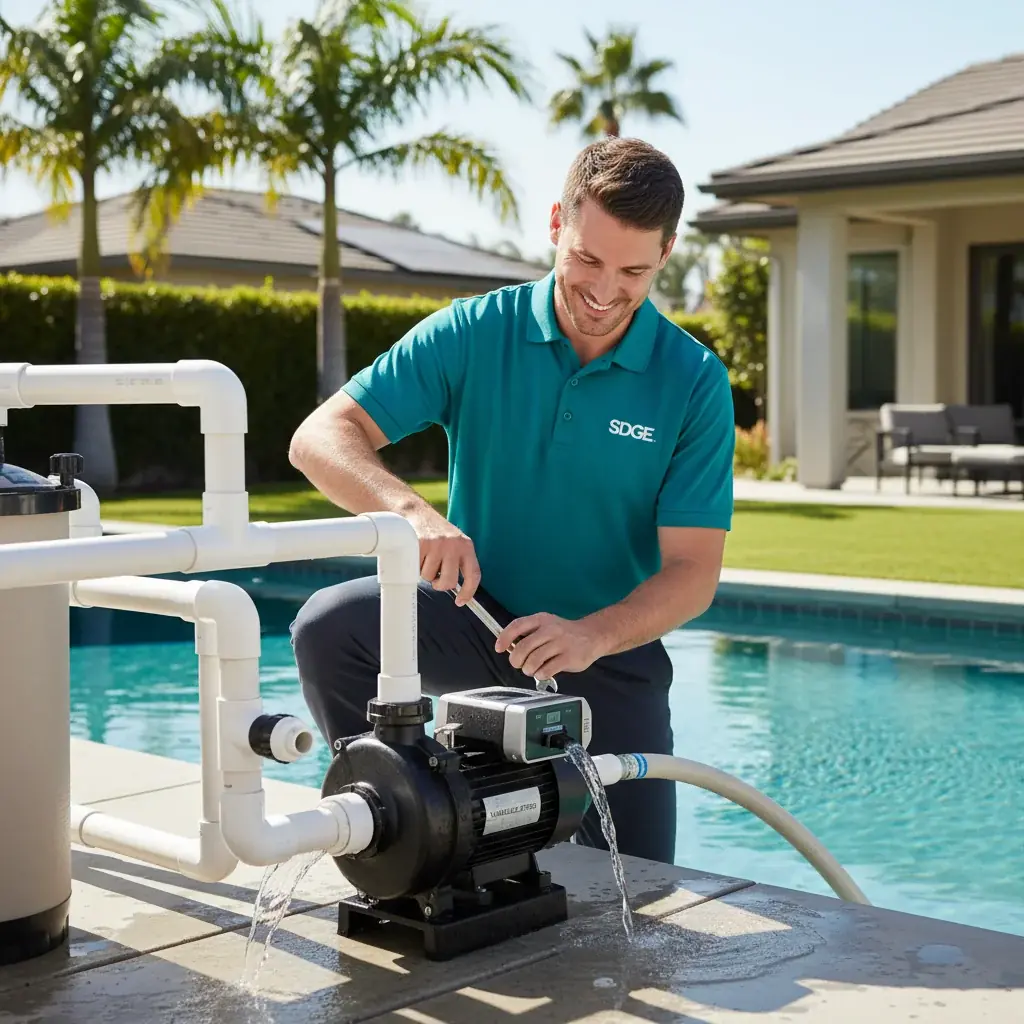
The SDG&E rebate for a qualifying variable speed pool pump is typically $100 to $400, with most licensed installations landing in the $200 to $400 range. It is a post-purchase rebate, not a coupon you hand the cashier. You pay full price upfront, your installer files the paperwork, and SDG&E mails you a check. Amounts shift year to year, so the current figure gets confirmed before any installation begins.
How the rebate actually works
This isn’t a discount at the point of sale. The process runs like this:
- You buy and install a qualifying variable speed pump.
- Your licensed contractor submits the application to SDG&E.
- SDG&E reviews the paperwork and cross-checks the installer’s license.
- A check arrives at your address within 6 to 8 weeks.
The application itself is one to two pages. It asks for your name, address, SDG&E account number, details about your old pump, and details about the new one. The invoice must show the date, full payment, and the exact model number. A generic line item like “pool pump install” causes rejection. Your contractor’s name and CSLB license number must appear on that invoice. SDG&E verifies it against the state’s CSLB database.
What qualifies in 2026
Three things must line up:
- The pump carries ENERGY STAR certification. The EPA sets the efficiency standards behind that label.
- The model appears on SDG&E’s Qualified Products List, which lives on their website.
- A licensed contractor performs the installation. DIY work disqualifies you.
Pentair, Jandy, and Hayward all have models on the approved list. Variable speed pumps permit precise RPM control, which is what makes them efficient enough to qualify.
What doesn’t qualify
- Single-speed pumps are excluded. They are also illegal to install as replacements in California.
- Most two-speed pumps fail the efficiency criteria.
- Any pump that lacks ENERGY STAR certification or doesn’t appear on the Qualified Products List is out.
If your current pump is a single-speed unit that just died, the rebate still applies. The qualifying factor is the new variable speed installation, not the condition of the old equipment.
The legal backdrop: Title 20
California Title 20 governs appliance efficiency standards. It requires a variable speed pump for replacement pumps above a certain horsepower threshold. If your single-speed pump fails, the law already forces you toward a VSP upgrade. The rebate offsets what is effectively a mandated expense, not an optional one.
Sample math for a San Diego pool owner
Here is what the numbers look like for a typical installation in 2026. These figures come from the research data provided:
- New VSP (Pentair IntelliFlo3): $1,800
- Professional installation and plumbing: $550
- Total upfront cost: $2,350
- SDG&E rebate: -$400
- Your final out-of-pocket cost: $1,950
Now the savings side. A typical San Diego pool owner running an old single-speed pump spends roughly $90 to $120 per month on pump electricity. A variable speed pump drops that to roughly $15 to $25 per month. That is $75 to $95 in monthly savings.
Using those numbers, the payback period on the $1,950 investment is roughly 21 to 26 months. After that, you are saving money every month the pump runs. VSPs typically last 7 to 10 years, so lifetime savings exceed the initial outlay many times over.
Your actual cost will depend on pool size, plumbing configuration, equipment brand, and access to the equipment pad. The pro you get matched with will quote the full price before any work starts.
Why variable speed pumps run cheaper
A single-speed pump runs at full power whenever it is on. There is no modulation. A variable speed pump adjusts its RPM to match demand. Filtration runs at low speed. The pump ramps up only when something requires more flow, like a pool cleaner or a water feature.
This cuts electricity draw dramatically. At low speed, a VSP draws far less power than a single-speed unit running the same hours. That is where the monthly savings come from.
The noise difference
Single-speed pumps are loud. You can hear them from across the yard. A variable speed pump at low RPM is whisper-quiet. You have to stand right next to it to hear it running. For pools near patios, bedroom windows, or shared walls with neighbors, this is a real quality-of-life upgrade.
Better filtration and water quality
Longer low-speed runs keep water moving constantly through the filter. This eliminates the dead spots where algae likes to form. Chemicals distribute more evenly throughout the pool. The result is clearer water and potentially lower chemical usage.
Running a VSP at low RPM around the clock is healthier for your water than blasting a single-speed pump for eight hours and shutting it off. If you want to dial in your run times, our guide on how long to run your pool pump in San Diego covers the specifics.
Less wear on your other equipment
Every time a single-speed pump kicks on at full power, it sends a surge through your filter, heater, and plumbing. That startup strain adds up. A VSP uses a soft start. It ramps gradually. Lower average operating pressure extends the life of every component downstream. Fewer premature repair calls, fewer surprise failures.
If you are already dealing with a pump that hums but won’t turn on, or one that is leaking at the seal, our post on pool pump repair in San Diego walks through what is fixable versus what needs replacement.
Steps to get your rebate
- Choose a pump from SDG&E’s Qualified Products List. Your installer can help you pick the right size and model for your pool.
- Have a licensed contractor install it. This isn’t optional. SDG&E will reject the application if the installer isn’t licensed.
- Submit the application with your paid invoice. Make sure the invoice shows the exact model number, the date, full payment, and the contractor’s CSLB number.
- Wait 6 to 8 weeks for the check.
Your installer typically handles steps 3 and 4 for you. Confirm this before the job starts so nothing falls through the cracks.
What moves the price
Every pool is different. The total cost of a VSP swap depends on:
- Pool size and plumbing diameter
- The brand and model you choose
- How accessible the equipment pad is
- Whether any plumbing modifications are needed
- Local permit requirements
The pro you get matched with will assess all of this and give you a full quote before work begins. For a broader look at what drives equipment replacement costs, see our post on pool equipment replacement costs.
When to call us
If your single-speed pump is aging, making noise, or has already failed, a variable speed upgrade is likely your next move. The rebate offsets the cost, Title 20 may already require it, and the monthly savings start immediately. Call us at (858) 400-4404 and we’ll connect you with a licensed local pool specialist.
Frequently asked questions
How much is the SDG&E rebate for a variable speed pool pump?
The SDG&E pool pump rebate is typically $100 to $400 for a qualifying variable speed pump, with most licensed installations landing in the $200 to $400 range. Amounts can change year to year, so the current offer gets confirmed before every installation.
Do I need a licensed contractor to get the rebate?
Yes. SDG&E requires a licensed contractor to perform the installation. DIY installs disqualify you from the rebate. The installer's CSLB number must appear on the invoice, and SDG&E cross-checks it against the state database.
How long does it take to receive the rebate check?
The check typically arrives within 6 to 8 weeks after your complete application is submitted. The installer handles the submission through the SDG&E portal or by mail.
Can I get the rebate if my old single-speed pump broke?
Yes. The rebate applies regardless of your old pump's condition. The qualifying factor is the new variable speed pump installation, not why you replaced the old one.
What pumps qualify for the SDG&E rebate?
The pump must carry ENERGY STAR certification and appear on SDG&E's Qualified Products List. Pentair, Jandy, and Hayward all have models on that list. Single-speed and most two-speed pumps do not qualify.
Need professional help in San Diego County?
Splash Pool SD connects you with a licensed specialist for any service in this post.