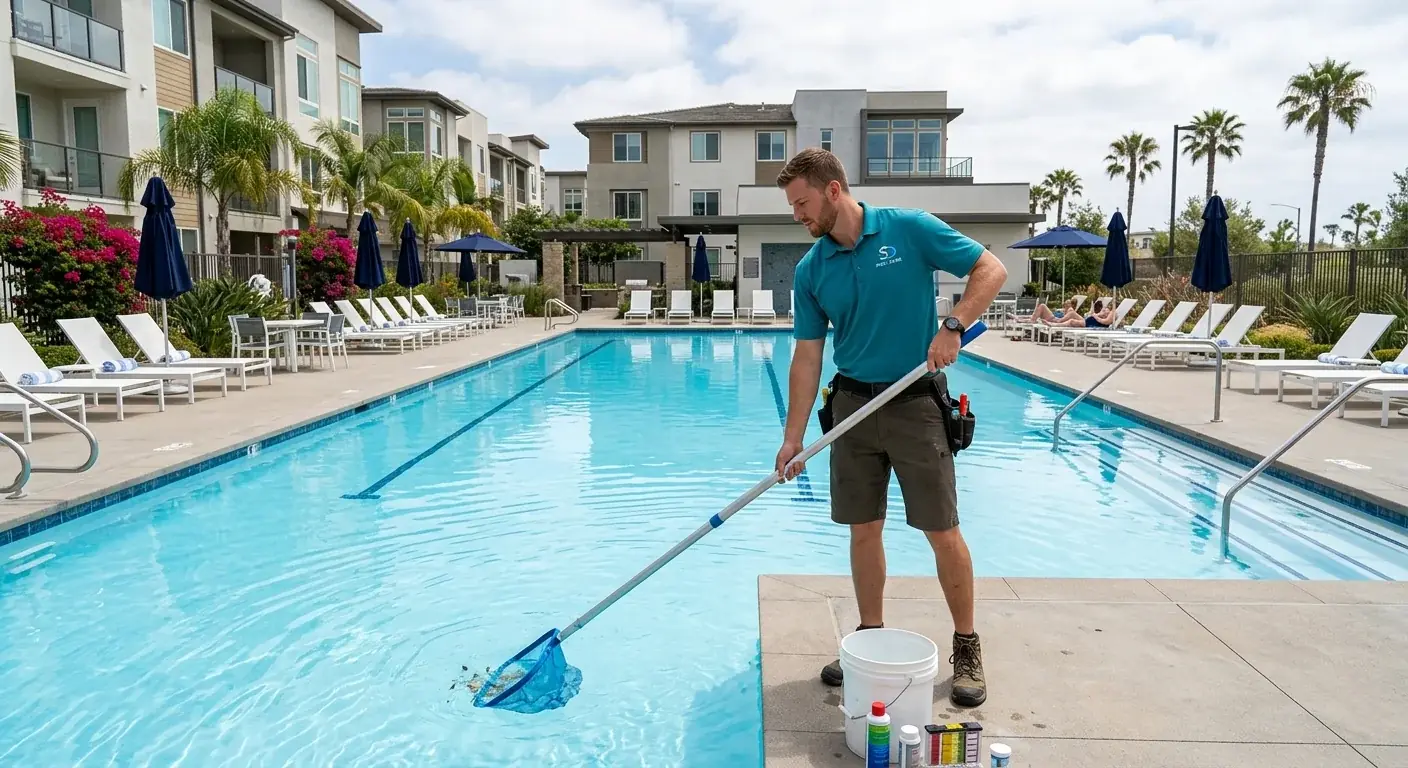
An HOA board in San Diego should put the full scope of pool work in writing before any pro touches the equipment. That means naming every piece of gear, stating who approves surprises, and spelling out access rules. Without those details in the contract, scope disputes follow the job.
What belongs in the written scope
A solid contract for community pool work names the specific equipment involved. It draws a clear line between repair and replacement. It states access hours, because many HOA sites have lockboxes, quiet hours, and clubhouse alarms that a backyard job never deals with.
The contract also identifies who approves additional faults found mid-job. This matters more than most boards realize. The property manager is often absent from the site when the pro discovers a second problem. Without a named approver, the work stops or the invoice gets disputed later.
Exclusions belong in the document too. If the scope covers the pump but not the plumbing feeding it, say so. Payment terms round out the list. The matched pro quotes before work starts, so the board sees the number before signing.
Shared plumbing changes the conversation
Community pools often have plumbing that runs beneath decks residents use daily. A leak in that shared line isn’t the same job as fixing a surface crack. Detection and repair are separate scopes. Underground line work is distinct from surface repair.
Boards should make sure the contract treats these as separate line items. Bundling them into one vague “plumbing fix” invites confusion about what was actually done and what still needs attention.
Licensing verification is non-negotiable
Before signing anything, the board should verify the contractor through the CSLB online license lookup. Match the legal name on the license to the name on the contract. If they don’t match, stop.
California Business and Professions Code §7048, amended effective January 1, 2026, sets a narrow exemption for casual minor work below a statutory threshold that requires no permit. Advertising or staffing voids that exemption. An HOA-advertised or staffed job never qualifies as casual. Boards should treat every community pool project as one that requires a licensed contractor.
For a deeper walkthrough of the verification process, see our guide on checking a pool contractor’s license in California.
Downpayment rules apply here
Covered home-improvement contracts carry a downpayment cap: the lesser of a fixed sum or 10 percent. Boards should confirm with counsel or the contractor whether their specific agreement falls under that rule before handing over any money.
Coastal and inland sites differ
Inspection findings vary across the county. Coastal communities like Coronado and Pacific Beach tend to show corrosion on metal fixtures and light niches. Inland areas like Escondido and El Cajon more often show scale buildup on heaters and heat exchangers. These are observations from inspections, not published rate-card items, but they affect what the scope should cover.
The contract should reflect the site’s actual condition. A coastal board might prioritize corrosion-resistant replacements. An inland board might budget for descaling or heater work. The matched pro assesses the site and quotes accordingly.
For more on how San Diego’s hard water affects pool equipment, read our post on hard water and San Diego pools. If the board is weighing equipment options, our guide on what drives pool equipment replacement cost breaks down the factors.
HOA work isn’t backyard work
The equipment may look the same, but the job is different. Access rules, insurance requirements, after-hours restrictions, and authorization for extras all set HOA sites apart. Every one of those differences belongs in the contract. A board that treats a community pool job like a residential one will run into problems.
Our post on how to choose a pool cleaning company in San Diego covers what to look for when vetting pros for any property type.
When to call us
If your board needs repair, equipment work, plumbing, or interior surface work on a community pool, that is licensed contractor territory. Splash Pool SD matches HOA boards and property managers with licensed independent local pool pros. Call us at (858) 400-4404 and we’ll connect you with a licensed local pool specialist.
Frequently asked questions
What should an HOA pool service contract include?
It should name the equipment, distinguish repair from replacement, state access hours, identify who approves additional faults, list exclusions, and spell out payment terms.
Does California law limit downpayments for HOA pool work?
Covered home-improvement contracts carry a downpayment cap of the lesser of a fixed sum or 10 percent. Boards should confirm the contract type with counsel or the contractor before signing.
How does an HOA verify a pool contractor's license?
Use the CSLB online license lookup tool. Match the legal name on the license to the name on the contract before any work begins.
Why does shared plumbing matter for HOA pool contracts?
Community leaks can sit beneath resident-used decks. Detection and repair are separate scopes, and underground line work is distinct from surface repair. The contract should separate them.
Need professional help in San Diego County?
Splash Pool SD connects you with a licensed specialist for any service in this post.