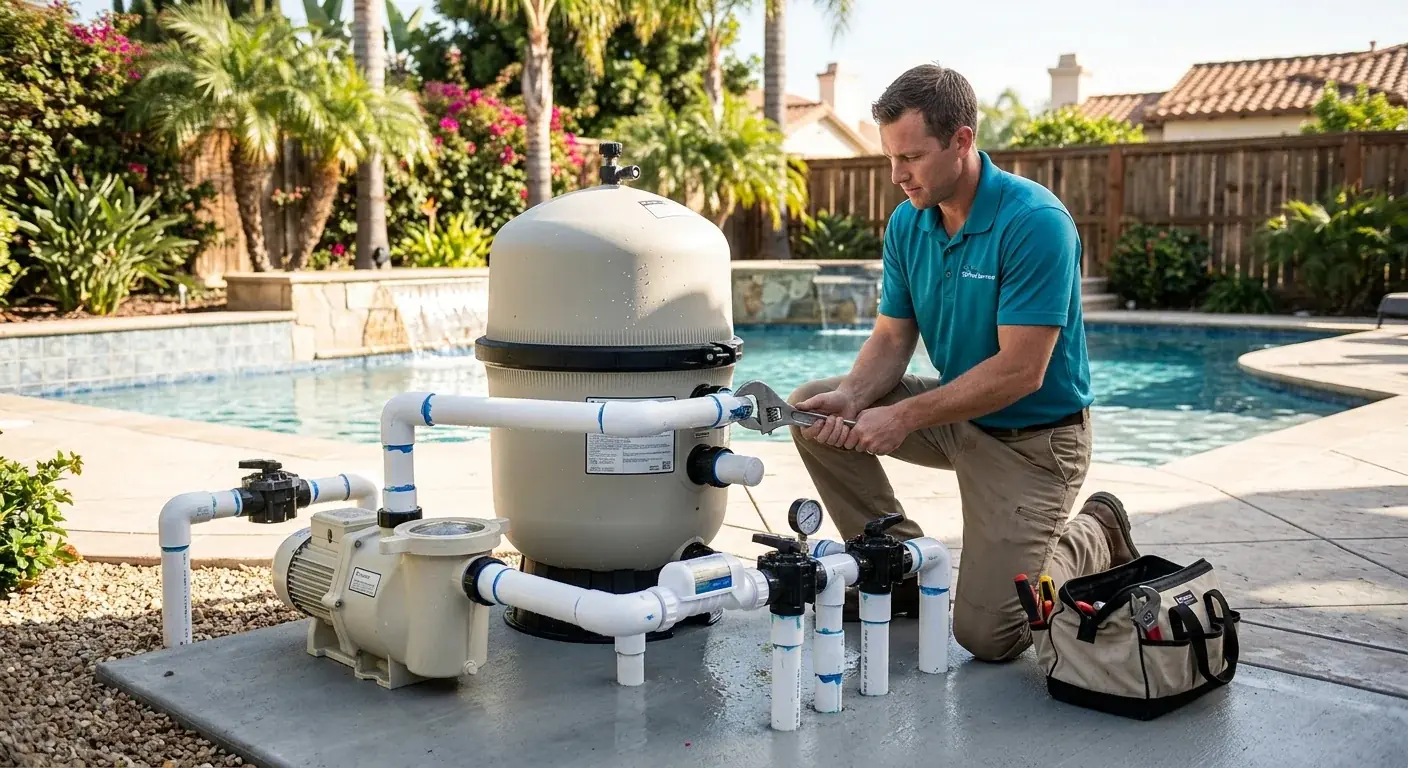
A pool filter that still leaves water hazy after a professional cleaning has likely reached the end of its service life. In San Diego, the combination of long run-hours, hard water, and intense UV exposure wears filters down faster than national averages suggest. When cleaning no longer restores clarity or flow, replacement is the fix.
Signs your filter needs replacing, not just cleaning
A dirty filter and a failing filter look similar at first. Both cause cloudy water and reduced flow. The difference shows up after you clean it.
A dirty filter responds to maintenance. Sand and DE filters recover with backwashing. Cartridge filters recover with a thorough rinse. Pressure returns to normal, water clears within a day or two, and the system runs quiet.
A failing filter doesn’t recover. The symptoms persist:
- Water stays cloudy despite correct chemistry and proper pump cycles
- Pressure reads abnormally low, which signals media failure or bypass
- The tank shows hairline cracks, dripping, or corrosion at seams
- Algae blooms return quickly because filtration is compromised
If you’ve had a professional cleaning and the water still won’t clear, the filter media or the housing itself is the problem.
How San Diego’s climate shortens filter life
The county’s environment puts extra demand on pool filters year-round.
The long sunny season means pumps run more hours annually than in cooler climates. More run-hours mean more water pushed through the media, which accelerates wear.
Wind events, especially in fall and winter, deposit dust and debris into the pool. The filter catches all of it. Pollen load is heavy in spring, particularly in inland areas like El Cajon and Santee where vegetation is dense.
Hard water is a factor across most of San Diego County. Mineral buildup coats cartridge fabric and DE grids, reducing their ability to trap particles. You can read more about how local water chemistry affects pools in our hard water guide.
Intense UV degrades plastic tank components over time. Housings become brittle, and seams develop micro-cracks that eventually leak.
Typical lifespans by filter type
These ranges assume normal residential use in this climate:
- Cartridge filters: 2 to 5 years
- Sand media: 5 to 8 years
- DE grids: 8 to 12 years
- Sand tank itself: 10 to 20 years possible
Coastal areas like Encinitas and Del Mar see salt air exposure that can corrode metal fittings and accelerate housing degradation. Inland areas deal with more dust and higher mineral content in fill water. Both shorten the ranges above.
How each filter type fails
Cartridge filters
Pleated fabric traps debris as water passes through. You remove the cartridge and rinse it to clean. Over time, the fabric tears, mats down, or loses its ability to spring back after compression.
Once the pleats are matted or torn, no amount of rinsing restores performance. The housing itself can also crack, which requires a full-unit swap.
Sand filters
Water is pushed through a bed of specialized sand. Regular backwashing flushes trapped debris. Over years, the sand grains smooth out and lose their sharp edges. When that happens, water finds channels through the bed instead of being filtered evenly. This is called channeling.
Once channeling starts, backwashing becomes ineffective. The sand needs replacing, or if the tank is old enough, the entire unit comes out.
DE filters
DE filters provide the finest filtration of the three types. A permeable powder coats internal grids, trapping particles down to a few microns. You backwash periodically and replenish the DE powder.
The grids are fabric-covered plastic. They tear or clog with oils and debris over time. Damaged grids let powder return to the pool, and filtration efficiency drops dramatically. If you see DE powder in the pool after backwashing, the grids are compromised.
For a deeper comparison of all three types, see our pool filter types guide.
Pressure and clarity warning signs
Your filter’s pressure gauge tells you a lot about its condition.
Abnormally low pressure means the media is failing. Sand channeling causes low readings. Torn DE grids allow water to bypass. Matted cartridge fabric reduces resistance, which also shows as a low reading.
Fluctuating pressure combined with air bubbles in the return jets points to a structural issue. Unusual noises from the tank may indicate a hidden crack. If the system struggles to hold pressure at all, a fracture is likely.
On the clarity side: if chemistry is balanced, the pump runs its full cycle, and the water still looks hazy, the filter isn’t doing its job.
Tank damage indicators
Look for these on the housing itself:
- Hairline cracks, especially near seams and connections
- Dripping or moisture at the base
- Corrosion on metal fittings
- Sun-brittled plastic that flakes or cracks when touched
A leaking tank wastes water and can damage the equipment pad underneath. If left alone, a small crack can become a structural failure. If you notice any of these signs, have a pro inspect the unit soon.
Sizing your replacement correctly
A replacement filter must match your pool’s volume and your pump’s flow rate. Getting this wrong causes premature wear or poor filtration.
The target is a full turnover of your pool’s water every 8 to 10 hours. To calculate volume:
- Rectangular pool: length × width × average depth × 7.5
- Round pool: π × radius² × average depth × 7.5
Once you know the volume, you can determine the required flow rate in gallons per minute. The filter’s maximum GPM rating must equal or exceed your pump’s GPM output. A buffer above the pump’s rating is preferred. For example, if your pump pushes 60 GPM, a filter rated for 75 GPM gives you headroom.
An oversized filter runs at lower pressure and needs less frequent cleaning. An undersized filter wears prematurely and requires constant attention.
Your matched pro will verify sizing before recommending a specific unit.
What drives replacement cost
We don’t publish dollar figures because every installation differs. Here’s what moves the price:
- Filter type and size: larger pools need bigger, higher-capacity units
- Brand and model: high-efficiency models cost more upfront but save energy over time
- Installation complexity: a like-for-like swap is simpler than re-plumbing for a different type
- Permits: rare for a straight swap, but possible if electrical work or major re-piping is involved
- Disposal fees for old media and tank
The licensed pro you’re matched with provides a full quote before any work starts. For a broader look at what affects equipment replacement pricing, see our equipment replacement cost guide.
Disposal rules for old filter media
DE powder
Never backwash DE into a storm drain. The powder harms aquatic life and clogs pipes. Let it dry out completely before disposal. Once dry, it can go in regular household trash. Some municipalities require double-bagging. Check with your local waste management authority if you’re unsure.
Cartridges
Rinse loose debris off the cartridge before bagging it. Most residential waste services accept used cartridges in regular trash. Specialized recycling for pool cartridges is rare. Used units carry oils, dirt, and chemical residue, so bag them securely.
The pro handling your replacement takes care of disposal and follows county regulations. You don’t need to manage it yourself.
Upgrading your filter type
Replacement is a good time to consider an upgrade. Common paths include:
- Sand to cartridge: better filtration with less water waste from backwashing
- Sand to DE: finest available filtration for pools that demand crystal-clear water
- Single cartridge to multi-cartridge: more surface area, longer intervals between cleanings
Upgrades may require plumbing modifications. Your pro will assess whether your existing pad and piping support the change or if re-plumbing is needed. We cover what to expect during installation in our equipment installation guide.
Repair or replace: making the call
Sometimes a filter issue is fixable without a full replacement. A cracked multiport valve, a worn O-ring, or a single torn DE grid might be repairable. The decision depends on the age of the unit, the cost of the repair relative to a new filter, and whether other components are near the end of their life.
We break down that decision in detail in our repair or replacement guide.
When to call us
If your filter won’t hold pressure, water stays cloudy after cleaning, or the tank shows visible damage, you need a licensed pool professional to assess the unit and size a replacement correctly. Call us at (858) 400-4404 and we’ll connect you with a licensed local pool specialist.
Frequently asked questions
How often do pool filters need replacing in San Diego?
Cartridge filters typically last 2 to 5 years, sand media 5 to 8 years, and DE grids 8 to 12 years. San Diego's long sunny season and hard water shorten those ranges because the system runs more hours and mineral buildup accumulates faster.
How do I know if my filter needs replacing instead of cleaning?
If water stays cloudy after a professional cleaning, pressure reads abnormally low despite a clean filter, or you see cracks and leaks in the tank, replacement is the next step. Cleaning solves temporary clogs. It cannot fix torn media, channeling sand, or structural damage.
Will the pro handle disposal of my old filter?
Yes. The licensed pro you're matched with handles dismantling, disposal, and any local compliance. DE powder must dry out completely before it goes in household trash, and cartridges should be rinsed and bagged. Your pro manages all of that.
What drives the cost of a filter replacement?
Filter type and size, brand and model features, installation complexity, and whether plumbing modifications are needed all affect the price. The matched pro provides a full quote before any work begins.
Can I upgrade from one filter type to another?
Yes. Sand to cartridge or sand to DE are common upgrade paths. Some homeowners also move from a single cartridge to a multi-cartridge setup for more capacity. Your pro can advise on what fits your plumbing and pool size.
Need professional help in San Diego County?
Splash Pool SD connects you with a licensed specialist for any service in this post.