Pool filter repair in San Diego: cartridge, DE, and sand
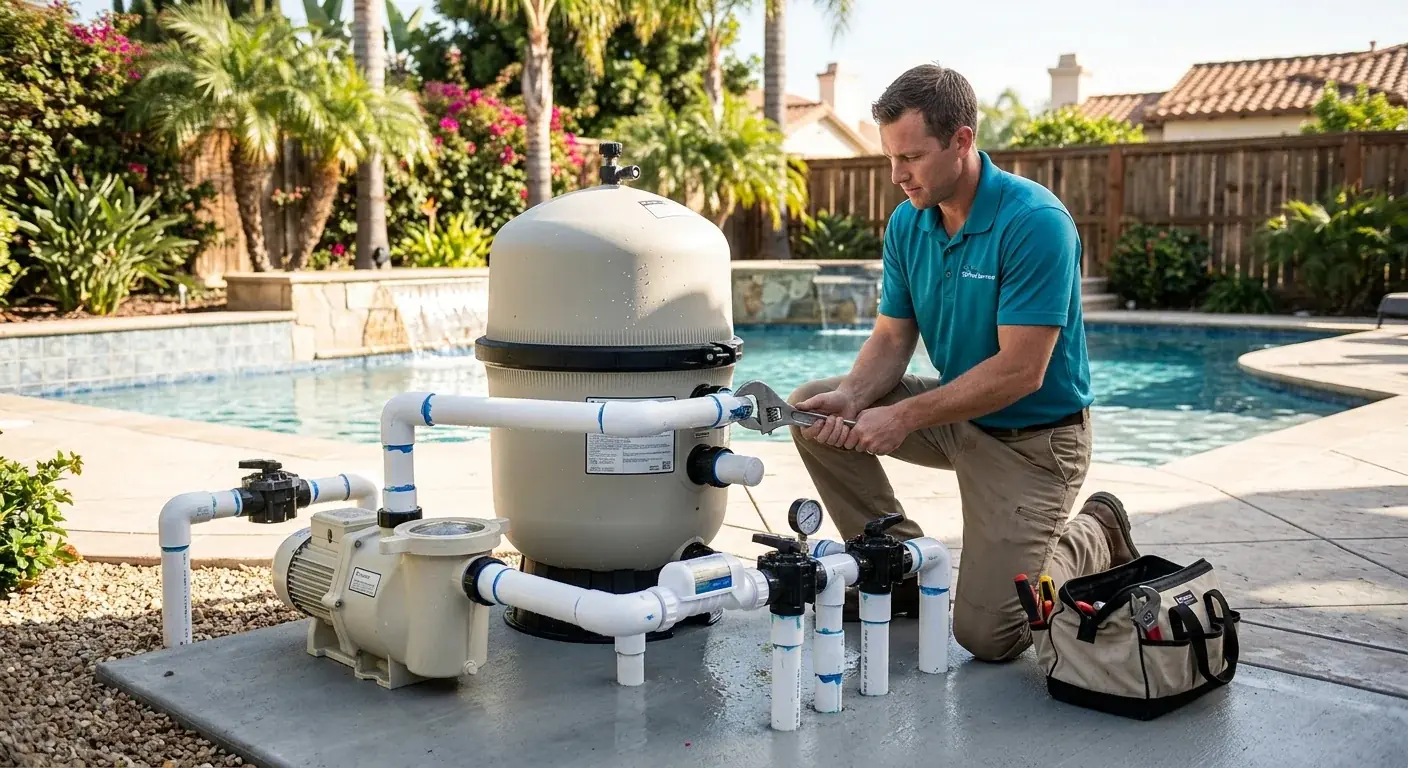
A pool filter repair in San Diego means fixing a specific failed component inside an otherwise sound system. The most common repairs involve replacing a cartridge element, a torn DE grid, a cracked lateral, a faulty gauge, or a worn seal. The decision between repair and replacement depends on the tank’s structural condition, how many parts are failing, and whether the filter still matches the rest of your equipment pad. A licensed specialist tests pressure and circulation first, then traces the symptom to its source before recommending a fix.
Splash Pool SD connects San Diego County homeowners with licensed local pool pros who handle filter diagnostics, repairs, and replacements. The matched pro quotes the work before anything starts.
How to tell what is actually wrong
Filter problems show up in a few predictable patterns. Debris blowing through the return jets means media or an internal part is bypassing. Water pooling around the tank points to a seal, valve, clamp, or drain issue. Weak return flow calls for a broader circulation check, because the filter may not be the source at all.
Cloudy water doesn’t automatically mean total filter failure. Dirty media, a faulty gauge, or restricted flow elsewhere in the system can produce the same result. A specialist separates symptoms from source before ordering parts.
Water near the filter may originate from pump seals, unions, valves, heater connections, or plumbing joints. Tracing the moisture source first prevents unnecessary replacements. Wet equipment near electrical components needs prompt attention regardless of the cause.
Pressure gauge diagnostics
The pressure gauge is your first diagnostic tool, but it doesn’t tell you a single universal number. Layout, pool size, and elevation all affect what normal looks like for your system.
High pressure means the media is loaded with trapped material. Clean the cartridge, backwash the DE grids, or rinse the sand flow path. If pressure rises again soon after cleaning, inspect the media, internals, and return lines for a deeper issue.
Low pressure combined with poor circulation points upstream. Common causes include a suction-side air leak, a blocked skimmer line, a closed valve, a clogged pump basket, or a clogged impeller. Replacing the filter won’t fix an upstream flow problem.
If the needle stays fixed when the pump is off, the gauge itself has failed. Erratic needle movement also signals a gauge that needs inspection. If the gauge shows no change after you clean the media, treat it as suspect.
Cartridge filter failures
Cartridge filters use pleated elements to trap material. A cracked end cap lets debris bypass the element and return to the pool. A split seam, damaged band, or torn pleat does the same thing.
If the tank and manifold are sound, element replacement is usually sufficient. Repeated element damage, though, often signals an incorrect fit or excess pressure elsewhere in the system. That pattern deserves a broader look before you keep buying new elements.
DE filter failures
DE filters coat grids with diatomaceous earth to catch fine particles. A torn grid or damaged manifold returns DE powder to the pool. You will see pale powder collecting near the return jets or settling on the floor.
Replacing the affected grid preserves a sound tank. Widespread internal deterioration, on the other hand, favors full replacement. The pro you are matched with will open the filter and assess grid condition directly.
Sand filter failures
Sand filters move water through a media bed and internal laterals. Sand appearing in the pool often means a cracked lateral. That doesn’t automatically mean the tank has failed, but the filter must be opened and the lateral assembly inspected internally to confirm.
San Diego regional differences
Where your equipment pad sits in the county affects which parts deteriorate first. This is one reason a generic replacement checklist misses location-specific damage.
Inland areas: East County and North County inland
Water in inland areas tends to be harder or more variable in mineral content. Mineral scale builds on cartridge pleats and DE grids over time. Scale restricts flow and reduces cleaning effectiveness. Inspections in places like El Cajon should check for scaled media, manifolds, and valves.
If you want more detail on how local water chemistry affects your pool, read our post on hard water and San Diego pools.
Coastal areas: La Jolla, Carlsbad, Encinitas, Coronado
Salt air corrodes clamps, valve hardware, and metal fittings. The filter media itself may remain perfectly usable despite visible corrosion on the housing hardware. Coastal repairs often target clamps and connections rather than the element inside.
Visits in Carlsbad or Encinitas should examine corrosion at clamps and fittings specifically. Surface rust differs from structural corrosion, and a trained eye tells the difference. For a broader look at equipment decisions, see our guide to pool filter types in San Diego.
Repair or replace: the decision criteria
Repair makes sense when:
- Pressure normalizes after cleaning or media replacement
- A single component failed and the rest of the assembly is sound
- The problem traces to a clogged impeller or suction leak rather than the filter itself
Replacement makes sense when:
- The tank or housing has a structural crack
- Corrosion affects the clamp, valve, and fittings simultaneously
- Leaks or internal failures recur after prior repairs
- The filter no longer matches the circulation needs of the updated equipment pad
Brand alone shouldn’t determine the outcome. Pentair and Hayward both make equipment that can be repaired or replaced depending on condition and compatibility. For more on brand comparisons, see our post on Pentair vs Hayward pool equipment.
If you are already leaning toward replacement, our guide on pool filter replacement in San Diego covers what that process involves.
Filter age and the equipment pad
Calendar age alone isn’t enough to decide. Two filters from the same era age differently because of chemistry, maintenance habits, sun exposure, corrosion, and operating pressure history.
Check the equipment label, installation record, or service invoice for a starting point. Then compare the filter’s condition with the rest of the pad. Piecemeal replacements can leave the filter as the weak link in an otherwise updated system. The original pump pairing may not suit later changes either.
A thorough assessment looks at flow, plumbing, pad space, electrical supply, and the overall hydraulic setup. Our post on pool equipment repair estimates explains what to expect when a pro evaluates your pad.
Safety note
Never open a pressurized filter tank. Shut the pump down and depressurize the system before removing any clamp, lid, or valve. This applies to cartridge, DE, and sand filters alike.
Choosing the right pro
Filter work requires someone who can read pressure behavior, identify regional wear patterns, and separate a filter fault from a pump or plumbing issue. Our guide on how to choose a pool repair pro in San Diego walks through what to look for. If the problem turns out to be the pump rather than the filter, our post on pool pump repair in San Diego covers that side.
When to call us
If your filter is losing pressure, leaking, returning debris to the pool, or showing corrosion you can’t assess yourself, a licensed pool pro should inspect it on site. The repair-or-replace decision depends on factors only a hands-on diagnosis can confirm. Call us at (858) 400-4404 and we’ll connect you with a licensed local pool specialist.
Frequently asked questions
How do I know if my pool filter is failing?
Check water clarity, return flow strength, pressure gauge behavior, and whether debris reappears after cleaning. A damaged cartridge, torn DE grid, or cracked lateral can all cause these signs. A specialist separates filter faults from pump or plumbing issues before recommending a fix.
When is a pool filter worth repairing instead of replacing?
Repair is viable when the tank and valve are structurally sound and only a single replaceable component failed. Replacement makes more sense when corrosion is widespread, leaks recur after prior repairs, or multiple parts are failing at once.
How long do pool filters last in San Diego?
There is no single useful lifespan for all filters. Chemistry, filter type, sun exposure, coastal corrosion, and pressure history all affect aging. Check the equipment label, service records, and physical condition to assess where your filter stands.
What does an abnormal pressure reading mean?
High pressure usually means the media is loaded with trapped material and needs cleaning. Low pressure with weak flow points to an upstream issue like a suction air leak or clogged impeller. A needle that does not move when the pump is off may mean the gauge itself needs replacement.
Is it worth repairing an older pool filter?
Yes, if the tank and valve are sound and only one component failed. No, when corrosion is extensive, leaks keep returning, or replacement parts are obsolete. Piecemeal repairs on a declining system often prove temporary.
Need professional help in San Diego County?
Splash Pool SD connects you with a licensed specialist for any service in this post.