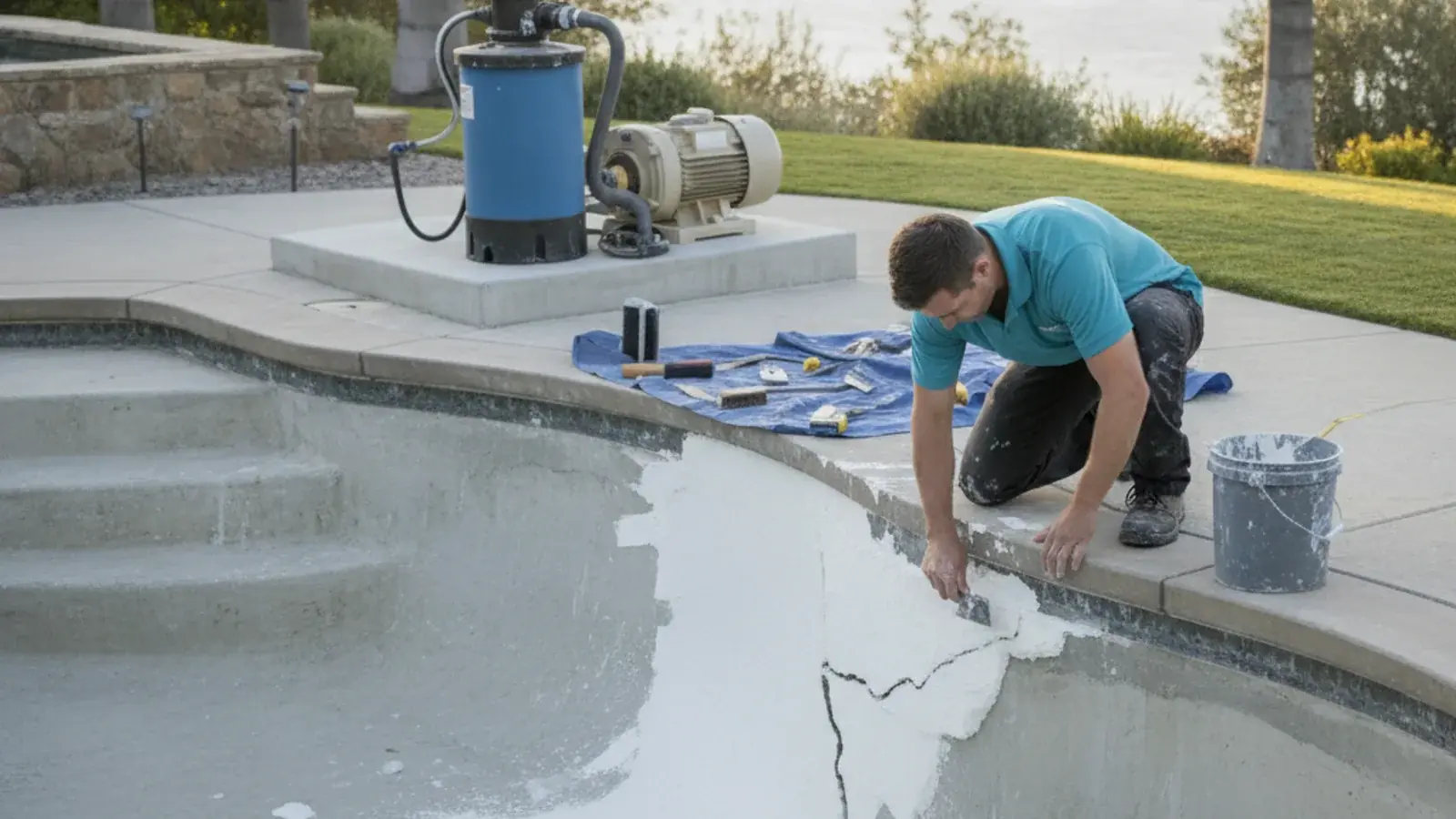
A crack in your pool plaster isn’t always an emergency, but it always deserves a closer look. In San Diego County, the combination of year-round sun, salt air on the coast, and shifting clay soil inland puts steady stress on plaster finishes. Some cracks are purely cosmetic. Others signal shell movement or a slow leak that will get worse if left alone. Knowing the difference helps you decide how fast to act and what kind of repair to expect.
Structural cracks vs. crazing
Not every line in your plaster is the same problem. The two most common types behave very differently.
A structural crack is a single defined line that deepens over time. It often appears at a corner, a step, or where a fitting meets the shell. It widens slowly and follows a straight or gently curved path. If you see one near a return line or a light niche, treat it as suspect. These cracks can let water reach the gunite behind the plaster.
Crazing looks different. It is a spiderweb of fine hairline lines spread evenly across the finish coat. It happens when the top layer cures faster than the plaster beneath it. Crazing is cosmetic. It doesn’t leak and doesn’t threaten the shell. If your pool looks like it has a web of tiny lines but the water level holds steady, you are likely looking at crazing.
Why San Diego pools crack more than you might expect
The county’s mild climate means pools run nearly year-round. That means more sun exposure and more chemical cycling than pools in seasonal regions. Both factors age plaster faster.
Coastal zip codes face an additional factor: salt air. It accelerates corrosion at metal fittings. Once water penetrates a crack near a corroded fitting, the leak worsens over time. If you are near the coast and notice rust staining around a return or skimmer, have a pro look at it soon.
Inland areas deal with a different problem. Expansive clay soil shifts between wet winters and dry summers. That seasonal movement stresses older shells at their weak points: corners, steps, and light niches. A pool that sat fine for years can develop a new crack after a particularly wet winter followed by a hot dry spell.
For more on how local water chemistry affects your finish, see our post on hard water and San Diego pools.
How the repair process works
A licensed pro will first assess the crack’s depth, direction, and location. Photograph the crack pattern before the visit. Note whether it crosses corners, steps, or fittings. Document any water loss you have observed. This helps the specialist determine scope quickly.
For a standard chip-and-patch repair, the process goes like this:
- Drain the area around the crack.
- Chip out damaged plaster along the crack line.
- Grind a clean channel several inches wide to expose sound material on both sides.
- Pack the channel with fast-setting hydraulic cement or a color-matched plaster blend.
- Hand-trowel to match the surrounding texture.
- Refill only after the product’s specified cure time.
Ask the specialist to name the product and state the refill rules in writing. Patch color rarely matches the surrounding plaster at first. Weathering usually evens it out within a few months.
Some hairline cracks can be filled underwater with epoxy putty. That is a short-term fix for cosmetic issues. Structural or weeping cracks require a full drain. The surface must be dry for a proper bond. Patching over wet plaster rarely lasts one season.
If the damage is extensive, a patch won’t hold. That is when resurfacing becomes the right call. Request written product care and warranty terms before work starts.
Hidden leaks: the bucket test
A hairline crack below the waterline can seep slowly. During San Diego’s dry summer months, that slow loss can look like normal evaporation. The bucket test helps you tell the difference.
Fill a bucket to the pool’s water line. Mark both levels. Recheck after 24 hours. If the pool drops more than the bucket, you likely have a leak.
If the test points to a leak, a leak detection specialist can pinpoint the source before any repair begins. This prevents a common mistake: patching a visible cosmetic crack while the real leak hides somewhere else.
How urgent is it?
Hairline surface cracks that aren’t growing can wait for a scheduled repair. They aren’t an emergency.
An actively leaking or visibly growing crack needs attention within days. A dropping water level paired with a crack is urgent. Water behind the shell can undermine the gunite structure. Delay can turn a simple patch into a full resurface.
If you are unsure whether your crack is still cosmetic or has become structural, have a pro check it. Deciding to wait is reasonable only after a professional assessment confirms the crack is stable.
What drives the cost
HomeGuide’s general US planning range for concrete or gunite small-crack repair is about $100 to $200, and about $700 to $1,000 for large cracks, spiderweb cracks, bulges, or divots. That is a surface-repair estimate only. It doesn’t cover structural work or full resurfacing.
Your actual price depends on several factors: pool size, the finish material, how accessible the crack is, the product the pro selects, and whether any equipment needs to be moved. If you are planning a salt-water conversion in the near future, mention it during quoting. Some products perform differently in salt systems.
The licensed pro you are matched with will give a quote after an on-site assessment. Pricing from photos alone isn’t reliable for crack work.
Repair longevity
A structural chip-and-refill repair is meant to last as long as the surrounding surface. Durability depends on the product used, the condition of the shell, and your ongoing water chemistry. Ask for written warranty terms on the patch. Underwater epoxy has a different durability profile, so get product and cure terms in writing either way.
If you want to understand when a patch is no longer enough, our guide on signs your pool needs resurfacing walks through the decision.
When to call us
If your crack is growing, leaking, or located at a structural weak point like a corner or fitting, you need a licensed pool professional to assess it in person. Splash Pool SD matches you with independent licensed pros across San Diego County who handle crack repair, resurfacing, and leak detection.
Call us at (858) 400-4404 and we’ll connect you with a licensed local pool specialist.
Frequently asked questions
What is the difference between crazing and a structural crack in pool plaster?
Crazing is a spiderweb of fine hairline lines spread evenly across the finish coat. It happens when the surface cures faster than the plaster beneath it. Crazing is cosmetic and does not threaten the shell. A structural crack is a single defined line that deepens over time, often found at corners, steps, or fitting junctions. It may signal shell movement and can lead to leaks.
How much does cracked pool plaster repair cost in San Diego?
HomeGuide's general US planning range for concrete or gunite small-crack repair is about $100 to $200, and about $700 to $1,000 for large cracks, spiderweb cracks, bulges, or divots. Your actual price depends on pool size, finish type, access, and the product used. The licensed pro you are matched with will quote after an on-site assessment.
Can you patch a pool crack without draining the water?
Some hairline cracks can be filled underwater with epoxy putty. However, structural or weeping cracks require a full drain. The surface must be dry for a proper chip-and-patch repair. Patching over wet plaster rarely lasts one season.
How do I know if my pool crack is actually leaking?
Try the bucket test. Fill a bucket to the pool water line, mark both levels, and recheck after 24 hours. If the pool drops more than the bucket, you likely have a leak. A leak detection specialist can pinpoint the source before any repair begins, so you do not patch a cosmetic crack while the real leak is elsewhere.
Need professional help in San Diego County?
Splash Pool SD connects you with a licensed specialist for any service in this post.