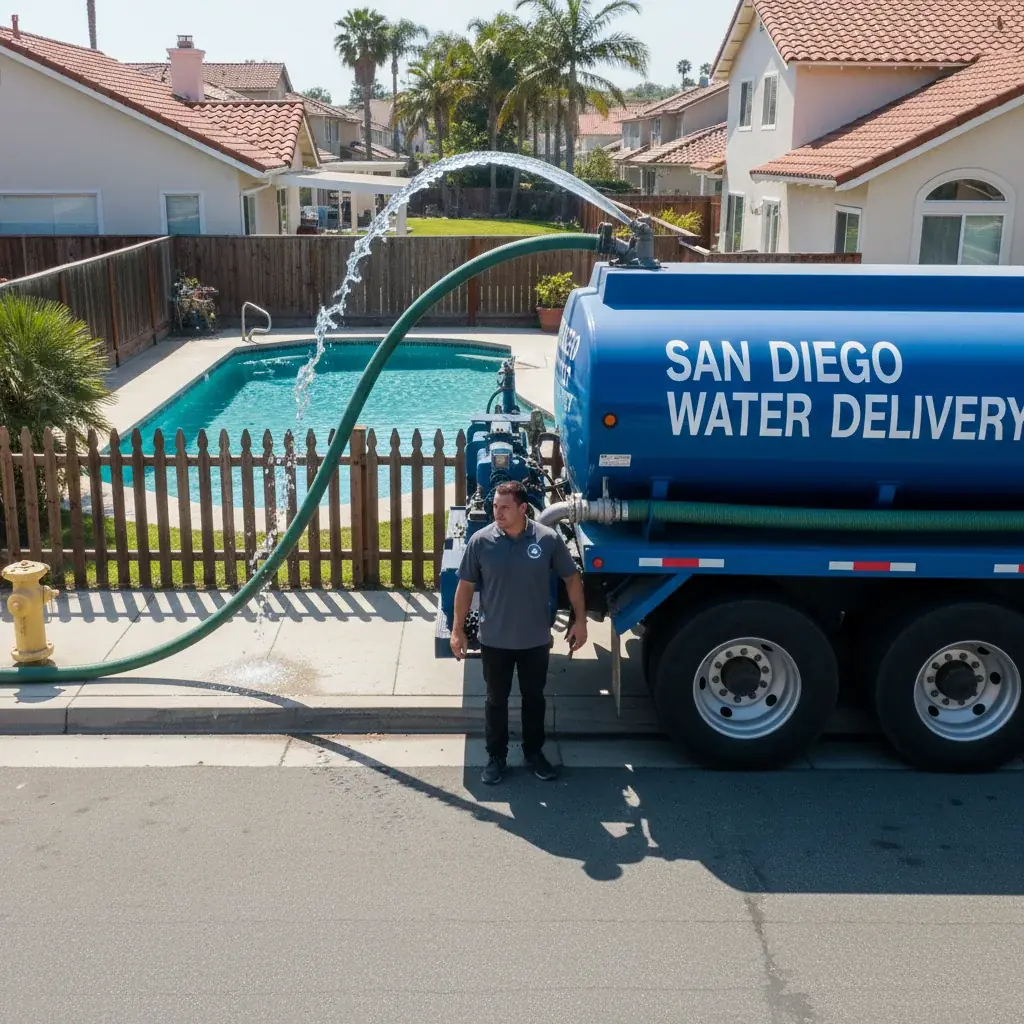
San Diego tap water is hard. It carries between 300 and 550 mg/L of calcium carbonate, depending on where you live and the time of year. That mineral load builds up inside your pool every time you top off or refill. Trucked water from bulk suppliers arrives at 100 to 200 mg/L because carriers use filtered or softened sources. For certain situations, that softer starting point saves real money on chemicals, equipment, and resurfacing down the road.
Why San Diego tap water is so hard
The San Diego County Water Authority blends two sources: Colorado River water and Northern California State Water Project water. Both carry significant mineral loads. The result is tap water that sits well above the ideal pool range of 200 to 400 mg/L calcium hardness.
Hardness varies by location and season. Coastal areas, inland valleys, and East County all see different numbers at the tap. But none of them come in soft enough to fill a pool without consequences over time.
What hard fill does to your pool
Every time water evaporates, calcium stays behind. It concentrates. Over months and years, that causes a chain of problems:
- White scale forms at the tile line.
- Plaster develops rough patches.
- Water clouds in ways that chemicals can’t fully clear.
- Salt cells, heat exchangers, and filter media scale faster.
- You burn through sequestrants, descalers, and acid treatments.
Tile calcium becomes a recurring issue that requires professional removal. Softer fill water extends the service intervals on all of this. If you have dealt with calcium buildup on your pool tile, you already know how stubborn it is.
The calcium math
Here is what the numbers look like for a typical 15,000-gallon pool.
At 400 mg/L, tap water delivers roughly 3.3 pounds of calcium per 1,000 gallons. Fill a 15,000-gallon pool from the hose and you are adding about 50 pounds of calcium on day one.
Trucked water at 150 mg/L delivers roughly 19 pounds for the same volume. That is less than half. The visible scaling threshold sits around 600 mg/L. A lower starting point means it takes longer to get there, which means fewer acid washes, fewer equipment repairs, and a longer life for your plaster.
For more on how hard water affects pools in this region, see our guide on hard water and San Diego pools.
When delivery makes the most sense
Pool water delivery isn’t always the right call. But it earns its cost in specific situations:
After a replaster. Fresh plaster is slightly porous and chemically reactive during its first year. Hard water etches the surface during the curing period and locks in calcium that requires an acid wash to remove. Soft fill gives the best curing environment. Wrong startup chemistry can void most manufacturer warranties, so this isn’t a place to cut corners.
After an acid wash. The logic is the same. You want clean, soft water going back in so the surface stays smooth. See our post on pool acid wash in San Diego for what that process involves.
When calcium hardness is already above 600 mg/L. At that level, dilution is the only fix. Treating with chemicals becomes expensive and temporary.
When TDS exceeds 2,500 to 3,000 mg/L or cyanuric acid sits above 100 ppm. Both signal that the water has accumulated too many dissolved solids to manage chemically.
When you are planning resurfacing or shell repair. Coordinating the fill with the contractor’s timeline matters. More on that below.
When it isn’t necessary
Slight cloudiness is usually a filtration or chemistry issue, not a reason to drain and refill. Annual draining is unnecessary if you maintain balanced chemistry. Calcium hardness at 450 mg/L is manageable with a good sequestrant.
San Diego County also discourages draining during drought conditions unless the work is structural. Local water districts discourage draining outside permitted work. If you are unsure whether your situation warrants a refill, a licensed pool pro can test the water and give you a straight answer.
Fill speed and logistics
Typical residential water pressure in San Diego runs 5 to 6 gallons per minute. Filling a 15,000-gallon pool from a hose takes roughly 40 hours. That is nearly two full days of continuous flow.
Two or three tanker loads fill the same pool in one afternoon. Trucks hold 5,000 to 6,500 gallons each. Each load pumps in roughly 30 to 60 minutes.
Lead time for scheduling is typically one to three business days. Some carriers offer faster turnaround, but confirm the specific arrival window when you book. A vague “sometime tomorrow” isn’t good enough if you are coordinating with a resurfacing crew.
Coordinating with resurfacing or an acid wash
New plaster begins curing immediately after troweling. It needs water within 24 hours for proper hydration. A slow hose fill exposes the top half of the shell for 12 to 18 hours, which risks premature drying and shrink cracking.
Book delivery for the completion day or the next morning at the latest. Most San Diego carriers routinely coordinate with contractors on timing. Confirm the window in writing.
If you are planning a resurfacing project, our post on pool resurfacing cost covers what drives the price and what to expect.
Cost comparison
Most bulk water carriers serving San Diego charge between $250 and $450 per truckload, with trucks typically holding 5,000 to 6,500 gallons. A 15,000-gallon pool requires two to three loads, so the total depends on your pool size and the carrier you choose.
Hose fill is cheaper upfront. But San Diego Water uses tiered residential rates, and a pool fill pushes most households into Tier 2 or Tier 3. Over two to three years, the extra chemical costs from hard fill water narrow the gap. If you are also dealing with pool water recycling options, that is another path worth comparing.
Hookup fees may apply beyond the base charge. Get the full quote before you book.
Post-fill startup
Once the pool is full, circulate the water for 24 to 48 hours before adding any chemicals. New plaster leaches calcium and raises pH initially. Test the water before treating. Bring chemistry up gradually. Rushing startup causes premature plaster staining.
Your matched pro can handle the startup protocol and test the water at the right intervals.
When to call us
If your calcium hardness is above 600 mg/L, you are planning a replaster, or you need to coordinate a fill with a resurfacing crew, a licensed pool professional should be involved. The stakes are high on fresh plaster, and the chemistry needs to be right from the start. Call us at (858) 400-4404 and we’ll connect you with a licensed local pool specialist.
Frequently asked questions
How much does bulk pool water delivery cost in San Diego?
Most bulk water carriers serving San Diego charge between $250 and $450 per truckload, with trucks typically holding 5,000 to 6,500 gallons. A standard 15,000-gallon pool needs two to three loads. Hookup fees may apply beyond the base charge, so confirm the total before booking.
Is trucked water really softer than San Diego tap water?
Yes. San Diego tap water ranges from 300 to 550 mg/L calcium carbonate depending on location and season. Trucked water from bulk suppliers typically arrives at 100 to 200 mg/L because carriers use filtered or softened sources. That lower starting point delays scaling on plaster, tile, and equipment.
How long does a pool water delivery take?
Each truckload pumps in roughly 30 to 60 minutes. A 15,000-gallon pool requires two to three loads, so plan for one afternoon. Lead time for scheduling is typically one to three business days with most San Diego carriers.
Do I need a permit for pool water delivery in San Diego?
No residential permit is required for a pool fill. The carrier handles its own water-sourcing compliance. Confirm that the supplier sources potable water and operates under San Diego County regulations before booking.
When should I drain and refill instead of treating the water?
Drain and refill when calcium hardness stays above 600 mg/L, total dissolved solids exceed 2,500 to 3,000 mg/L, or cyanuric acid sits above 100 ppm and will not drop. Beyond those thresholds, dilution becomes costly and temporary. A licensed pool pro can test and advise.
Need professional help in San Diego County?
Splash Pool SD connects you with a licensed specialist for any service in this post.