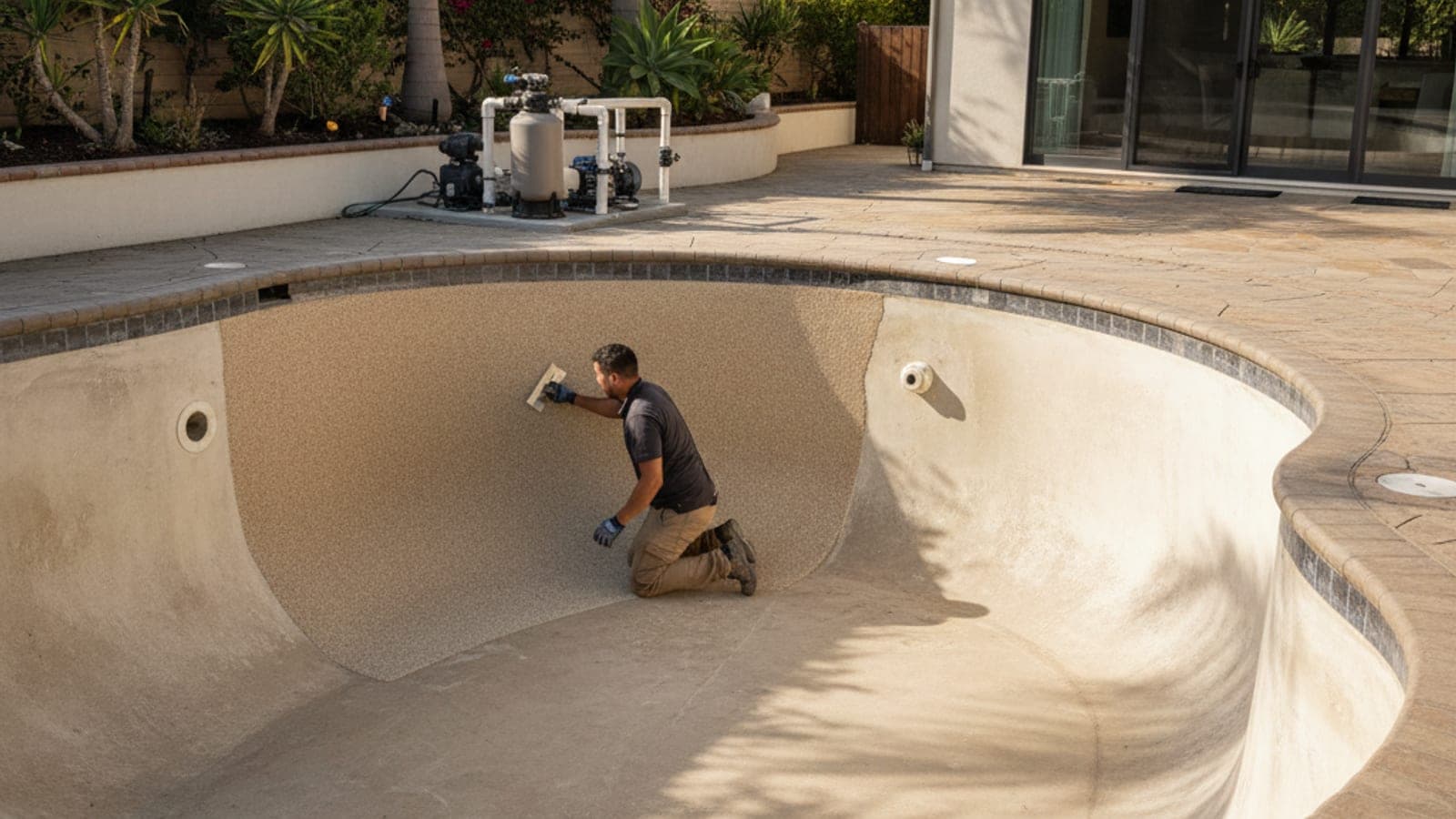
Pool resurfacing in San Diego County costs different amounts depending on your pool’s size, the finish you pick, and how much prep work the shell needs. No two quotes look alike because no two pools wear the same way. The licensed pro you’re matched with through Splash Pool SD will inspect your pool, measure the surface area, and give you a written quote before any work starts.
What follows is a breakdown of what moves that number up or down, so you can read a quote with confidence.
What resurfacing actually is
Resurfacing strips the worn interior finish down to the structural shell and applies a new finish by hand. It isn’t a patch, not a coat of paint, and not a cosmetic cover-up. The process addresses the entire submerged surface.
What drives the price
Several variables determine where your project lands on the cost spectrum.
Pool size
Contractors measure by surface area, not by gallons. A small backyard pool might run 600 to 800 square feet of surface. A standard 20-by-40-foot pool sits around 1,100 square feet. Resort-style designs can push past 2,000 square feet. More surface means more material and more labor.
Finish material
The type of finish you choose is one of the largest cost factors. Standard plaster is the most affordable option upfront. Quartz sits in the middle. Pebble carries the highest initial price but lasts the longest, which can make it the better long-term investment in San Diego’s hard water.
Tile and coping
If your waterline tile or coping needs replacement, that adds a separate line item to the quote. Coping material matters too: brick, natural stone, and poured concrete all price differently.
Prep method
If the existing finish is sound, the crew can use a bonding agent and apply the new finish as an overlay. If the old finish is failing, they chip it all the way down to bare gunite first. A full chip-out costs more but is sometimes the only correct approach.
Structural surprises
Once the old finish comes off, the crew may find cracks, delamination, or rebar exposure that needs repair before the new finish goes on. These are impossible to price until the pool is drained and inspected.
Access and location
Backcountry and rural properties in East County can add travel and material-delivery costs. Tight side yards or steep lots also slow the crew down.
Bundled upgrades
Many homeowners take advantage of the drain to upgrade equipment, add LED lighting, or install water features. A licensed electrician can wire low-voltage lights while the pool is empty. Bundling these during a resurface often saves versus doing them separately later.
Finish options and how they hold up here
San Diego’s hard water is the single biggest enemy of every pool finish. Calcium builds up, etches, and shortens lifespan across the board. Here is how each option performs locally.
Standard plaster
Lifespan is 8 to 12 years, often less in hard-water areas. It is the smoothest underfoot and comes in classic white or subtle tints. The tradeoff is that it stains easily from copper-based algaecides and dissolved metals, and it pits and roughens toward the end of its life. It remains the most common budget choice.
Quartz
Lifespan is 12 to 18 years. Crystalline quartz aggregate adds durability over plain plaster. Colors include blues, greens, and multicolor blends. It is slightly rougher underfoot than plaster but tougher. You will see the aggregate pattern on the surface, which some owners love and others don’t. Brands you may see quoted include PlasterScapes, Diamond Brite, and smoother Pebble Sheen variants.
Pebble
Lifespan is 15 to 25 years. It is the most durable option against hard-water scaling and hides minor surface imperfections well. Colors range from blues to earth tones to tropical palettes. The texture is rough underfoot, which can be hard on small children’s feet. Algae can hide in the texture if maintenance lapses. Brands include PebbleTec, Pebble Sheen, Pebble Fina, and Wet Edge.
In Encinitas, a well-maintained pebble finish can push 25 years. In Rancho San Diego, the same finish might not make 10 if chemistry is neglected. That gap is entirely about maintenance.
For a deeper comparison, see our guide on pebble, plaster, and quartz options.
Signs you actually need resurfacing
Not every rough patch means a full resurface. Here is what does warrant one:
- Surface feels rough or chalky underfoot
- Visible pitting, holes, or craters in the finish
- Heavy staining that resists cleaning and acid washing
- Calcium nodules, which look like small bumps on the plaster
- Bond coat failure, where the plaster bubbles or lifts from the shell
- Any of the above on a pool that is 15 or more years old
And here is what usually doesn’t:
- Mild discoloration that an acid wash can fix
- Minor stains that haven’t been professionally treated yet
- Waterline scale, which a tile cleaning solves
- A 10-year-old pool that is still smooth with only slight discoloration
If your pool is 12 to 15 years old and you are considering preemptive work, or you bought a home and are unsure of the surface age, getting a professional assessment is worthwhile. We cover the warning signs in more detail in our post on signs your pool needs resurfacing.
The timeline from drain to swim
Most resurfacing projects take 7 to 14 days from drain to swim-ready. Here is the general sequence:
- Day 1: Drain the pool, which takes 4 to 8 hours
- Days 2 through 4: Chip-out or surface prep
- Days 4 through 7: Tile and coping replacement if included
- Days 8 through 9: Finish application, done in a single day with a full crew
- Days 10 through 12: Cure and refill
- Days 13 through 14: Startup chemistry begins
After that, the chemical cure continues for another 3 to 4 weeks. The pool is usable, but chemistry management during this window is critical.
Best time of year in San Diego
April through October is the ideal window. Warm temperatures help the finish cure properly, and rain is unlikely. Late October through March brings cooler cure temps and rain delays.
April and May are the busiest months. Contractors typically book 4 to 8 weeks out in spring. If you want a spring slot, call by February or March.
Post-resurfacing care: the first 28 days
The first month determines how well your new finish ages. Here is what the startup period demands:
- Test chemistry daily for the first 4 weeks
- Keep calcium hardness between 200 and 275 ppm initially
- Hold pH slightly acidic, between 7.2 and 7.4, during the cure
- Brush the walls daily for the first 2 weeks to remove plaster dust
- Run the pump 24 hours a day for the first 7 days
After the cure window, shift to ongoing maintenance: hold pH at 7.4, keep calcium hardness between 250 and 350 ppm, brush walls weekly, and use a scale inhibitor quarterly in hard-water areas. Professional tile cleaning every 3 to 5 years keeps the waterline looking sharp. Our post on hard water and San Diego pools explains why this matters so much here.
Comparing quotes
Because every pool is different, the only way to know your actual cost is to get a written quote from a licensed pro who has inspected your pool in person. When you compare quotes, make sure each one specifies the finish brand, the prep method, whether tile and coping are included, and the warranty terms. We break down how to evaluate quotes side by side in our guide on comparing pool refinishing quotes.
When to call us
If your pool surface is rough, pitted, or showing bond failure, a licensed resurfacing professional needs to assess it in person. DIY fixes and pool paint only delay the real work. Call us at (858) 400-4404 and we’ll connect you with a licensed local pool specialist.
Frequently asked questions
What factors change the price of pool resurfacing the most?
Pool surface area, the finish material you choose, and whether tile or coping replacement is included are the biggest movers. A full chip-out to bare gunite costs more than an overlay with bonding agent. Access difficulty and any structural repairs found during prep also shift the number.
How often does a pool need resurfacing in San Diego?
Standard plaster lasts 8 to 12 years, quartz lasts 12 to 18 years, and pebble can last 15 to 25 years. San Diego's hard water shortens lifespan on every finish if chemistry is not maintained.
Is pool paint a cheaper alternative to resurfacing?
Pool paint lasts 3 to 5 years, peels over time, and hides surface problems rather than fixing them. It is not a real substitute for a proper resurface.
What is the best time of year to resurface in San Diego?
April through October offers warm, dry conditions that help the finish cure properly. Contractors book 4 to 8 weeks out in spring, so calling by February or March gives you the best chance at a spring slot.
How long before I can swim after resurfacing?
Most projects take 7 to 14 days from drain to swim-ready. The chemical cure continues for another 3 to 4 weeks, during which daily chemistry testing is critical.
Need professional help in San Diego County?
Splash Pool SD connects you with a licensed specialist for any service in this post.