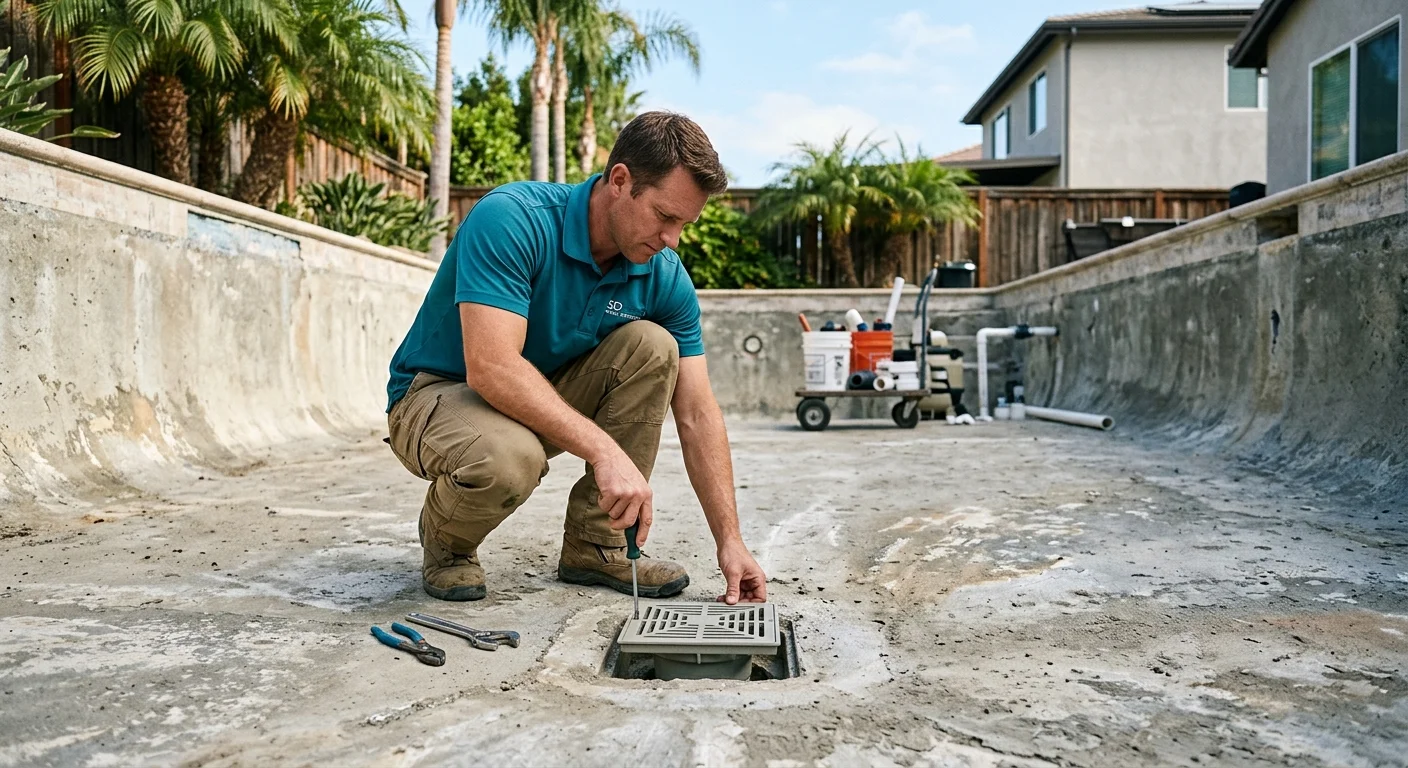
A blocked main drain line shows up as weak floor suction, air in the pump, or a branch that stops moving water entirely. The fix starts with diagnosis at the equipment pad, not with excavation or guesswork. Splash Pool SD connects San Diego County homeowners with licensed local pool specialists who test each suction branch, confirm the blockage, and clear the line using a method suited to the pipe route.
What the main drain actually does
The main drain is a floor-level suction outlet tied to your pool’s circulation loop. It isn’t a bathtub-style drain and doesn’t empty the pool. Water travels from the outlet toward the pump, through the equipment, and back through the returns. Layout varies per pool, and floor suction strength differs from one system to the next.
Never lower your water level to diagnose a drain issue unless a specialist directs you to do so.
Symptoms of a blocked or collapsed line
Several signs point toward a main drain problem, though no single symptom proves a blockage on its own. Watch for these patterns:
- Suction drops when flow is directed to the main drain
- The pump loses prime under one valve setting
- Air enters the pump once the drain branch opens
- The skimmer outperforms floor suction noticeably
- Debris reappears at the outlet after you remove it
- Circulation shifts without a filter or basket cause
A valve fault, an air leak, or a clogged basket can mimic these same signs. That is why a pro tests each suction source independently for comparison. A buried collapse or leak isn’t identifiable from the deck. It requires line isolation and pressure testing to confirm.
Never insert a rod, wire, or tool into the drain. Leave the cover and outlet untouched until a professional inspects. If the pump can’t sustain flow, shut the system down. Report when the symptom started and any preceding event. Equipment swaps, nearby construction, and debris events are all relevant context.
Anti-entrainment cover rules
The main drain cover is a functional part of the suction outlet assembly, not just a cosmetic plate. If the cover is cracked, loose, missing, or has damaged hardware, shut off the system and keep swimmers out until a qualified pro inspects.
A damaged cover halts all line-clearing work. The pro must inspect the cover before any suction or clearing begins. Clearing a blockage doesn’t excuse a bad cover.
Never substitute a cover based on approximate size. The pro must match the outlet, the mounting points, and a compatible replacement. No random screws, adhesives, or makeshift plates. Ask your pro how the chosen cover meets current requirements.
If you want to document the condition, photograph the cover from the deck only. Don’t enter the water. A wide shot of the pool floor and the equipment area helps the specialist prepare. Cover replacement and line clearing solve different problems, and a pro will treat them as separate scopes.
How a pro locates and clears a blockage
Diagnosis starts at the equipment pad, never with excavation. The specialist documents valve positions, inspects fittings, and compares pump behavior across branches. Where plumbing permits, the pro isolates the suspected branch and tests whether it moves water and holds pressure. Your pool’s layout and connection points dictate the test method.
If a blockage is confirmed, the pro selects a clearing tool suited to that pipe. The method must match the pipe route and the suspected material. A camera is useful in some lines but not all bends and layouts.
After clearing, the pro re-compares flow under the same valve settings. Moving debris alone is insufficient. The test must confirm measurable improvement. If the line still fails, further investigation is needed. Leak detection identifies water escaping from buried plumbing and guides the next step.
Testing must support any recommendation to cut decking. Request a written scope naming the tested line and the next step. If a buried repair is suggested, ask which test supports it. You can verify any specialist’s license through the California Contractors State License Board lookup.
Distinguishing a line problem from a pump problem
Comparing suction branches gives the clearest diagnosis. If the skimmer runs fine but the drain side changes, the issue likely sits in the line or a valve. If all branches are weak, the problem is probably elsewhere. Note basket fill, air timing, and valve-position sound changes.
A pump-side air leak, a clogged basket, or a stuck valve can mimic a blocked drain. Equipment restriction can affect multiple suction sources at once. Visible water at the pump is a separate clue. A wet pad doesn’t automatically implicate the main drain.
Ask your pro which branches were tested and what the results showed. Ask whether the problem followed one valve position only. Ask whether the pump ran normally with the branch isolated. Never approve deck cutting based on weak floor suction alone. Buried work must follow testing that points to the line. A pump replacement won’t fix a confirmed branch obstruction. If your pump itself is the issue, a pool pump repair specialist can address it separately.
Blocked vs leaking vs broken cover
These are three distinct jobs requiring different approaches:
- Blocked: the branch fails a flow or pressure test while the skimmer still performs normally. Clearing the line is the fix.
- Leaking: water loss is the primary sign. A bucket test or wet ground near the line indicates a leak. This belongs under leak detection, not cleaning.
- Broken cover: a stop-work safety condition regardless of pipe status. No clearing or suction work proceeds until the cover is replaced and inspected.
Never treat a drain repair as authorization to open the deck. Ask the specialist which of the three conditions was proven, and get it in writing. For buried line failures that require excavation, underground plumbing repair is a separate scope with its own testing requirements.
Preparing for service in San Diego County
Before the specialist arrives, record your skimmer positions, equipment-pad location, and valve labels. Report any recent pump work, plumbing changes, or deck repairs. Unlabeled valves are still relevant to the diagnosis.
Note access obstacles when you book. Locked gates, stairs, alleys, and tight pads all affect how a pro approaches the job. San Diego County properties vary widely. A narrow side yard in City Heights or hillside steps in La Mesa can change the equipment a specialist brings and the time the visit takes. Mention all physical access constraints upfront so the matched pro arrives prepared.
When to call us
If floor suction has noticeably changed, the pump draws air on one branch only, or the main drain line fails to operate normally, a licensed pool professional should inspect the system. A missing or damaged drain cover requires a pro before you restart the pump at all. Call us at (858) 400-4404 and we’ll connect you with a licensed local pool specialist.
Frequently asked questions
Does pool drain cleaning require emptying the pool?
No. The main drain is a suction outlet tied to the circulation loop. It does not empty the pool like a bathtub drain. A pro works on the line from the equipment pad and valve assembly without lowering the water level unless the specialist specifically directs it.
How do I know if my main drain line is blocked?
Common signs include suction dropping when flow is directed to the main drain, the pump losing prime on one valve setting, air entering the pump when the drain branch opens, and the skimmer noticeably outperforming floor suction. No single symptom proves a blockage alone, so a pro tests each suction source independently.
Can a blocked main drain be cleared without digging up the deck?
Often yes. Diagnosis starts at the equipment pad, not with excavation. A pro isolates the suspected branch, tests whether it moves water and holds pressure, then selects a clearing method suited to the pipe route. Deck cutting is only considered if testing points to a buried failure that cannot be reached otherwise.
What should I do if my main drain cover is cracked or missing?
Shut off the system immediately and keep swimmers out. A damaged cover is a safety condition that halts all line-clearing work. A licensed pro must inspect the outlet, match the cover to the mounting points, and confirm it meets current requirements before any suction or clearing work begins.
How do I tell if the problem is the drain line or the pump?
Compare suction branches. If the skimmer runs fine but the drain side changes, the issue likely sits in the line or valve. If all branches are weak, the problem is probably elsewhere, such as a pump-side air leak or clogged basket. A pro tests each branch independently to confirm.
Need professional help in San Diego County?
Splash Pool SD connects you with a licensed specialist for any service in this post.