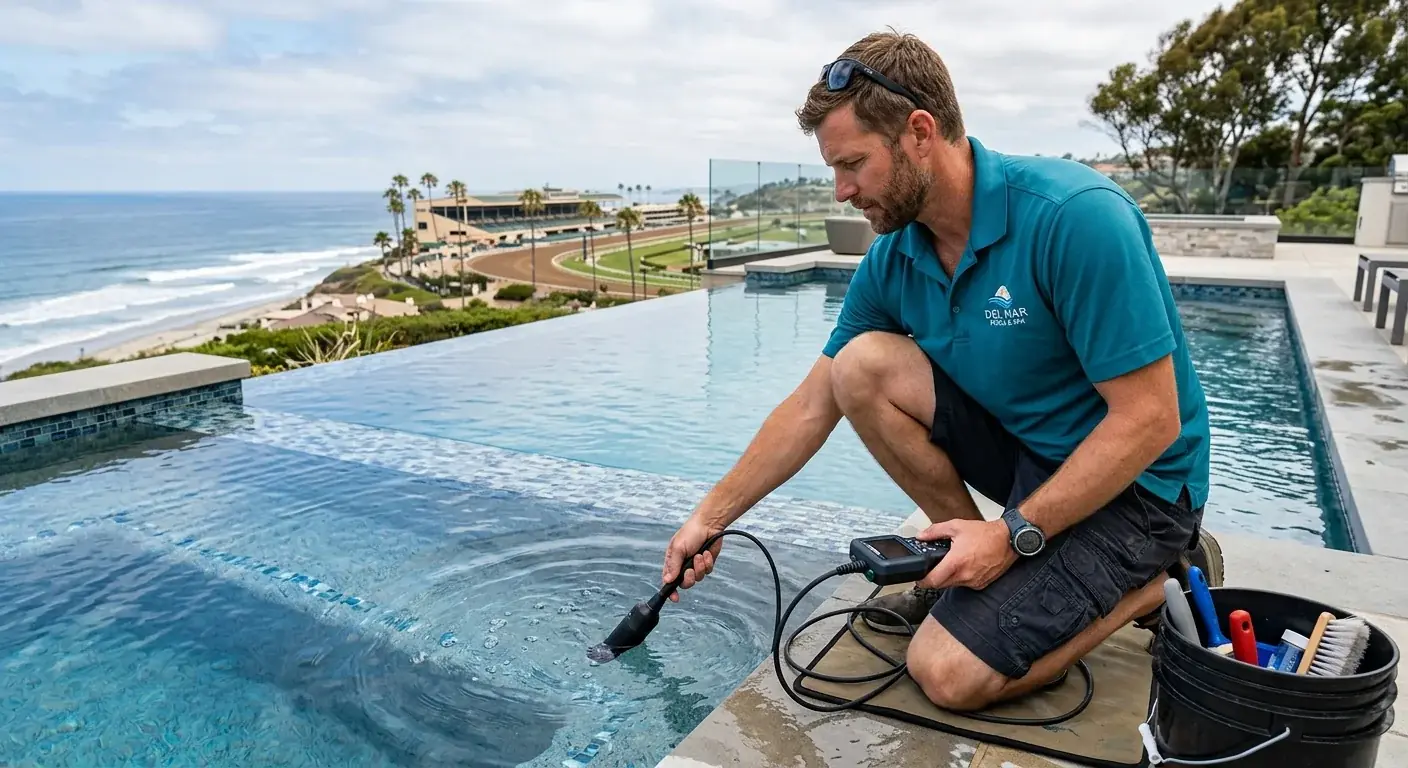
Pool leak detection in Del Mar uses a combination of dye testing, pressurization, acoustic listening, and thermal imaging to find hidden water loss without tearing up your deck or landscape. The process is non-invasive, and most leaks are located in a single visit. If your water level is dropping faster than evaporation explains, a professional can pinpoint the source and give you a clear repair plan.
Why Del Mar pools are especially prone to leaks
Del Mar sits on sandy loam mixed with clay. That combination shifts and settles over time, and the movement stresses underground plumbing and concrete shells. Southern California seismic activity adds another layer of pressure on already vulnerable joints and fittings.
Many pools in Del Mar are decades old. Plaster cracks. Grout erodes. PVC grows brittle. Daily heating and cooling cycles cause expansion and contraction that fatigues seals, fittings, and structural components year after year. A pool that held water perfectly for twenty years can develop a slow leak from a single season of ground movement.
The coastal location matters too. Salt air accelerates corrosion on metal fittings and equipment connections. What starts as a pinhole in a return fitting can widen quietly until the water bill tells you something is wrong.
How professional leak detection works
The pros we connect you with follow a structured process. Each step narrows the search area, so by the time they identify the leak, they know exactly where it is and what caused it.
Visual inspection
The first step covers the interior surface, the deck, the equipment pad, and the surrounding landscape. The technician looks for damp spots, unusual plant growth, and settling or cracking in pavement. These are often the first clues that point toward a specific area.
Dye testing
With the pump off, a non-toxic dye is introduced near a suspect area. If the dye is drawn into a crack or penetration, that confirms the leak location. This method works well on the shell itself, around skimmers, and at return fittings.
Pressurization testing
Individual plumbing lines are isolated and pressurized one at a time. A pressure drop in a specific line confirms a leak in that pipe. This step is key for underground lines that aren’t visible above ground.
Acoustic detection
Hydrophones and ground microphones amplify the sound of water escaping from a pressurized pipe. This lets the technician pinpoint the exact location without extensive excavation. It is one of the most precise tools available for underground leaks.
Infrared thermography
Thermal cameras detect temperature differences caused by escaping water. This is especially useful under concrete slabs and along buried pipe runs where other methods have trouble reaching.
For a deeper look at the full process, see our guide on how pool leak detection works.
Common leak locations in Del Mar pools
Based on the detection methods above, here is where leaks most often turn up:
- Skimmer mouth: mastic and sealant degrade over time, leaving gaps between the skimmer and the shell.
- Skimmer body: cracks from ground movement or age.
- Return jets and main drains: seal deterioration lets water escape behind the fitting.
- PVC at fitting connections: brittle pipe cracks at joints, especially after years of thermal cycling.
- Lights, cleaner lines, and specialty penetrations: gasket failure allows slow seepage.
- Underground pipes: ground shift, tree roots, or poor original installation.
- Shell hairline cracks: settling, seismic activity, or poor curing during construction.
- Equipment pad: pumps, filters, heaters, and valves can all develop leaks at connections.
If you are seeing wet spots near the skimmer specifically, our post on pool skimmer repair in San Diego covers what is involved in fixing that area.
What happens after the leak is found
Once the location and severity are identified, the pro explains the findings to you directly. You get a detailed report with photos and a repair plan.
Minor leaks, like a degraded skimmer seal or a cracked return fitting, are often fixed quickly with professional-grade materials on the same visit.
Underground pipe leaks require a more targeted approach. The technician marks a precise dig site so excavation is limited to the smallest area possible. The damaged section is repaired or replaced, the trench is backfilled, and the surface is restored.
After the repair, follow-up tests confirm the leak is fully resolved. You aren’t left guessing whether the fix held.
For leaks in underground plumbing specifically, our post on underground pool plumbing repair walks through what that process looks like.
What happens if you ignore a leak
A small leak doesn’t stay small. Water escaping beneath the shell erodes the soil that supports it. Over time, that erosion can compromise the structural integrity of the pool itself. In Del Mar, where the soil already shifts, this is a real risk.
Deck and home foundation damage can follow. Water migrating through soil doesn’t respect property lines. A leak under the pool deck can eventually affect nearby structures.
And then there is the water waste itself. A slow leak that loses even a few gallons per hour adds up to thousands of gallons per month. In a region where water isn’t cheap and conservation matters, that is money and a resource going into the ground.
If you are trying to figure out whether what you are seeing is a leak or just evaporation, our post on pool leak or evaporation in San Diego helps you sort that out.
What affects the cost of detection and repair
Every leak is different, so there is no single price that applies across the board. What moves the number:
- Leak complexity: a cracked skimmer seal is a simpler fix than a broken underground pressure line.
- Pool size: larger pools have more plumbing and more surface area to test.
- Access: equipment pads that are easy to reach cost less to work on than ones buried behind landscaping or concrete.
- Equipment brand and age: some fittings and parts are more readily available than others.
- Whether a permit is needed: structural repairs in Del Mar may require city approval.
The matched pro gives you a transparent quote after the initial assessment, before any repair work begins. You aren’t committing to anything until you have seen the findings and the price.
When to call us
If your water level is dropping faster than evaporation explains, your water bill has climbed without a clear reason, or you are seeing wet spots around the deck, those are signs that need a professional look. Early detection keeps a small fix from becoming a structural problem.
Call us at (858) 400-4404 and we’ll connect you with a licensed local pool specialist.
Frequently asked questions
How much does pool leak detection cost in Del Mar?
Cost varies based on leak complexity, pool size, and how accessible the suspected area is. Non-invasive methods help keep repair expenses down by pinpointing the exact location. The matched pro provides a clear quote after the initial assessment, before any work begins.
What are the signs my pool has a leak?
Water level dropping beyond normal evaporation, unexplained increases in your water bill, wet spots around the deck, chemical levels that fluctuate and need frequent adjustment, and visible cracks in the shell or coping are all common indicators.
Can I find a pool leak myself?
A bucket test can confirm you are losing more water than evaporation accounts for. Pinpointing where the leak is, though, requires specialized equipment like pressure testers, hydrophones, and thermal cameras. A professional avoids guesswork and unnecessary digging.
How long does a pool leak detection take?
Most detection sessions are completed within a few hours. Complex cases involving multiple underground lines or hard-to-reach areas may take longer. The pro will let you know what to expect before starting.
What should I do if I suspect a pool leak?
Contact a professional leak detection service as soon as you notice the signs. Early detection prevents a small seal failure from escalating into structural damage or soil erosion beneath the shell. It also conserves water.
Need professional help in San Diego County?
Splash Pool SD connects you with a licensed specialist for any service in this post.