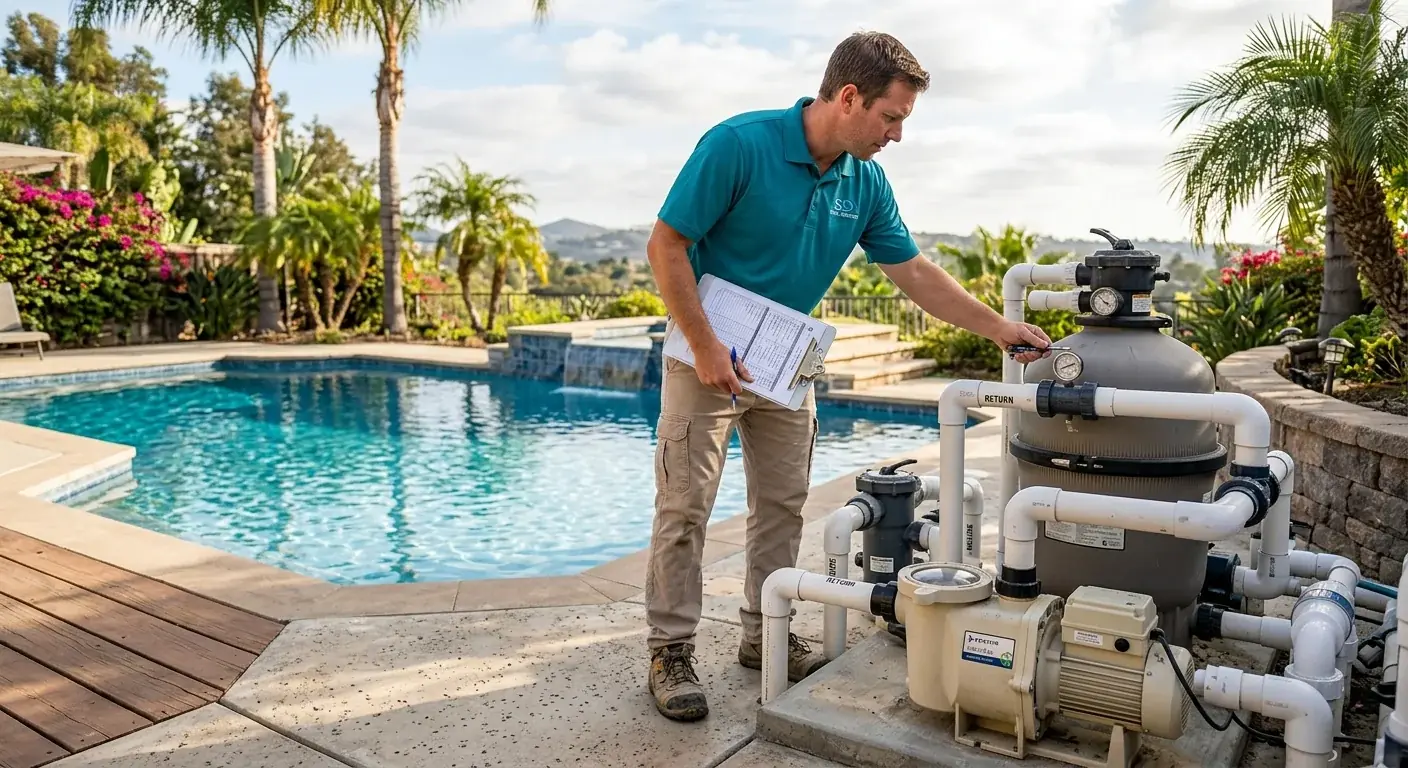
A pool inspection in San Diego covers four systems: the shell and finish, plumbing, the equipment pad, and safety features. A report that names only one of these is incomplete. A useful inspection tests things you can’t see from the deck.
Two different jobs people call an inspection
The word “inspection” covers two distinct services, and mixing them up leads to the wrong pro showing up.
A pre-purchase inspection is documentation for a real estate transaction. A licensed pool-and-spa specialist inspector orders it during escrow. The report describes condition without steering you toward a contractor. It is written as a record for the buyer.
A repair assessment starts from a symptom: a heater that won’t fire, a grinding pump, a pool losing water. It ends in a diagnosis plus a quote. Splash Pool SD routes repair assessments across San Diego County. Our network handles repair, leak detection, equipment, and resurfacing. For transaction reports, you need a licensed pool inspector instead.
Shell and finish
The inspector checks for cracks, hollow or drummy spots under the plaster, staining, waterline tile chips, coping condition, and the expansion joint. Surface wear is normal on an older pool. A bond-beam crack isn’t.
Plumbing
The inspection confirms the pool holds water, that the skimmer and main drain pull correctly, and that valves and actuators route water properly. Buried lines can’t be assessed visually. A good report says so plainly rather than guessing.
Equipment pad
The inspector notes the pump, filter, heater, salt cell, automation, and timer. Age, condition, visible leaks, and piecemeal replacement all get recorded. Piecemeal swaps, a newer pump on an original filter, suggest the pad has been updated in stages and often matches the age of the house. Mismatched ages reveal an approximate failure timeline for the remaining pieces. Read more about what drives replacement decisions in our guide to pool equipment replacement costs.
Safety features
California requires two of seven drowning-prevention features on private single-family pools. The requirement triggers when a permit is pulled for a build or remodel. It isn’t a blanket retrofit on all existing pools. The inspector checks barriers, gates, drain covers, and electrical bonding.
San Diego patterns: inland vs. coast
San Diego County isn’t one climate zone, and that shows up in inspection findings.
Inland, the mineral load is the primary enemy. Hard water scales heater elements, shortens pump seal life, and degrades plaster faster than soft water does. East County and the inland valleys see inefficient heaters and early surface aging. Your water provider publishes hardness figures. Check those before disputing a quote. Our post on hard water and San Diego pools goes deeper.
On the coast, salt air is the primary enemy. La Jolla, Coronado, Del Mar, and Pacific Beach all show corrosion on pump housings, unions, fasteners, and exposed hardware. The shell often outlasts the equipment in these areas.
Older pools across the county are usually on their second or third equipment set. Pieces were rarely replaced at the same time, so a mismatched pad is the norm, not the exception.
Water loss and leak detection
An inspection confirms water loss and narrows which side it is on. It can’t locate the leak. That is a separate service.
The bucket test is the starting point. Place a weighted bucket on a step, fill it to pool level, and compare after 24 hours. Equal drop means evaporation. The pool dropping more than the bucket means a leak.
Loss only while the pump runs points to the pressure side. Loss only when the pump is off points to the shell. Air in the pump basket suggests a suction-side leak above the waterline.
Locating the exact spot requires pressure testing plus electronic listening gear. That is leak detection, not inspection.
What a good report looks like
Findings are organized by system, not dumped into one flat list. Each item gets a severity rating: urgent versus cosmetic wear. Photographs document named issues, especially cracks and corrosion. A section lists what couldn’t be checked. Buried plumbing, a covered pool, and a locked gate are common gaps.
A generic list of every possible problem isn’t a useful report. If yours reads like a template with no specifics, it was.
After the inspection
Findings fall into three categories: cosmetic wear, end-of-life equipment, and active faults. Cosmetic issues aren’t urgent. End-of-life equipment needs planning. Active faults worsen and cost more with delay. Escaping water undermines structures above the waterline.
Common next steps include equipment replacement, resurfacing, and leak location. Splash Pool SD matches you with a licensed specialist for whichever step your report points to.
Licensing and verification
Pool work in California requires a CSLB C-53 license. Verify any contractor at the CSLB license lookup before work starts. This applies whether you are hiring for a repair assessment or a full renovation.
When to call us
If your inspection found active faults, aging equipment, or unexplained water loss, you need a licensed pool pro to diagnose and fix it. Call us at (858) 400-4404 and we’ll connect you with a licensed local pool specialist.
Frequently asked questions
What does a pool inspection cover in San Diego?
A thorough pool inspection covers four systems: the shell and finish, plumbing, the equipment pad, and safety features. A report that names only one system is incomplete.
Is a pool inspection the same as leak detection?
No. An inspection confirms water loss and narrows which side it is on, but it cannot pinpoint the exact location. Locating a leak requires pressure testing and electronic listening gear, which is a separate service.
Do I need a separate pool inspection when buying a home?
Yes. A standard home inspection usually skips or only glances at the pool. The pool is its own system with its own failure modes, and the two costliest hidden issues, buried-line leaks and shell deterioration, are not visible from the deck.
What license should a pool inspector hold in California?
Pool work in California requires a CSLB C-53 license. You can verify any contractor at the CSLB license lookup before hiring them.
What happens after a pool inspection finds problems?
Findings fall into three categories: cosmetic wear, end-of-life equipment, and active faults. Active faults worsen over time, so addressing them early typically costs less. A referral service can match you with a licensed specialist for the next step.
Need professional help in San Diego County?
Splash Pool SD connects you with a licensed specialist for any service in this post.