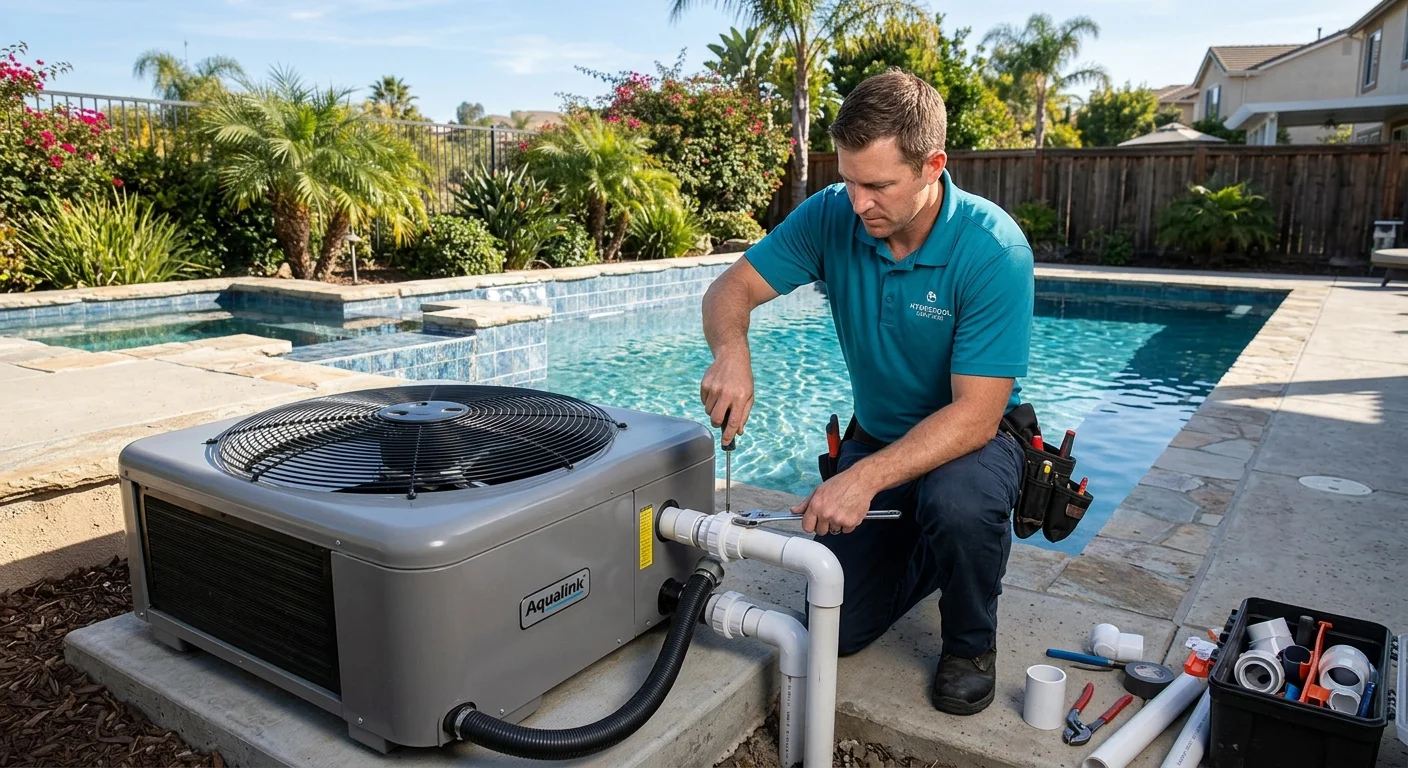
A pool heat pump that stops warming the water usually points to airflow restriction, a flow problem upstream, a sensor limit, or a refrigerant issue. The right first step isn’t guessing which part failed. It is recording what the unit shows you and comparing that against your exact model’s manual. A licensed specialist narrows the problem without guesswork, and that is who Splash Pool SD connects you with.
Confirm you have a heat pump, not a gas heater
These two aren’t interchangeable labels. A heat pump has a prominent fan grille and an exposed coil area. A gas heater doesn’t. Check the data plate on the unit for the model number and type. Use the manual that matches that exact model, not the cabinet color or the brand name alone.
Gas-heater troubleshooting focuses on ignition. Heat-pump troubleshooting focuses on ambient conditions, airflow, water flow, sensors, and refrigerant. Following the wrong checklist wastes time and can lead to misdiagnosis. If you are unsure which type you have, our post on gas heaters vs heat pumps in San Diego walks through the differences.
Photograph the data plate and the control display. Record the exact error message including punctuation and letter codes. Note the selected mode, the temperature setting, and what the fan is doing when the unit calls for heat. Never translate codes using a different model’s manual. Manufacturers assign different meanings to similar-looking messages.
Location and conditions matter more than you think
San Diego County isn’t one climate. A heat pump pad in Encinitas sits in cool marine air most mornings. An identical unit in El Cajon runs in dry inland heat. The same model can behave differently at each location, and the operating limits in the manual reflect specific ambient ranges.
Use the actual conditions at the unit, not a weather reading from a coastal airport. If your home is inland, record the temperature at the equipment pad. Note when the heating request began, what the display showed, and whether the fan was moving. Track whether the message changes as the weather shifts through the day.
A unit that resumes heating once the temperature rises back into its published range is showing you a useful pattern. That pattern doesn’t prove every component is functional, but it helps a specialist separate a documented operating limit from a true fault.
Don’t bypass sensors or alter hidden service settings to test a theory. Bypassing erases evidence and can create a second problem. Photograph each screen before changing any homeowner-accessible setting.
Airflow, coils, and the fan
Airflow checks are specific to heat pumps. Look for leaves, stored items, or anything pressed against the coil area. Check whether something covers the top grille. Photograph any bent fin sections, debris, or visible damage.
Don’t attempt cleaning methods you found in a generic video. Don’t remove cabinet panels. Don’t spray coil chemicals without checking whether the manual approves the method. Some manuals specify a particular approach or require a professional. If you are unsure, share photos with the specialist first.
A stationary fan is important evidence, but it isn’t a complete diagnosis by itself. Record whether the control panel shows a heating call while the fan sits still. Note repeated starts and stops, vibration, or new sounds. A short video captures behavior that may not repeat during an appointment.
Clearance requirements vary by model. A narrow side yard in Clairemont presents different constraints than an open pad in Escondido. No single countywide clearance figure exists. Check your installation manual for the exact spacing your unit requires.
Flow problems that mimic heater faults
A change in circulation can trigger what looks like a heating complaint. Timing alone doesn’t prove the heat pump failed. If the display shows a flow-related message, copy it exactly and interpret it through your model’s manual only. Don’t assume a refrigerant fault or a failed board.
Report whether the pool pump is running. Note any recent changes to the pump schedule, valve positions, or filter condition. A preceding change is useful context even if it turns out to be unrelated. Don’t rearrange unfamiliar valves to test theories. Photograph the current valve positions instead.
Basket checks are fine if they are part of your normal maintenance routine. Otherwise, leave the circulation inspection to the specialist. A pro examines the heat pump alongside the connected system and separates a circulation issue from an internal heating fault. That prevents unnecessary heat-pump component replacement.
Plumbing layouts differ across the county. A compact setup in Chula Vista looks different from an open North County pad. Photograph the entire equipment pad showing the pump, filter, valves, and connections. If the diagnosis expands, the same specialist can identify related scope. If replacement enters the conversation, review our guide on what drives pool equipment replacement cost before deciding.
Refrigerant and licensing
A suspected refrigerant issue changes the hiring conversation. This isn’t a useful homeowner checkpoint. You can’t confirm a refrigerant problem from the outside, and handling refrigerant requires specific qualifications.
Not every refrigerant repair automatically requires a C-53 license. The CSLB defines C-53 as the swimming pool classification, covering pool, spa, and hot tub construction along with solar heating equipment installation. That definition doesn’t mandate C-53 for all repairs. No single source identifies every applicable classification for every scenario. Ask the contractor which license covers the proposed work.
Unlicensed contracting is a misdemeanor in California unless an exemption applies. Verify any contractor through the CSLB online license lookup. Match the business name and license number to the person offering you a contract. Our post on checking a pool contractor’s license in California covers the steps.
Request a written diagnosis when refrigerant is mentioned. It should identify the model, the fault, the proposed work, and the contractor’s license. Reject vague refill claims that come without a testing explanation.
What a specialist does that you can’t
A licensed pool specialist examines the heat pump as part of the whole system. They check airflow, water flow, electrical signals, sensor readings, and refrigerant pressure with the proper tools. They separate a simple setting issue from a component failure and from a circulation problem upstream.
Splash Pool SD performs no physical repairs. We connect homeowners with licensed independent specialists who diagnose the problem and bear responsibility for the work. The matched pro quotes before any work starts. What drives that quote includes the unit’s brand and model, the specific fault, parts availability, and access to the equipment pad.
If your unit shows a persistent error code, the fan won’t operate, you see visible damage, or you suspect an internal component or refrigerant issue, that is the point to bring in a pro. For broader heater troubleshooting, our guide to pool heater repair in San Diego covers gas and electric units as well. If the unit won’t start at all, see pool heater not turning on.
When to call us
A heat pump that trips the same error repeatedly, shows no fan movement, or has suspected refrigerant trouble needs a licensed specialist with model-specific diagnostic tools. Attempting further checks without the right manual and equipment risks creating a second problem. Call us at (858) 400-4404 and we’ll connect you with a licensed local pool specialist.
Frequently asked questions
How do I know if my pool heat pump is actually broken?
Water temperature alone does not confirm a failure. Record the display message, settings, fan behavior, water flow, and outdoor conditions. Compare what you see against your exact model's manual before concluding anything is broken.
My heat pump runs but the water stays cool. What should I check?
The cause is not confirmable without a model-specific diagnosis. Start by checking airflow around the coil, water flow through the system, any operating limits listed in your manual, and whether the fan is moving. These observations give a specialist a starting point.
Can I clean the heat pump coils myself?
Check the manufacturer manual before touching the coil. Approved methods and clearance requirements vary by model. Do not use chemicals or remove cabinet panels based on generic video advice.
How do I verify a pool contractor's license in California?
Ask the contractor for their license information, then verify it through the CSLB official online license lookup. Match the business name and license number to the person offering you a contract.
Need professional help in San Diego County?
Splash Pool SD connects you with a licensed specialist for any service in this post.