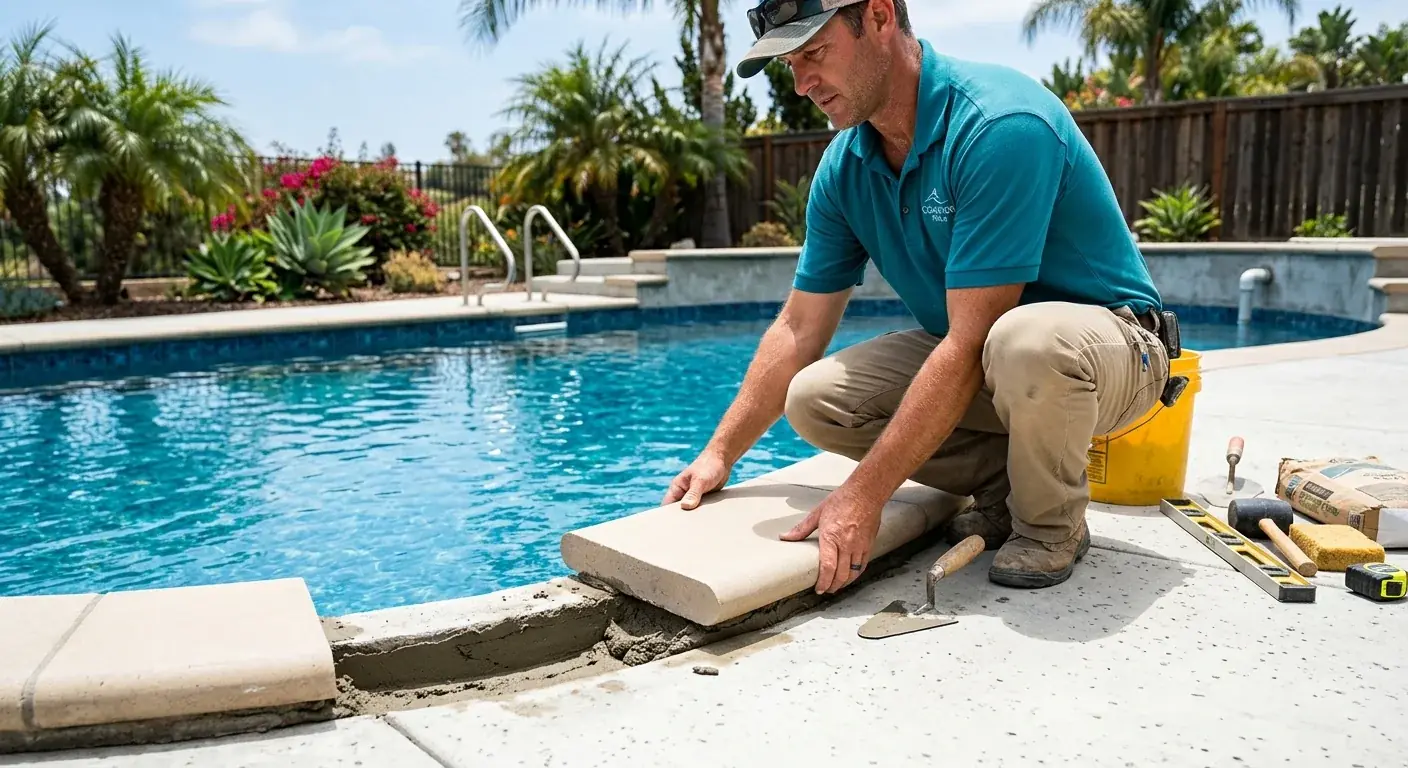
Pool coping is the material that caps the top edge of your pool shell. It bridges the gap between the pool structure and the surrounding deck. When coping stones go loose, crack, or lift away from the shell, water seeps behind the pool wall and damages the bond beam underneath. In San Diego, expansive clay soils are the main driver of this problem. The ground swells in wet winters and shrinks through dry summers, shifting deck slabs and stressing the mortar that holds coping in place.
Splash Pool SD connects you with licensed local pool professionals who handle coping repair. We don’t perform the work ourselves. The pro you’re matched with assesses the damage, quotes the job, and completes the repair.
What coping does and why it matters
Coping serves several functions at once. The slight overhang blocks water from entering the gap between the shell and the deck. It shields the bond beam, which is the reinforced concrete ring that sits atop the pool wall. It channels splash-out toward deck drains instead of letting it pool behind the structure. It also gives swimmers a non-slip edge to grip when exiting.
Common coping materials in San Diego include concrete, brick, natural stone, and precast units. Each has a different profile and finish, and each interacts with mortar and movement differently. When coping fails, the consequences go beyond appearance. Loose stones create trip hazards. Stones that fall into the pool can chip the interior finish. Water that seeps behind the shell erodes the bond beam and can lead to structural shifts.
Why San Diego soils cause coping failure
The county sits on expansive clay soils that respond dramatically to moisture changes. Winter rains saturate the ground and cause it to swell. The long dry season that follows pulls moisture out and the soil shrinks. This cycle repeats year after year.
Deck slabs ride on top of that soil. As the ground moves, slabs shift, crack, and settle unevenly. Coping is tied to both the pool shell and the deck, so it absorbs stress from both directions. Over time, the mortar holding coping stones in place turns brittle and loses adhesion. Sun exposure, constant water contact, and ground movement all degrade it.
Improper initial installation accelerates the problem. A missing or poorly built expansion joint is one of the most common culprits. Without that flexible gap between the coping’s outer edge and the deck, the deck pushes directly against the coping and bond beam during soil movement. New drainage patterns or nearby construction can also add strain to an already stressed system.
Early detection keeps a small fix from becoming a major renovation. Weekly cleaning visits help spot the first signs: a stone that rocks underfoot, a hairline crack in the mortar joint, or a visible gap where coping meets the deck. If you want more detail on how San Diego’s hard water and soil conditions affect pools overall, our post on hard water and San Diego pools covers the broader picture.
Repair tiers: from re-mortaring to full re-cope
The right repair depends on how many stones are affected, whether the damage is cosmetic or structural, and what’s happening underneath.
Re-mortaring
This is the least intensive option. It works when the stones themselves are intact but the mortar has failed. The process is straightforward: chip out the old mortar, clean the joint surfaces, and re-set the stones with fresh mortar. If you catch the problem early, this is a quick and cost-effective fix.
Stone replacement
When individual stones are cracked, chipped, or broken, they need to come out. New stones are matched by material, color, and profile to blend with the surrounding coping. This requires skilled masonry work. A poor match stands out and can look worse than the original damage. Material choice matters here too. Our guide on pool coping options and materials walks through the common choices.
Full re-cope
A full re-cope removes all existing coping and replaces it. This is chosen when damage is widespread, when the original installation was poor or outdated, or when bond beam repair requires access to the top of the pool wall. Material options for a full re-cope include travertine, flagstone, brick, and precast concrete.
The expansion joint: a small detail that prevents big problems
The expansion joint is the flexible gap between the outer edge of the coping and the deck surface. It’s typically filled with mastic sealant. Its job is to absorb deck movement caused by expansive soils so that the deck doesn’t push against the coping and bond beam.
Without a functioning expansion joint, every cycle of soil movement transfers force directly into the coping. That’s why any coping repair should include re-establishing this joint if it’s missing or deteriorated. If the mastic around your pool is cracked, shrunken, or gone entirely, that’s a sign the joint needs attention. Our post on pool mastic replacement in San Diego explains what’s involved.
The tile band connection
Below the coping, at the waterline, sits a decorative tile band. It provides a durable, easy-to-clean surface. Coping sits on the bond beam, and the tile band sits just below it. When coping mortar fails, the loosening can extend down and disturb the tiles underneath.
Any time coping is repaired, the tile band should be inspected. Loose or cracked tiles at the waterline often point to coping movement above. If both need attention, addressing them together saves time and avoids doing the same area twice. Our post on pool tile repair in San Diego covers what that work involves.
When the problem is deeper than the stones
Widespread lifting or cracking across multiple coping stones often signals a deck problem rather than a coping problem. Possible causes include soil settlement, poor original compaction, or expansive soils that have heaved or sunk the deck slab. When the deck shifts, it pulls coping away from the shell.
Re-mortaring alone won’t fix a root cause like this. The bond beam itself may be cracked from ground movement, hydrostatic pressure, or deck stress. A cracked bond beam leaves coping without a stable base, and no amount of fresh mortar will hold stones on a failing structure.
Bond beam repair requires removing coping and tile to access the concrete ring. It’s a more involved project, but it addresses the structural issue rather than patching symptoms. If you’re seeing cracks in your pool deck alongside coping movement, that’s a strong signal the problem extends below the surface.
What moves the price of coping repair
Every quote is different because every pool is different. The factors that drive cost include:
- Pool size and perimeter length
- Material and finish of the coping stones
- How many stones need re-mortaring versus replacement
- Whether custom or hard-to-source materials are required
- Pool access and shape complexity
- Whether the expansion joint needs to be rebuilt
- Whether tile work or bond beam repair is included
- Equipment and material brands specified
The licensed professional you’re matched with will assess all of these on site and provide a quote before any work starts. No one should begin a coping project without a written scope and price.
Choosing the right pro for the job
Coping repair sits at the intersection of masonry, structural knowledge, and pool-specific experience. A general handyman might handle a single loose stone, but anything involving the bond beam, deck movement, or a full re-cope calls for a licensed pool contractor. Our guide on how to choose a pool repair pro in San Diego covers what to look for, including license verification and insurance.
If the repair scope grows into a larger project, understanding what’s involved in pool resurfacing or a full renovation helps you plan and budget with accurate expectations.
When to call us
If coping stones are loose, cracked, or lifting away from the pool shell, a licensed pool professional should assess the damage before it reaches the bond beam or deck structure. The longer water seeps behind the shell, the more expensive the fix becomes.
Call us at (858) 400-4404 and we’ll connect you with a licensed local pool specialist.
Frequently asked questions
What causes pool coping to crack or lift in San Diego?
Expansive clay soils are the primary cause. They swell during wet winters and shrink through long dry summers. That cycle shifts deck slabs and stresses the mortar holding coping in place. Aged mortar also turns brittle over decades, and poor original installation or a missing expansion joint makes things worse.
Can I re-mortar a loose coping stone myself?
A single loose stone with intact mortar on the other side is a reasonable DIY project. Once multiple stones are loose, cracked, or lifting, or if you suspect deck or bond beam movement, a licensed professional should handle it. Incorrect repairs can worsen the damage.
How long does pool coping repair take?
Re-mortaring a few stones typically takes about one day. Replacing a section of damaged stones runs one to three days. A full re-cope, where the entire perimeter is removed and replaced, can take several days to over a week. Tile work and mortar curing add time to any of these.
What is the difference between re-mortaring and full replacement?
Re-mortaring keeps your existing stones in place and secures them with fresh mortar. Stone replacement swaps out cracked or chipped pieces with new ones matched by material, color, and profile. A full re-cope removes the entire coping perimeter and replaces it, which is chosen for widespread damage or when bond beam access is needed.
Need professional help in San Diego County?
Splash Pool SD connects you with a licensed specialist for any service in this post.