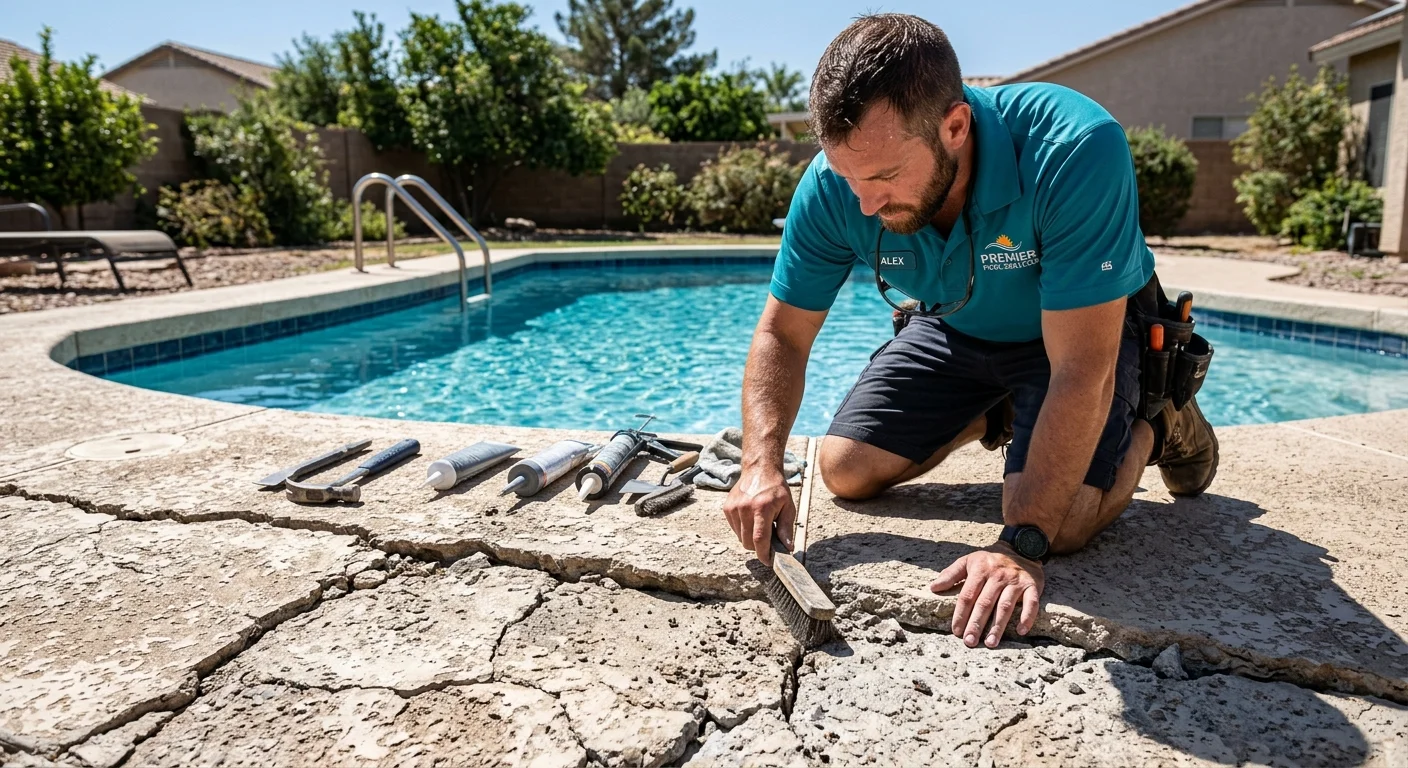
A homeowner in Encinitas notices a hairline crack running from the coping toward the drain. A homeowner in El Cajon sees the same thing near the equipment pad. The two situations demand different questions because soil, drainage, and construction methods differ across San Diego County. The first step is never filling the crack. The first step is figuring out what it is.
Control joints aren’t cracks
Concrete decks are poured with intentional lines called control joints. They give the slab a planned path for movement so it doesn’t crack randomly. Joints run straight, repeat at regular intervals, and may be tooled into wet concrete or cut after it cures.
A crack that follows a joint line is often just the joint doing its job. The material inside may have separated or aged, but the slab itself is behaving as designed. Filling that line with a rigid product can trap stress and cause a new crack beside it.
Real cracks behave differently. They wander across a panel, branch into smaller lines, or cross a joint at an angle. They show up at transitions: where the deck meets coping, a drain, a wall, or the equipment pad. These are the lines that need a closer look.
Before anyone applies filler, sealant, or dye, the crack should be identified. Covering it too early hides the evidence a specialist needs.
Movement signs that change the plan
A crack with both sides level and no width change is usually stable. A crack where one side sits higher than the other, or where the gap has widened since last summer, tells a different story.
Other movement indicators include:
- Repeated patch failure in the same spot
- Cracks that converge toward a single point
- Soft or crumbling material at the crack edge
- New staining or persistent dampness nearby
These signs mean the cause is below the surface. A patch won’t hold if the slab keeps shifting. The specialist needs to check sub-slab conditions, root intrusion, drainage paths, and any prior construction that may have disturbed the base.
Photos taken months apart help show whether the crack is active. Note when you first saw it and whether any nearby work, like trenching or new landscaping work, happened around the same time.
One important distinction: a deck crack isn’t the same as a structural pool crack. If damage continues through the vessel wall or appears on the interior finish, that requires a separate structural inspection.
When a plumbing leak might be involved
A damp area beside a deck crack doesn’t automatically mean a pipe is leaking underneath. Water can come from rain runoff, splash-out, irrigation overspray, or routine washing. Opening the slab based on location alone can cause unnecessary damage and cost.
What does point toward a plumbing issue:
- Dampness that persists regardless of weather
- Water appearing only when the pump or a specific system runs
- Pool level dropping under consistent conditions with no other explanation
- Soft or eroded material directly at the crack edge
If evidence suggests a leak below the slab, a leak detection specialist isolates the plumbing runs and recommends pressure testing. The goal is to narrow the location before any concrete comes up.
Don’t add dye, expanding filler, or sealant before the specialist sees the area. These products obscure the evidence.
Keep in mind that leak testing, plumbing access, concrete removal, pipe repair, and deck finishing may each be a separate scope of work. Get the proposed sequence in writing. Make sure the repaired line is tested before anyone covers it back up.
Repair options once the cause is clear
Patch
A patch suits isolated surface damage after the cause has been identified and resolved. The material must match the existing deck in texture and color. Ask the pro to show you the proposed finish under both dry and wet conditions, since many products look different when saturated.
Patches often remain visible on finished surfaces. That is normal. Ask how the pro prepares the crack edges and whether the nearby joint gets treated differently.
Overlay
An overlay covers a broader area with a new finish layer. It makes sense when the slab is structurally sound but shows widespread cosmetic wear, mismatched patches, or surface spalling. It isn’t a substitute for correcting active movement or a leaking line beneath.
Eligibility depends on slab condition. A pro who recommends an overlay without checking for movement underneath is skipping a step.
Replacement
Replacement removes a selected section or a larger connected area. It may provide access to plumbing or sub-slab material. It can address sections that no longer align with the rest of the deck.
The scope should identify removal limits, drainage transitions, joint placement, surface finish, and how the pool itself gets protected during the work.
Comparing proposals
One contractor’s patch may include different preparation than another’s. Compare proposals by scope, not by label. Ask each pro to state the identified cause, what remains uncertain, and what conditions could change the recommendation.
Verify any contractor’s status through the CSLB license check before signing a contract.
Coordinating deck work with resurfacing
Deck repair and pool resurfacing affect neighboring surfaces, but they are separate projects. The deck surrounds the pool. Resurfacing renews the interior. One doesn’t automatically fix problems in the other.
Coordination matters most near the coping, tile line, and drains. Deck demolition creates debris and vibration around finished pool surfaces. Interior work changes crew access and protection needs.
When both projects are planned, the deck and pool specialists must agree on order before either begins. Start with unresolved leaks or movement. A new deck finish can conceal access points that a leak repair might need later. Fresh pool work may need protection during later demolition.
The written plan should identify who removes materials, who restores each transition, and when plumbing gets tested. Coping connects the two scopes visually and physically. Decide whether it stays, gets focused repair, or belongs in a broader renovation.
Don’t add resurfacing merely because deck work is underway. Each proposal should explain the specific condition it addresses.
When to call us
Call when a crack is changing shape, sitting uneven, failing repeated patches, or paired with unexplained water loss. A licensed local pool pro can inspect the deck, identify the cause, and define the right next step.
Call us at (858) 400-4404 and we’ll connect you with a licensed local pool specialist.
Frequently asked questions
Does every crack in a pool deck need repair?
No. Straight lines that follow a repeating pattern are often control joints, which are intentional. A crack that wanders, branches, or crosses a joint is more likely a real problem. A specialist can tell the difference on site.
Can a cracked deck mean there is a plumbing leak underneath?
It can, but a crack near a wet spot does not prove a pipe caused it. Rain, splash-out, and irrigation also create dampness. A leak specialist compares the crack pattern with plumbing routes and equipment behavior before recommending any concrete removal.
Will an overlay fix a cracked pool deck?
An overlay covers cosmetic wear on a slab that is still stable. It does not correct active movement, poor support beneath the slab, or a leaking line. If the cause is unresolved, the crack will return through the new surface.
Should deck repair happen before pool resurfacing?
When both are planned, the order matters. Deck demolition creates debris and vibration near finished pool surfaces. The two specialists should agree on sequence before either begins, and unresolved leaks or movement should be addressed first.
Need professional help in San Diego County?
Splash Pool SD connects you with a licensed specialist for any service in this post.