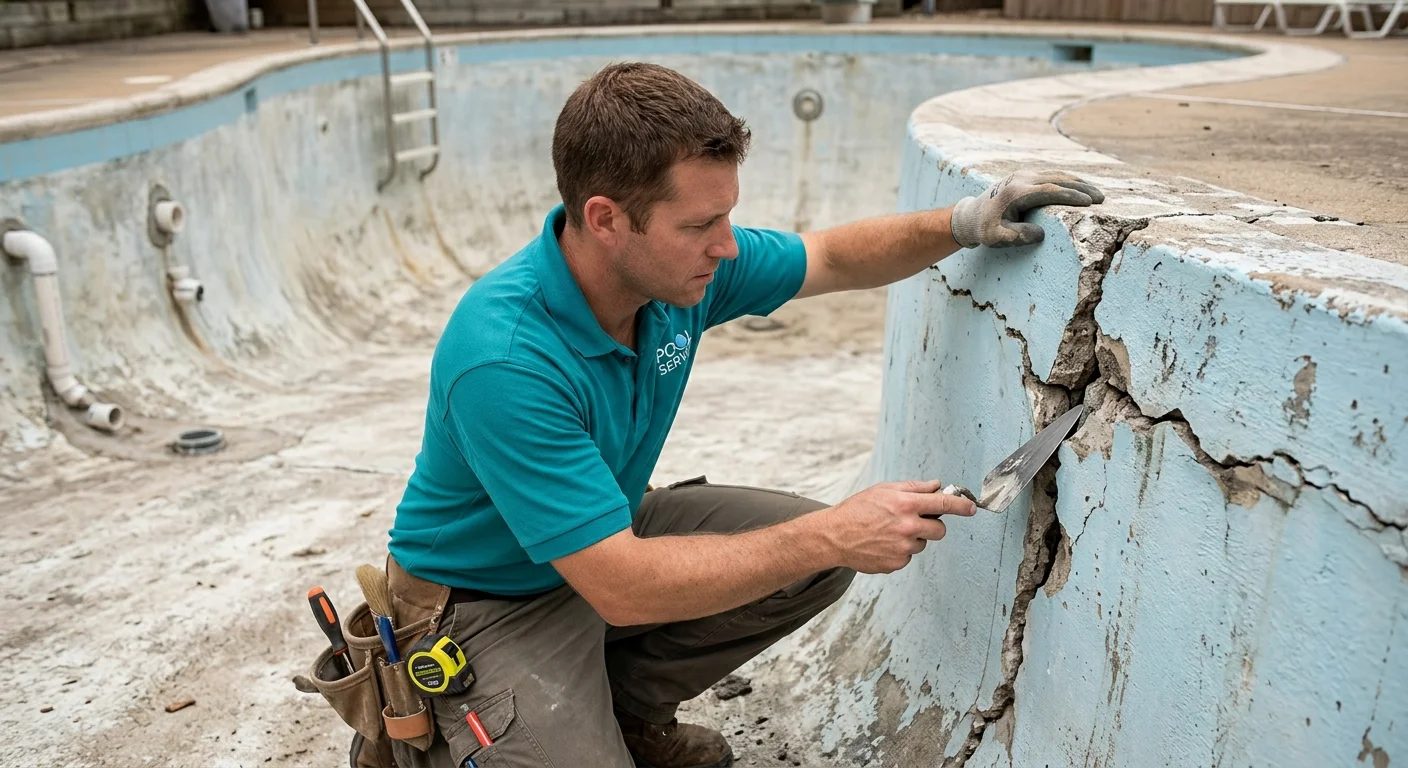
A structural pool crack repair cost can’t be pulled from a chart or estimated from a photograph. The price depends on how deep the crack runs, what finish covers it, how accessible the damaged area is, and what site conditions caused the movement in the first place. A licensed specialist inspects the shell, writes a detailed scope, and quotes before any work starts. Splash Pool SD connects you with that specialist.
Crazing isn’t the same as structural damage
Fine hairline lines on pool plaster are called crazing. They stay in the finish layer and don’t reach the concrete shell beneath. Crazing is common in aging plaster and usually doesn’t threaten the pool’s integrity.
A structural crack is different. It penetrates into the shell itself. Width or definition alone can’t confirm depth. Discoloration, rough edges, and missing plaster can make a shallow line look serious, or a deep fracture look minor. A small patch of aging plaster differs from a line that crosses multiple surfaces.
High-risk zones include steps, benches, corners, tile lines, coping, and fittings. Transitions between surfaces reveal what moved and where damage extends. If a crack crosses from the wall into a step or runs beneath the tile line, that pattern matters.
Water loss doesn’t automatically prove a crack is leaking. Plumbing failures, fitting problems, equipment issues, and evaporation all cause level drops. A structural crack can exist without any visible water loss. On-site diagnosis is required. Reject any estimate based on a photo alone.
The key question a specialist answers: is the finish affected, the shell, or both?
San Diego soil and site conditions matter
San Diego County includes coastal ground, inland valleys, mesas, slopes, and canyon edges. Neighboring properties can differ in grading, drainage, fill material, and retaining structures. Uneven ground movement concentrates stress on a pool shell. The shell may resist that stress or fracture at a weak transition point.
Not every crack indicates active soil movement. Construction details, past repairs, and drainage changes also play a role. A specialist must examine the whole setting before assigning a cause. Deck separation, displaced coping, and altered drainage patterns are contextual clues. Movement around steps may signal a broader pattern.
Dry periods and seasonal rain affect local drainage. Roof runoff, irrigation, planters, slopes, and drains all shift moisture around a pool. The repair plan must account for observed site conditions. Be cautious of single-cause claims made before a full property inspection. If soil or drainage issues fall outside a pool contractor’s scope, identify the right evaluator for that work.
For more on how San Diego’s hard water and soil affect pools, see our post on hard water and San Diego pools.
The diagnostic process
A thorough diagnosis documents the crack route, adjoining surfaces, and any prior patches. The specialist determines where the crack starts, where it ends, and which components it crosses. Three questions guide the assessment: is this finish only, does it penetrate the shell, and is there another condition contributing?
The specialist may need access beneath loose or damaged finish to confirm depth. Don’t drain the pool or remove material before a professional instructs you to. If water loss is present, that requires a separate leak-detection workup. A wet-area crack isn’t automatic proof of a leak source. Plumbing, fitting, and shell defects must not be conflated.
Request photographs plus a written scope of work. The scope names the damaged area, the repair method, the finish restoration, and any exclusions. Clarify whether this is an isolated crack or a wider shell concern. Compare scopes between proposals, not headline prices. Verify the contractor through the CSLB license lookup before signing anything.
Staple and epoxy injection: how the repair works
Staple and epoxy injection are common methods, but they are options, not universal solutions. A licensed specialist determines whether they fit your specific shell and crack.
The general sequence looks like this:
- Remove finish around the crack to expose the concrete.
- Clear loose material and any failed prior patches.
- Prepare crossing points on both sides for staples.
- Install specified staples or anchors per the written plan. Staples bridge sound material across the damaged line.
- Inject epoxy or a compatible material to fill the crack. Product selection is documented in the contractor’s scope.
- Close the area. Tile, plaster, or pebble finish is restored separately.
The order may shift based on access and conditions. Some cracks require a different structural approach entirely. Some prove to be finish-only once the surface is opened. Ask how the full crack path was confirmed before it gets covered again.
Why resurfacing alone doesn’t fix a structural crack
Resurfacing replaces the exposed interior finish. It addresses worn, rough, stained, or failing surface material. It doesn’t reconnect a cracked shell beneath. New plaster may temporarily hide a structural line, but the underlying break persists. Movement below the new surface can reappear later.
The correct sequence is: identify the damage, repair the shell, then restore the finish. Resurfacing is the final stage, not the structural fix. If your project involves multiple phases, each responsible contractor must be named. Match scopes before comparing proposal totals. The contract must state location, method, finish area, and exclusions. Specify who handles tile, coping, deck, and drainage.
If you are comparing resurfacing options, our guide on comparing pool refinishing quotes walks through what to look for. For a broader view of what pool repair costs in San Diego, that post covers the factors that move pricing across different repair types.
What moves the price
No confirmed local rate exists for structural crack repair in San Diego County. The cost is set by the licensed specialist after diagnosis. Factors that influence the quote include:
- Pool size and depth of the crack
- Finish type: plaster, pebble, quartz, or tile
- Access to the damaged area
- Equipment or materials specified in the scope
- Whether drainage or soil work is needed alongside the repair
- Permit requirements, if any apply to the scope
The matched pro provides an itemized quote before work starts. Compare written scopes, not bottom-line numbers. A lower price that omits finish restoration or drainage correction isn’t the same job.
For more on how cracked pool plaster repair differs from structural work, that post covers surface-level fixes in detail.
When to call us
A crack that reaches the shell requires a licensed professional assessment. Don’t attempt a DIY patch on a structural fracture, and don’t accept a quote based on a photograph alone. Call us at (858) 400-4404 and we’ll connect you with a licensed local pool specialist.
Frequently asked questions
Can I get a structural crack repair estimate from a photo?
No. A photo cannot confirm whether a crack reaches the shell or stays in the finish. A licensed specialist must inspect the crack on site, examine surrounding surfaces, and assess soil and drainage conditions before writing a scope of work.
Does resurfacing fix a structural crack?
No. Resurfacing replaces the interior finish only. It does not reconnect a cracked shell beneath. The correct sequence is to identify the damage, repair the shell, and then restore the finish as a final stage.
How do I know if my crack is structural or just surface crazing?
You cannot confirm depth from appearance alone. Discoloration, rough edges, and missing plaster can exaggerate what looks like a deep crack. A specialist opens the area if needed and determines whether the finish, the shell, or both are affected.
What should I check before signing a repair contract?
Verify the contractor through the CSLB license lookup. Compare written scopes between proposals, not headline prices. The scope should name the damaged area, the method, the finish restoration, and any exclusions.
Need professional help in San Diego County?
Splash Pool SD connects you with a licensed specialist for any service in this post.