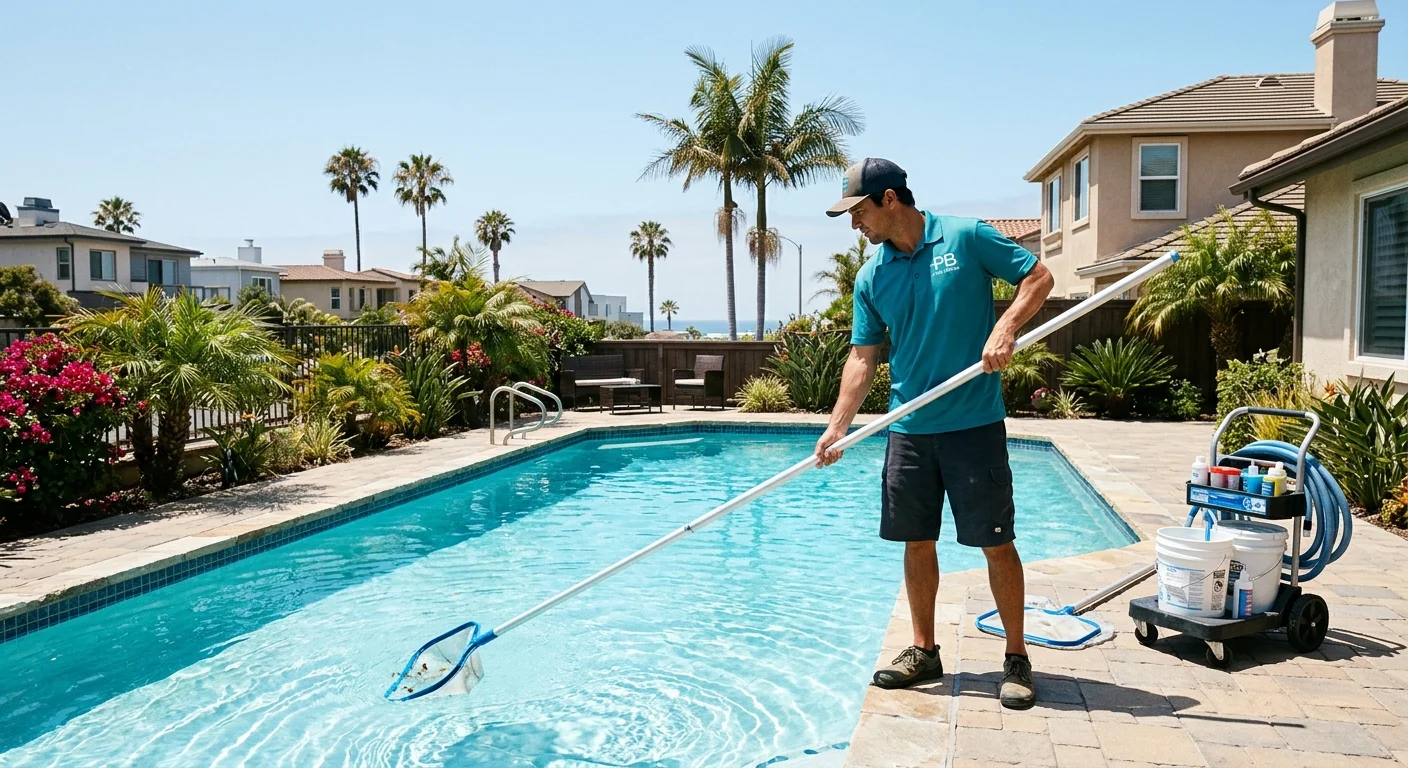
Pacific Beach sits a few blocks from the Pacific Ocean, and that proximity shapes every aspect of pool care here. Salt air leaves residue on equipment, sand works its way into filters, and coastal moisture accelerates corrosion on exposed metal. A pool cleaning routine in this neighborhood has to account for conditions that inland San Diego pools never face.
Splash Pool SD matches Pacific Beach homeowners with licensed independent local pool pros. The matched specialist performs the work, provides terms, and quotes before anything starts. We don’t set prices or perform service ourselves.
Salt air and sand aren’t the same as a saltwater system
Ocean air deposits a light salt film on decks, rails, equipment lids, and exposed hardware. This residue isn’t the same thing as a managed saltwater pool system. It doesn’t sanitize the water. It doesn’t replace chlorine, bromine, or any measured chemical treatment. Your pool still needs regular testing and dosing based on actual readings.
Sand arrives through wind, feet, towels, toys, and pets. Heavier grains settle on steps and the pool floor. Finer particles make it into the filter. The amount varies by yard. A walled yard near Crown Point collects different debris than an open yard facing Mission Boulevard. Landscaping, rooflines, covers, and airflow all change what lands in the water.
Distance from the ocean alone isn’t a reliable guide for chemical dosing. Treatment must follow test results, not assumptions about proximity to the beach.
Skimmer and filter load runs higher here
The skimmer catches surface material. The filter handles finer particles. In Pacific Beach, wind, sand, leaves, and hair increase the load on both. A full skimmer basket restricts the water path. A dirty filter impairs circulation.
Signs that something is off include weaker return flow, poor surface movement, and filter pressure that sits above the system’s clean baseline. That baseline is specific to your equipment. There is no universal number that applies to every pool. Compare readings to your own system’s starting point.
Routine checks during a visit should include the skimmer basket, pump basket, filter condition, and return flow. Follow the manufacturer’s instructions for filter service. Cleaning the waterline alone can hide a circulation problem underneath.
Written records help separate a windy week from a persistent restriction. If baskets refill quickly after cleaning, or if weak flow continues despite proper care, something deeper may be wrong: a blocked line, a damaged component, or a pump fault. That moves the conversation from cleaning to repair.
Corrosion on the equipment pad deserves a weekly look
Salt residue and coastal moisture damage exposed metal over time. Fasteners, heater cabinets, valve hardware, anchors, and enclosures are all vulnerable. A weekly visual check around the equipment pad is a simple habit that catches problems early.
Look for discoloration, flaking, damaged coatings, wet areas, and changes in fittings. Photos taken from the same position help you compare gradual changes over weeks and months.
Surface discoloration isn’t the same as a cracked housing, an active leak, or internal damage. Location and extent matter. Don’t apply unapproved sprays or coatings to rusty spots. Follow the manufacturer’s maintenance guidance for your specific equipment.
Internal components, controls, heaters, and motors require a qualified specialist. Corrosion on a functional part requires repair, not surface cleaning.
What a weekly visit covers
A thorough weekly visit in Pacific Beach typically includes:
- Surface debris, settled sand, steps, walls, and waterline
- Skimmer and pump baskets, plus visible lid condition
- Measured water readings with treatment suited to that specific pool
- Return flow, surface movement, and filter pressure compared to baseline
- Filter condition checked per manufacturer instructions
- Visible leaks, corrosion, cracked fittings, and equipment changes
- A written record of readings, treatment applied, debris observed, and any noted defects
Windy periods add grit and leaves. Heavy swimmer use changes what the pro observes. Covers, landscaping, and circulation patterns affect where material gathers. A good visit ends with a clear status update for the homeowner.
Cloudy water plus weak flow isn’t the same issue as sand on the floor. Green water may involve treatment, circulation, filtration, or a combination. The pro should note what they see and what they did, so patterns emerge over time.
For more on what a standard service visit includes, see our guide on what pool maintenance service covers. If you’re wondering how frequency gets determined, this piece on cleaning schedules breaks down the factors.
When cleaning becomes repair
Some situations go beyond routine maintenance. Call a licensed specialist when you notice:
- Water around the pump, filter, heater, valves, or connections
- Return flow that stays weak after proper basket and filter care
- A pump that repeatedly loses prime
- Cracked lids, housings, valves, fittings, or exposed parts
- Filter readings that fail to return toward the clean baseline
- Cloudy or green water that recurs despite documented treatment
- Corrosion that advances beyond a removable exterior deposit
A clogged basket can mimic a pump problem. Poor flow has multiple possible causes. Water near equipment may originate elsewhere. A good pro separates observations from diagnosis. The explanation should name the symptom, list the checks done, identify the suspected component, and state whether cleaning, adjustment, repair, or replacement is proposed.
You can verify any contractor’s license through the CSLB online check before approving repair or construction work. Our guide on choosing a pool repair pro in San Diego walks through what to look for.
Tracking records over time
The CDC’s healthy swimming guidance offers general direction on water maintenance, but your pool’s needs are specific to its size, finish, equipment, and exposure. Track readings over time. Log swimmer use, visible debris, weather, and chemicals added. Notes reveal whether a problem is temporary or repeating.
A pool near Garnet Avenue with heavy foot traffic from beachgoers will see different debris patterns than a pool tucked behind walls on Sail Bay. The record is what tells you which pattern you’re dealing with.
If your equipment is older and you’re noticing more frequent issues, our post on what drives pool equipment replacement cost explains the factors that move the number. For pools dealing with hard water on top of coastal exposure, this guide on hard water and San Diego pools covers the calcium side.
When to call us
If your Pacific Beach pool has persistent flow problems, recurring cloudiness, advancing corrosion, or any sign of a leak, it needs a licensed pool professional who can diagnose and repair the issue. Routine cleaning alone won’t fix a failing component. Call us at (858) 400-4404 and we’ll connect you with a licensed local pool specialist.
Frequently asked questions
How often should a Pacific Beach pool be cleaned?
Frequency depends on pool size, swimmer load, wind exposure, landscaping, and whether the yard is walled or open. A pro matched through Splash Pool SD assesses these factors and recommends a schedule before work starts.
Does ocean air turn my pool into a saltwater pool?
No. Salt residue from ocean air is a light film on surfaces. It does not replace a managed saltwater system or any sanitizer. Your pool still needs measured chemical treatment based on test results.
What does a weekly pool cleaning visit include?
A typical visit covers surface debris, settled sand, skimmer and pump baskets, waterline, measured water readings, return flow checks, filter pressure compared to baseline, and a written record of observations.
When does pool cleaning become a repair job?
When weak flow persists after proper basket and filter care, when corrosion advances beyond surface deposits, when water appears near equipment, or when cloudy water recurs despite documented treatment, a licensed specialist should diagnose the cause.
Need professional help in San Diego County?
Splash Pool SD connects you with a licensed specialist for any service in this post.