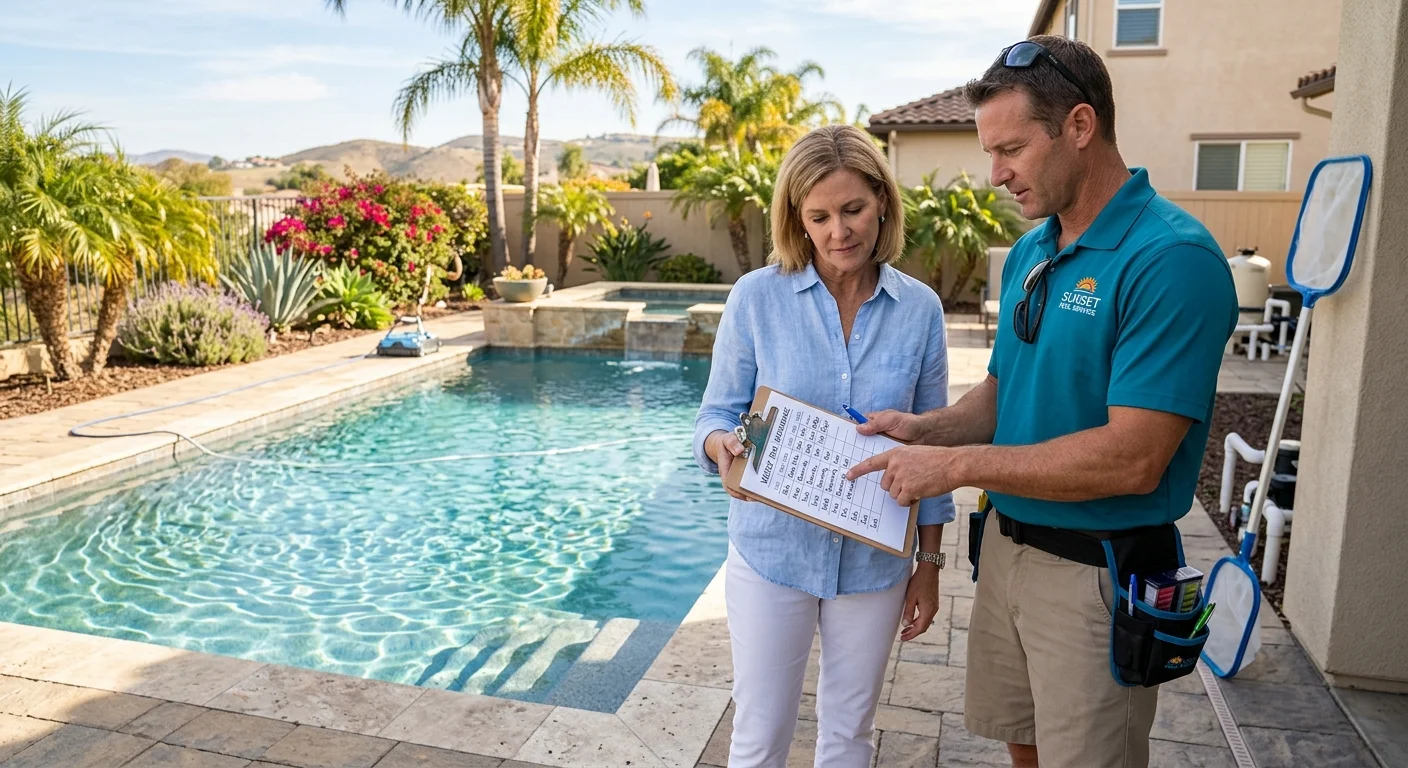
Most San Diego pools need weekly cleaning as a baseline. That cadence handles the debris, brushing, and basket clearing that keep water clear and equipment running. But weekly is a starting point, not a fixed rule. Pools with heavy swimmer loads, direct sun all day, or trees dropping jacaranda blossoms onto the surface may need more. Screened enclosures and lightly used pools can sometimes stretch longer between visits.
The short answer: plan for weekly, then adjust based on what your pool actually shows you.
What a weekly visit covers
A standard weekly cleaning includes several tasks that work together:
- Skimming floating debris before it sinks or reaches the basket
- Brushing steps, walls, corners, and the tile line
- Vacuuming or deploying a robotic cleaner for settled material
- Clearing skimmer and pump baskets so flow stays unrestricted
- Inspecting the waterline, surfaces, and visible equipment
Each task addresses a different failure mode. Skimming prevents organic material from decomposing in the water. Brushing disrupts algae before it bonds to the surface. Basket clearing protects the pump from restricted flow, which can overheat the motor over time.
Why weekly even when the water looks clear
A pool can look fine from the deck while chlorine drops, pH rises, or a return weakens. Appearance alone misses subsurface and chemical changes. That is why a weekly physical cleaning matters even when the water looks blue and still. The visit isn’t just about what you can see. It is about catching shifts before they compound.
Cleaning and testing run on separate clocks
This is the distinction most pool owners miss. Physical cleaning and chemistry testing aren’t the same schedule.
The CDC recommends testing chlorine and pH a minimum of twice daily, and increasing that frequency during heavy use. DPD test kits outperform strips in accuracy. The target range for pH is 7.0 to 7.8. Free chlorine should stay at a minimum of 1 ppm, or 2 ppm if you use stabilized chlorine or maintain a CYA level.
Sunlight consumes chlorine. Swimmers reduce it further. Jets that create droplets also increase chlorine demand. None of these changes are visible from the deck. A weekly cleaning visit doesn’t replace this testing rhythm. For a deeper breakdown of what to test and when, see our guide on pool water testing.
No off-season in San Diego
San Diego doesn’t shut pools down for winter. Equipment runs year-round, debris doesn’t stop, and weather keeps shifting the water even when nobody is swimming.
Winter wind moves leaves, seed pods, and dust across the surface. Rain carries surrounding dirt toward the water. A skimmer basket can fill unseen beneath the surface while the pool looks calm from above. Restricted flow still damages equipment whether or not anyone is using the pool.
Microclimates across the county make this even more variable. Point Loma sits under the marine layer most mornings, which reduces direct sun but keeps humidity high. Santee and El Cajon get brighter, more direct sunlight that drains chlorine faster. Coastal North County faces salt air and different wind patterns than inland neighborhoods like Rancho Bernardo. These are short distances with genuinely different daily loads on the water.
If your pool sits in a hard-water area, mineral buildup at the waterline is a year-round concern too. Our post on hard water and San Diego pools covers what that looks like and how to manage it.
Factors that increase workload
Several drivers overlap, and they don’t follow the calendar. Watch patterns, not the season.
Swimmers. Sweat and dirt deplete chlorine. Pool parties and guest streams accelerate chemistry shifts. On heavy swim days, test chlorine that same day rather than waiting for the next scheduled check.
Direct sun. Sun is an independent chlorine drain. Exposed pools in El Cajon or Rancho Bernardo lose free chlorine faster than shaded ones. But shade trades one problem for another: leaves, flowers, and pollen fall into the water instead.
Wind. Wind makes tree debris unpredictable. A single gust can fill a skimmer basket in minutes. If you notice repeated basket filling, increase how often you check between service visits.
Recurring patterns. If dirt always collects in one corner, add a spot cleanup there. If chlorine drops faster on swim days, test then. The pool tells you what it needs. The calendar doesn’t.
What you handle between visits
Weekly service covers the physical route. Between visits, the homeowner’s job is observation and testing:
- Test chlorine and pH per the CDC frequency
- Remove floating leaves before they sink
- Check the skimmer basket after wind events or visible debris
- Listen for unusual pump sounds and note return flow
- Inspect the waterline for discoloration, rough deposits, or recurring film
Early attention prevents week-over-week buildup. A small problem caught on Tuesday doesn’t become a big one by the next service day. If you want to understand how pump runtime affects circulation between visits, our guide on how long to run a pool pump in San Diego walks through the variables.
Robotic cleaners: a supplement, not a replacement
Robotic cleaners collect settled dirt in their own filter compartment. They are useful for keeping the floor clear between visits. But they can’t test chlorine, interpret pH readings, empty a skimmer basket, or assess whether circulation is adequate. They don’t replace a professional service route. They reduce the load on it.
DIY vs. professional: where the line sits
The practical division works like this. The homeowner handles daily observation and water testing. The pro handles the recurring physical cleaning route. Equipment repair or structural work is a separate category entirely and requires a contractor license.
If you ever need to verify a contractor’s license for that kind of work, check the California Contractors State License Board. Our post on how to check a pool contractor license in California explains the process.
And if you are comparing service options for the first time, how to choose a pool cleaning company in San Diego covers what to look for.
When to call us
If your pool needs more than routine cleaning, equipment work, structural repair, or a chemistry problem that won’t resolve, that calls for a licensed pool professional. Splash Pool SD matches San Diego County homeowners with licensed independent pros who handle the work directly.
Call us at (858) 400-4404 and we’ll connect you with a licensed local pool specialist.
Frequently asked questions
How often should a pool be cleaned in San Diego?
Weekly is the working baseline for most San Diego pools. Heavy swimming, direct sun, wind, and nearby trees can push that to more frequent visits.
Does weekly pool service replace water testing?
No. The CDC recommends testing chlorine and pH at least twice daily, and more often during heavy use. Weekly cleaning handles physical debris, not chemistry.
Do San Diego pools need cleaning in winter?
Yes. San Diego has no true off-season. Wind moves leaves and dust, rain carries dirt toward the water, and equipment runs year-round regardless of swim frequency.
Can a robotic cleaner replace weekly professional service?
No. Robotic cleaners collect settled dirt but cannot test chlorine, read pH, empty skimmer baskets, or assess circulation. They supplement a service route, not replace it.
Need professional help in San Diego County?
Splash Pool SD connects you with a licensed specialist for any service in this post.