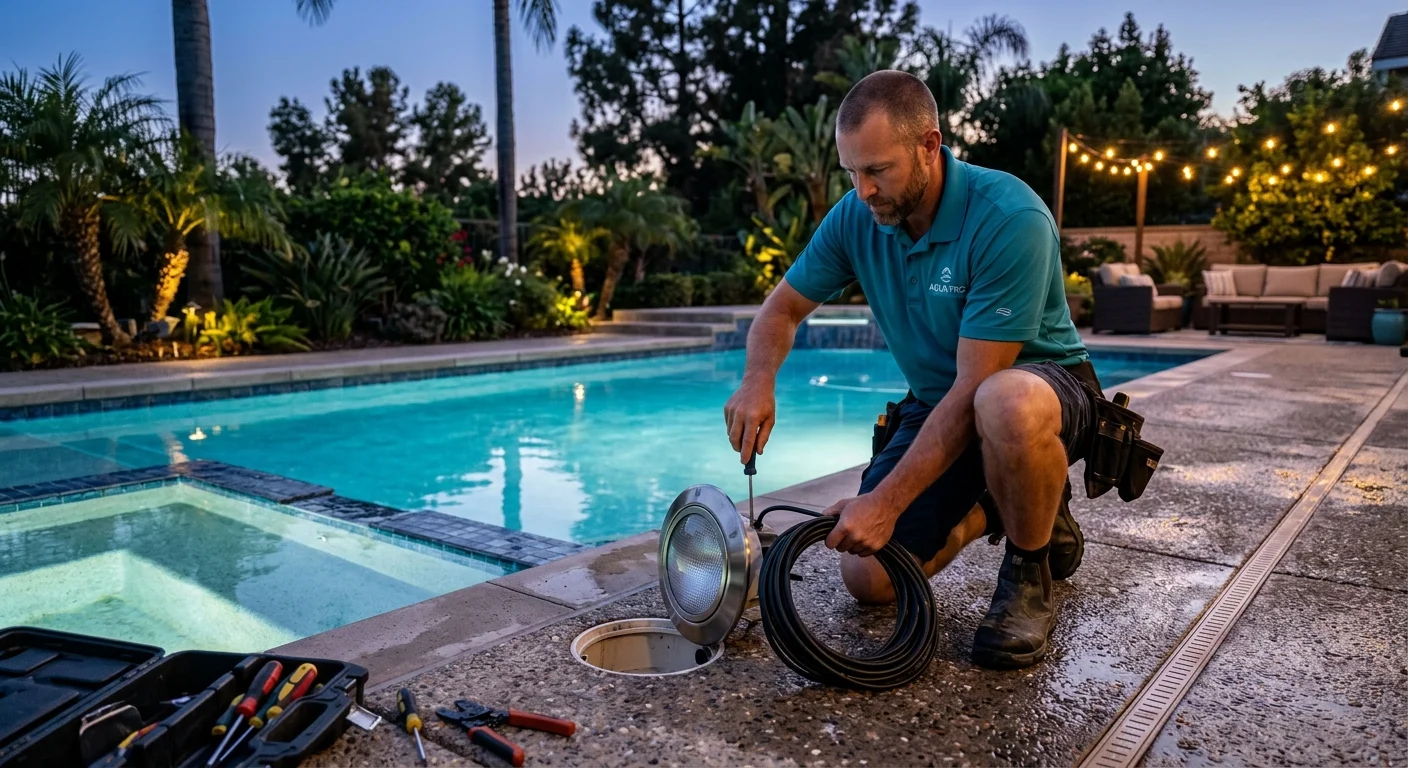
Upgrading to an LED pool light means replacing the fixture, lens, seals, and cord as a matched set. The job also involves checking the niche, verifying GFCI protection, confirming bonding, and making sure the new fixture communicates with your existing controls. It isn’t a simple bulb swap. A licensed pro handles the electrical scope, and the matched pro from Splash Pool SD quotes the full job before any work starts.
Why replace instead of repair
A failed incandescent fixture or an outdated color often triggers the search. The lamp and gasket may still be obtainable, but the housing, lens, seal, cord, and mounting all need inspection. Moisture inside the housing changes the repair-versus-replace decision quickly. Damaged threads, a deteriorated cord, or corrosion can block repair entirely. Unavailable parts do the same.
An LED swap covers the fixture, lens, seals, and cord together. That avoids pairing a new lamp with an uncertain assembly. Your pro should specify which parts stay and which get replaced.
Diagnosis before replacement
A tripped GFCI, a controller setting, or a transformer issue can mimic fixture failure. A damaged cord and a failed fixture produce similar symptoms. Before approving a replacement, ask your pro to confirm the fixture is actually the problem.
Request the exact fixture model in writing. The proposal should list any adapter, transformer, controller, or junction work. Don’t approve a fixture based on catalog appearance alone. The existing installation determines suitability.
If your light stopped working suddenly, our post on pool lights not working in San Diego walks through the common causes.
White LED versus color LED
White LED keeps operation simple. Color models offer selectable colors, programmed changes, and scenes. The choice affects more than aesthetics.
Physical fit doesn’t guarantee controller communication. A basic switch may power a color fixture but strip its color functions. The power supply and transformer must match the product.
Photograph your automation panel, transformer label, junction area, and fixture label before the pro visits. Faded or missing labels slow the matching process. Earlier remodels can obscure system information. Brand names alone are insufficient. Exact model numbers matter because product families contain different fixtures and control methods.
Ask your pro these questions before signing:
- Will the light work from the current switch or controller?
- Which color functions do the existing controls support?
- Does the power setup match the new fixture?
- Will a transformer, relay, or control component change?
- How will the light operate without automation?
For broader equipment decisions, our pool equipment upgrade guide for San Diego covers how these choices connect.
Niches, cord, and conduit
The niche is the housing built into the pool wall. Its shape, dimensions, mounting style, and condition affect which replacement fixture works. A nicheless light uses different mounting and isn’t an automatic substitute. A matching face ring doesn’t confirm compatibility. Your pro must inspect how the fixture seats and fastens. Adapters exist for some niche and light combinations.
The cord routes through conduit to a connection point. A replacement cord must cover the actual route, including bends and elevation changes. Measuring the straight deck distance gives a wrong result. Tight bends, debris, or damaged conduit complicate the cord pull. Earlier installations can also resist cord movement. Your contractor should assess the route before promising an easy pull.
If a submerged cord splice appears during the job, pause the work and verify the manufacturer’s method. No improvised connections belong near pool water.
If the fixture itself is cracked or leaking, our guide on pool light repair in San Diego covers when repair is still an option.
Local exposure factors
Coastal properties in San Diego County expose metal parts to salt air corrosion. Check the niche ring, mounting hardware, and junction components for pitting or seizure. Inland areas with strong sun fade labels and make them brittle, which complicates system identification.
These conditions affect how your pro identifies the existing system. They don’t change which fixture you choose, but they can add time to the diagnosis.
GFCI, bonding, and licensing
Your pro should inspect circuit GFCI protection and bonding around the fixture. The bonding check includes the niche and nearby metal components. GFCI, grounding, and bonding are distinct. Each needs its own assessment. A vague “looks fine” is insufficient.
This work may involve fixed wiring, a transformer, a junction box, or automation. That scope requires a licensed contractor. Verify the license through the CSLB lookup, not a third-party directory. Confirm the work falls within the contractor’s active classification. If anything is unclear, confirm directly with the CSLB before signing.
Our post on checking a pool contractor’s license in California explains the lookup step by step.
Permits and jurisdiction
Permit requirements depend on the scope and the property. Your contractor should identify the responsible authority for your address. This applies across San Diego County, from City Heights to unincorporated East County. The city or county that holds jurisdiction sets the rules, and your pro should name that authority in the proposal.
Written scope before work
The proposal must cover the fixture, cord, controls, electrical connections, and testing. Include any niche changes. State who handles the required permit or inspection. This prevents the electrical portion from becoming an unexplained add-on later.
For a sense of what a full equipment installation looks like, see what to expect during pool equipment installation.
Coordinating with resurfacing
If you are planning a resurface, settle the lighting scope before finish work begins. A damaged niche, a conduit concern, or a niche conversion expands the scope. These decisions affect pool wall work, so don’t delay them.
Both pros must agree on niche retention or change. Agree on the adapter or niche conversion plan. Agree on old fixture and cord removal timing. Agree on who inspects the conduit and connection point. Agree on the niche edge meeting the new finish. Agree on electrical testing timing.
Photograph the fixture, niche face, cord route, deck connection, transformer, and controls. Keep model information with the resurfacing proposal. Resurfacing doesn’t automatically require a new light, but coordination prevents a fixture decision after niche access changes.
At the final walkthrough, have the pro demonstrate the controls and identify the circuit protection. Get the installed model information for future service.
If you are weighing resurfacing options alongside the light upgrade, our piece on how long pool resurfacing lasts helps with timing.
When to call us
Wiring, GFCI protection, bonding, control changes, and niche modifications all require a licensed pool professional. If your fixture is failing, your controls are outdated, or you are coordinating with a resurface, get a qualified pro involved early. Call us at (858) 400-4404 and we’ll connect you with a licensed local pool specialist.
Frequently asked questions
Will a new LED light fit my existing pool niche?
Not always. The niche shape, dimensions, mounting style, and condition all affect whether a new fixture seats properly. Adapters exist for some combinations, but a matching face ring alone does not confirm compatibility. Your pro needs to inspect how the fixture fastens before ordering.
Does the pool need to be drained for a light replacement?
That depends on the fixture type, niche condition, and how the cord routes through conduit. Some replacements happen with water in the pool. Others require a partial or full drain. Your pro should tell you before quoting.
Will a color LED work with my existing automation?
Physical fit does not guarantee controller communication. The power supply, transformer, and control protocol must all match the new product. Photograph your automation panel, transformer label, and junction area so your pro can verify compatibility before ordering.
Who should perform a pool light replacement?
Any work involving fixed wiring, GFCI protection, bonding, transformers, junction boxes, or automation requires a licensed contractor. Verify the license through the CSLB lookup, not a third-party directory, and confirm the classification covers the scope.
Need professional help in San Diego County?
Splash Pool SD connects you with a licensed specialist for any service in this post.